


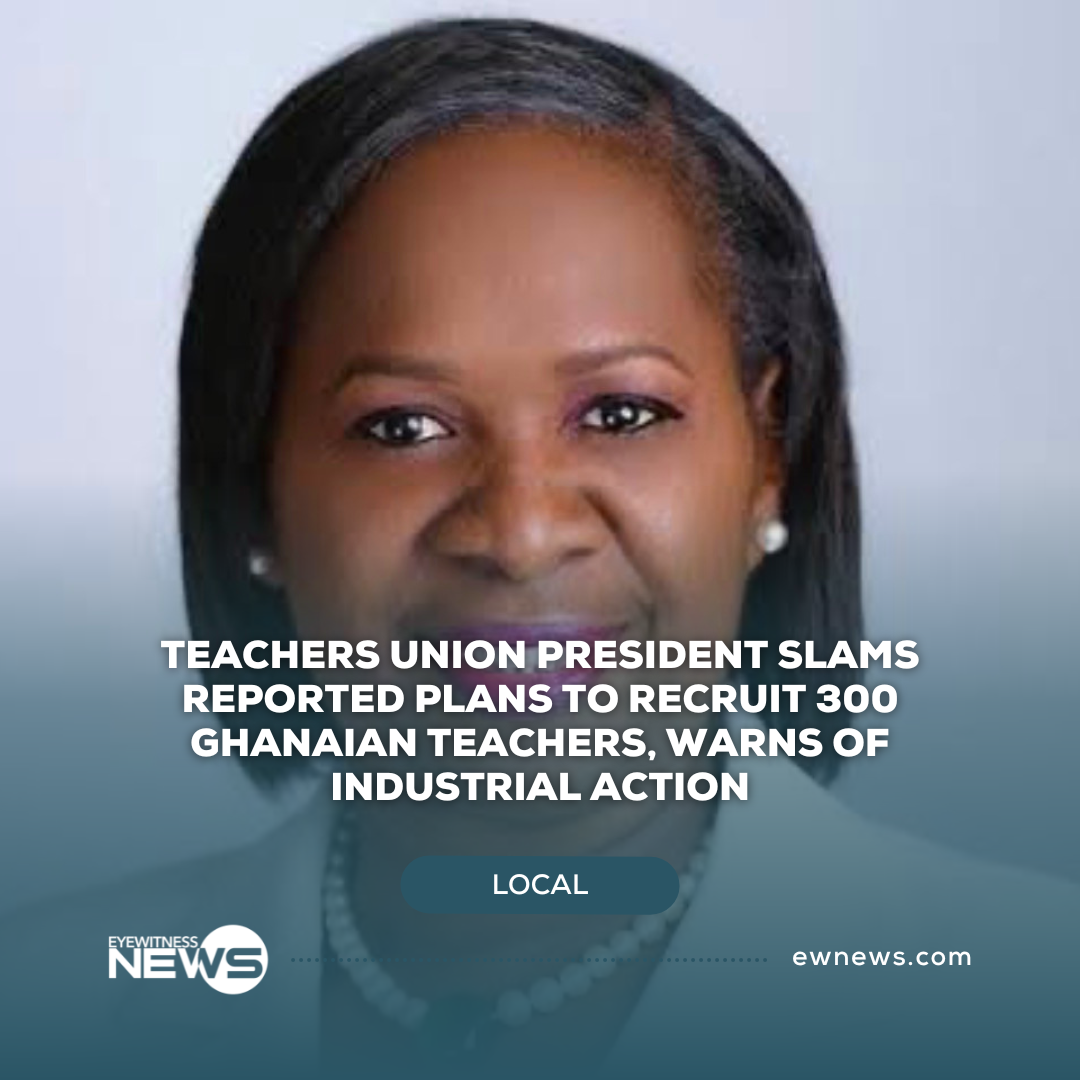
NASSAU, BAHAMAS- Bahamas Union of Teachers (BUT) President Belinda Wilson has condemned as “egregious” and “highly offensive” the government’s reported agreement to recruit 300 teachers from Ghana, saying educators first learned of the plan through a social media post by Ghana’s Foreign Affairs Minister rather than from Bahamian officials.
Wilson’s comments, made in a WhatsApp voice note circulated on Sunday, came after Ghana’s Foreign Affairs Minister, Samuel Okudzeto Ablakwa, announced on social media that “following official negotiations,” The Bahamas is ready to receive 300 Ghanaian teachers this year as the first phase of expanded educational cooperation between the two countries.
“This is egregious and highly offensive to the hard-working, dedicated teachers of The Bahamas,” Wilson said.
She questioned why the government could negotiate an overseas recruitment agreement while the union has been at the bargaining table since October 2025 without securing a new industrial agreement or salary increases for more than 2,000 teachers.
“Prime Minister Philip Davis and Minister of Education Glenys Hanna-Martin’s successor, Minister I. Chester Cooper, can negotiate in minutes to have 300 teachers from Ghana come to The Bahamas, but the Bahamas Union of Teachers has been at the negotiation table for almost 10 months and we were unable to secure a salary increase for over 2,000 teachers already in the service,” she said.
Wilson said hundreds of teachers are still awaiting payments owed to them, including salary reassessments, confirmations, rental allowances, examination marking fees, disturbance, hardship and coaching allowances.
She also said graduates of the University of The Bahamas from 2025 and 2026 remain unemployed despite the reported teacher shortage.
“The government cannot tell us there is a shortage while qualified Bahamian graduates are still waiting to be hired,” she said.
Wilson stressed that the union is not opposed to expatriate teachers, noting that many non-Bahamian educators are members of the union and have made valuable contributions to the country’s education system.
However, she argued that the government failed to consult the union before reaching any agreement.
“We are aware of the teacher shortage, and we appreciate the valuable contributions of expatriate teachers already serving in our schools. But this does not exempt the government from consulting with stakeholders such as the Bahamas Union of Teachers. It does not excuse the government from blatantly disrespecting important partners in the discussion and decision-making process.”
Wilson said the union has received no official briefing on where the teachers would be assigned, what subjects they would teach or the qualifications they possess.
“We have not been informed officially what subject areas, what grade levels, what schools or what islands these teachers are being assigned to,” she said. “A foreign affairs minister from Ghana, some 5,200 miles away, is informing The Bahamas about teachers coming to The Bahamas.”
She also questioned the financial implications of the reported recruitment, noting that expatriate teachers typically receive benefits including airfare, housing assistance, rental allowances and gratuities, while local teachers continue waiting for payments owed to them.
Calling the announcement “an affront to all of us,” Wilson urged union members to prepare for industrial action if the government proceeds without addressing longstanding concerns.
She called on teachers owed outstanding payments, unemployed University of The Bahamas graduates, union members and supporters to stand in solidarity, suggesting a demonstration at Rawson Square.
Wilson said industrial action would be pursued if the government brings the reported 300 Ghanaian teachers to The Bahamas for the start of the August 2026 school year without consulting the union, if the new industrial agreement is not completed and registered, and if outstanding payments owed to teachers remain unpaid.
She also said the union wants full disclosure on the recruitment process, including the number of teachers being hired, their subject specializations, qualifications, vetting process and employment benefits before any overseas recruitment proceeds.
Deputy Prime Minister and Minister of Education, Science and Technology Chester Cooper in a statement said: “The Ministry of Education, Science & Technology welcomes the generous offer of cooperation of the Government of Ghana to assist with the recruitment of up to three hundred (300) teachers. As highlighted during the recent budget debate, the Ministry currently faces a shortfall of approximately three hundred (300) teachers. This is compounded by retirements, contract expirations, and the expansion of specialized areas such as special education, technology, financial literacy, digital literacy, and entrepreneurship studies.:
He added: “To address this urgent need, we established a multi-agency Task Force comprising the Ministry of Foreign Affairs, the Ministry of Public Service, the Department of Labor, the Royal Bahamas Police Force, and the National Accreditation and Equivalency Council of the Bahamas (NAECOB). The Task Force is actively implementing strategies to attract Bahamian educators, including recently retired teachers, recent graduates, and those who previously left the profession and now desire to return. In keeping with government policy, Bahamians will be given first priority to fill all vacancies.”
He noted that the government has engaged several nations, including Ghana, Kenya, the United States of America, the United Kingdom, the Philippines, and others, to explore opportunities for collaboration. “We held direct discussions with the Minister of Foreign Affairs of Ghana on the margins of the country’s recent independence celebrations to advance this important initiative. All recruitment efforts will be subject to standard Ministry procedures, rigorous vetting of qualifications and character, cultural sensitivity training, comprehensive orientation, and a six-month immersion program.”
He added: “We remain committed to continuously strengthening the nation’s education system so that our students get the attention they rightly deserve. For decades, we have benefitted from strategic international recruitment of educators from partner nations. We emphasize that such recruitment is intended only to address vacancies that cannot be immediately filled by qualified Bahamians. The well-being of our children and the progress of our nation remain our highest priority.”