


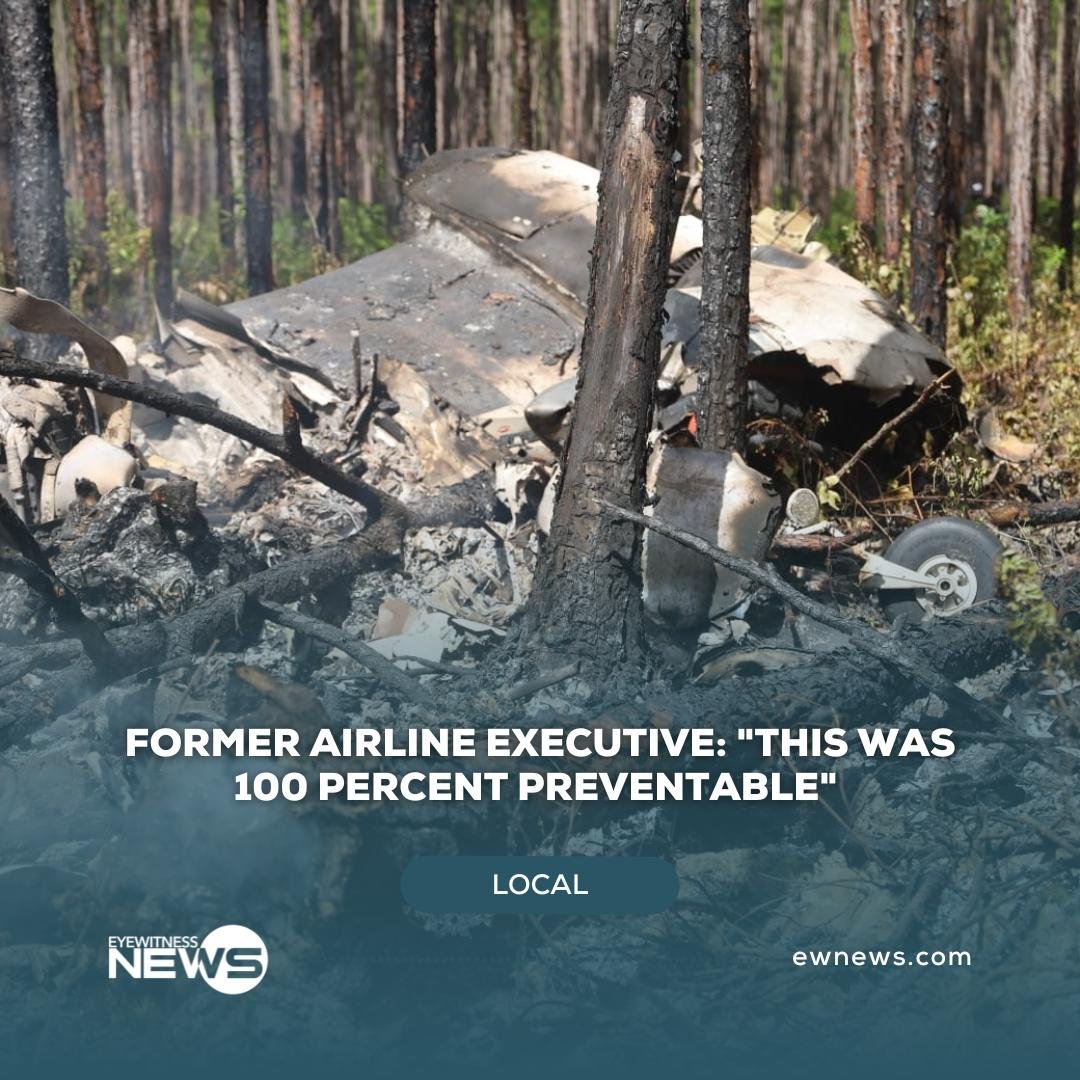
Speaking with Eyewitness News, Butler described the Independence Day tragedy as “100 percent preventable,” saying the warning signs have been there for years.
“Flamingo Air, these are telltale signs,” Butler said. “When you keep seeing incidents, those are warning signs. You don’t wait until people die before you start paying attention.”
Butler believes adding more regulations is not the answer.
“More regulation doesn’t make you safe,” he said. “You need a quality management system. That’s what finds problems before they become accidents.”
He said airlines should constantly evaluate risk, monitor maintenance, review operations and identify safety concerns before they become tragedies.
Butler also said licensing is often misunderstood by the public.
“You have people who can fly, but they may not have the licence required for the type of operation they’re conducting,” Butler said.
He explained that aviation licences differ depending on the type of flying being performed and that a pilot may legally hold one licence while not being authorized for another type of commercial operation.
“There are different licences,” Butler said. “A person may be able to fly, but not be licensed for charter. That’s an important distinction.”
He added that being licensed is also different from being current.
“You can have a licence and still not be current,” Butler said. “Whether the pilot is qualified and not current, there is a difference.”
Butler emphasized he was speaking generally about aviation oversight and not suggesting those circumstances applied to Friday’s crash.
He believes investigators should examine pilot qualifications, licensing, currency, training records, company operations and maintenance programs as part of their investigation.
Butler also questioned whether Civil Aviation has been aggressive enough in enforcing existing standards.
“How many more accidents and deaths?” he asked.
According to Butler, The Bahamas follows standards established by the International Civil Aviation Organization, with local regulators responsible for enforcing those requirements.
He believes recommendations made after previous accident investigations should be reviewed to determine whether they were fully implemented.
“The recommendations are there for a reason,” Butler said. “If they’re not acted on, then we’re missing opportunities to prevent the next accident.”
Butler also questioned whether investigators should determine whether Friday’s flight was operating as a scheduled commercial service under Flamingo Air’s Air Operator Certificate or another type of operation using a Flamingo Air aircraft.
For Butler, Friday’s tragedy should become more than an accident investigation.
“If we don’t learn from this, then we’ve learned nothing,” he said.