


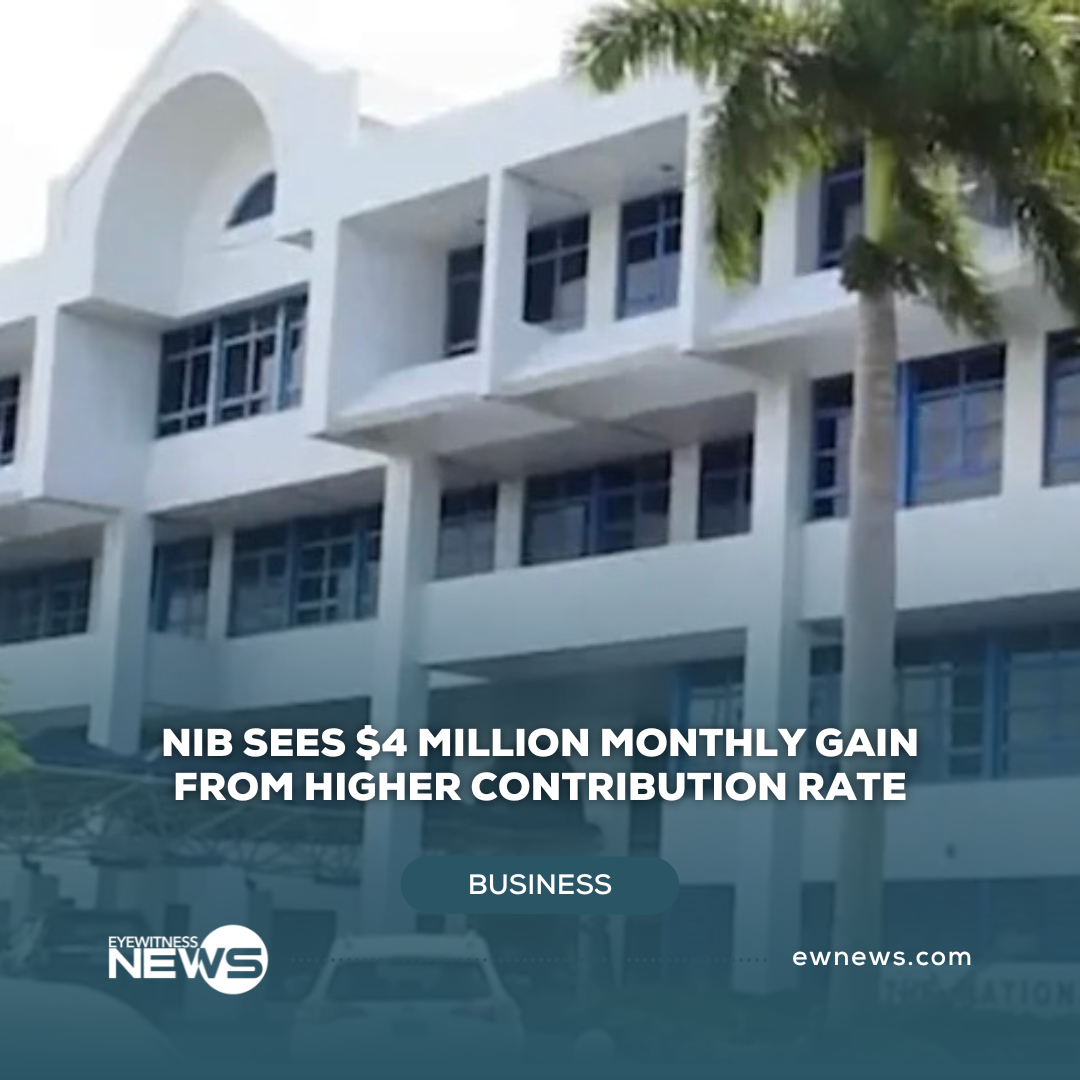
NASSAU, BAHAMAS- The National Insurance Board’s 1.5 percent contribution rate increase has generated an average $4 million in additional monthly contribution income and helped improve the fund’s financial performance beyond expectations, according to NIB Director Dr. Tami Francis.
Speaking at a briefing on NIB’s upcoming biennial adjustments, Dr. Francis said the July 1, 2024, contribution rate increase was introduced as part of efforts to strengthen the fund’s short and medium-term sustainability.
“By increasing the contribution rate by 1.5 percent, we have seen on average a $4 million per month increase in our contribution income. So this has really assisted us in moving towards that goal where we want to actually be,” she said.
However, Dr. Francis cautioned that the contribution increase alone is not enough to secure the fund’s future.
“Of course, now, this is not a full stopgap measure. Contribution rate is just not the only measure to put in place to help save the fund,” she said, adding that the increase is being combined with recommendations from actuarial reviews and internal reforms.
While acknowledging that the fund still faces challenges, Dr. Francis said its performance has exceeded projections.
“Our performance is actually much better than predicted. We are currently, while we may still have a slight difference in our contribution income versus our benefit expenditure, what we would have expected or predicted, we are doing a lot better than expected.”
She added: “Now, that does not mean we are to rest on our laurels, but an increase of this nature would not be something that will ultimately save the fund, and as I said earlier, we’ll have to work along with other measures as we work towards reform.”
According to Dr. Francis, NIB has also strengthened compliance efforts and invested in technology to make it easier for contributors and employers to make payments.
“The contribution rate increase of the 1.5 percent, that has actually really helped, and we have also put other measures in place with regards to our compliance, and also, too, in terms of our technology and ensuring that our systems are working better,” she said.
She pointed to NIB’s Employer Self-Service (ESS) platform, which allows employers to make payments electronically rather than visiting NIB offices.
“Sometimes, of course, while employers may have the funds, it may be somewhat hectic to come into National Insurance, so we make it a lot easier for them to make the payments.”
Dr. Francis also highlighted the C10 mobile application, which allows self-employed persons and businesses with 10 or fewer employees to pay contributions digitally.
“Our goal is to actually make it a lot easier for persons to do business with National Insurance.”
The NIB director said the organisation has also focused on reducing operating costs. Administrative expenses have fallen significantly over the past several years.
“In 2018, we would have been somewhere around about 21 percent of admin expenses. Today, our administrative expenses has decreased, and we are now at 15 percent.”
She said the combined impact of higher contribution income, improved compliance, technology upgrades and cost-saving initiatives has strengthened the institution’s overall position.
“There are several measures working together that has helped our performance over time.”
Despite the improvements, Dr. Francis said demographic trends continue to pose long-term challenges for social security systems worldwide.
“When we started National Insurance, when it was implemented in 74, we had approximately seven contributors, seven workers to support one retiree. Today, we have approximately three workers to support one retiree.”
With fewer workers supporting a growing retiree population, she said NIB’s objective is to extend the fund’s sustainability over the long term.
“There are several things that we may do to increase it over the short and medium term, but we want that stretch. We want that 60-year. We want that 78-year. That’s our ultimate goal.”
While stressing that the fund is not in crisis, Dr. Francis said reforms must continue.
“The fund right now, we’re not in crisis, but as I said earlier, that doesn’t mean we should rest on our laurels.”