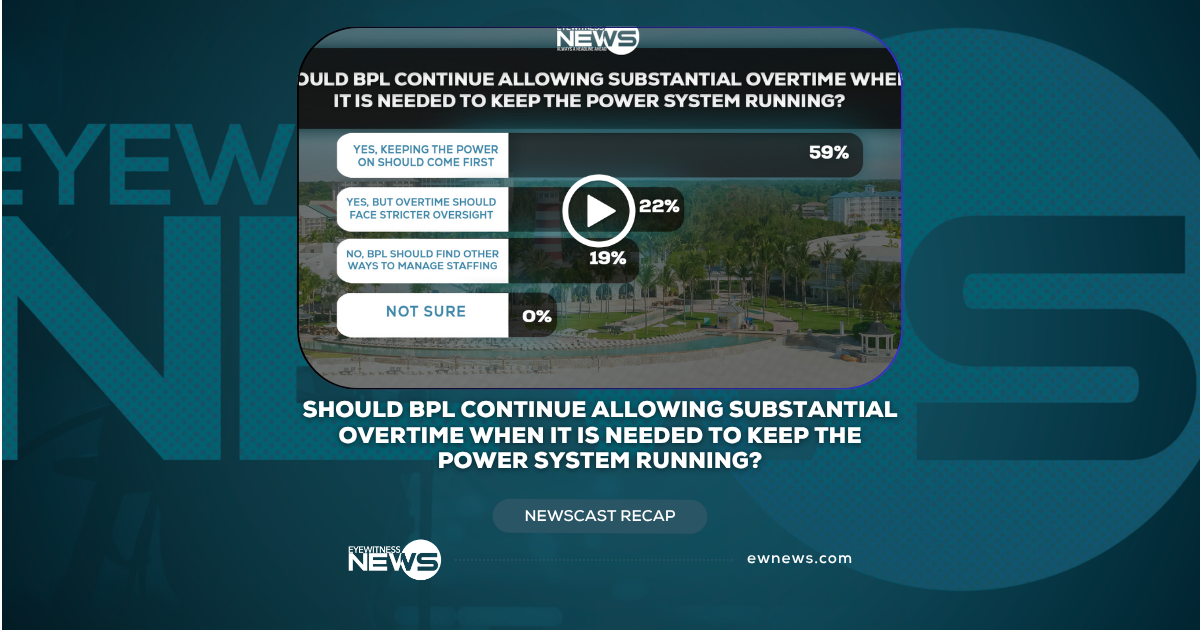



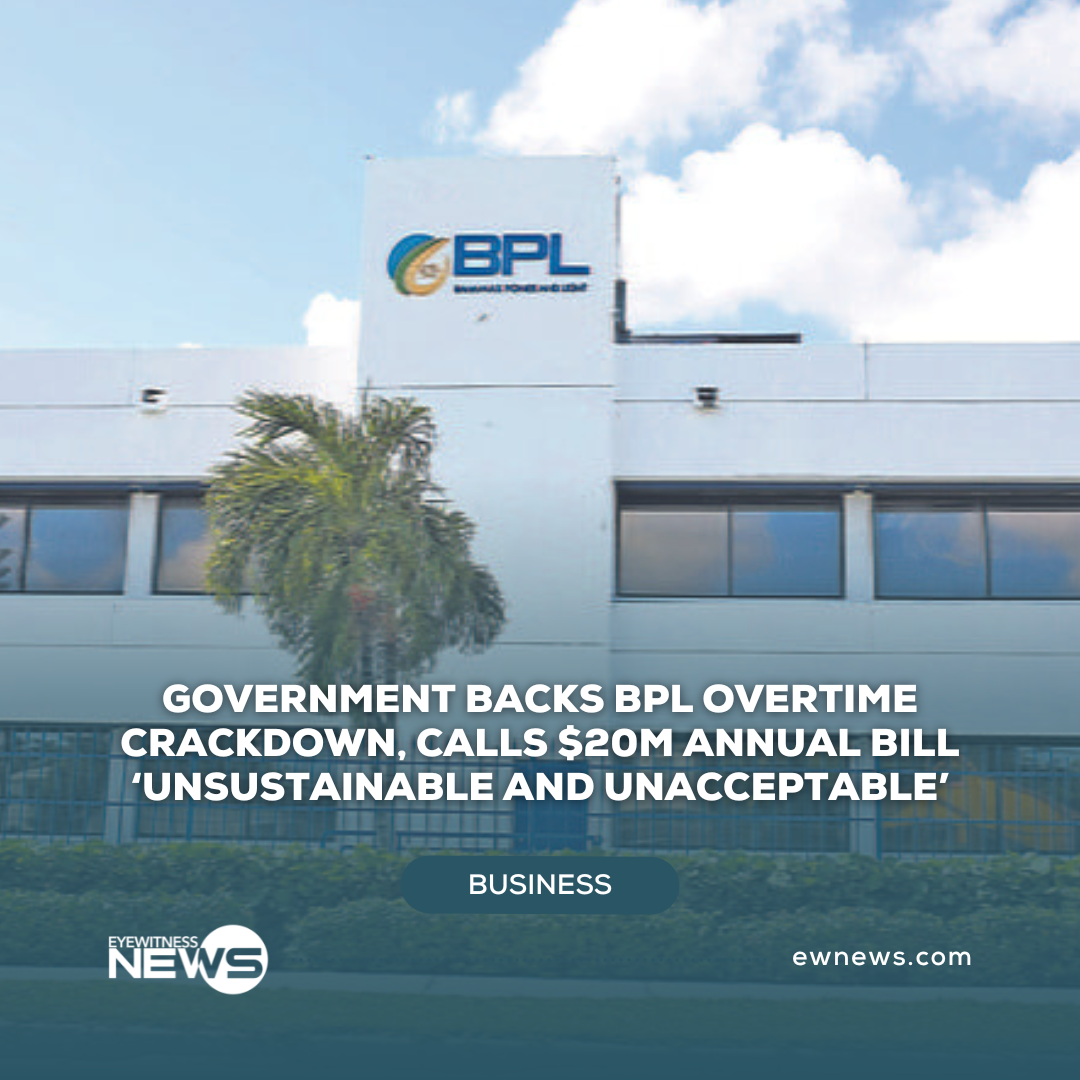
NASSAU, BAHAMAS — The government has thrown its support behind Bahamas Power and Light’s controversial new overtime policy, declaring that an annual overtime bill approaching $20 million is “unsustainable and unacceptable” and insisting that tighter controls are necessary to safeguard the utility’s finances and public funds.
The government’s intervention comes amid an escalating dispute between BPL and the Bahamas Electrical Workers Union (BEWU) after it emerged that three BPL employees collectively received just over $600,000 in overtime over a one-year period.
In a statement issued Thursday, the government said BPL’s board and executive leadership had engaged with BEWU, the Bahamas Electrical Utility Managerial Union and other stakeholders over the need for a “more transparent, accountable and sustainable overtime system.”
“The Government recognizes that overtime is sometimes necessary to maintain reliable electricity service, respond to emergencies and protect public safety. However, an overtime bill approaching $20 million annually is unsustainable and unacceptable,” the statement said.
“It places an unreasonable burden on BPL’s finances and, ultimately, on the Bahamian people.”
The new overtime policy introduced by the board, led by Executive Chairman Christina Alston, recently took effect and is aimed at giving executives tighter oversight of overtime expenditure.
The policy requires prior approval for planned overtime and at least two levels of authorization for all overtime submissions. Emergency overtime must be supported by reports and documentation, while the new framework also introduces stricter timekeeping requirements, monthly expenditure reviews and overtime caps.
The government stressed that the policy is not designed to eliminate legitimate overtime or deny employees compensation, but to ensure overtime is necessary, fairly allocated, properly authorized and fully documented.
It said the reforms are also intended to address excessive working hours and fatigue-related safety risks. The policy requires relief planning after 12 continuous working hours, imposes a maximum of 16 continuous working hours and requires mandatory rest before an employee resumes duty.
The tighter controls follow a review of BPL’s overtime practices which uncovered what the government described as “unusual patterns and anomalies.”
Internal records show that three employees in BPL’s Fuel and Performance Department received a combined $601,295.16 in overtime between May 2025 and April 2026.
Two accounted for $483,281.53 of the total, receiving $265,551.83 and $217,729.70 respectively, while the third received $118,013.63. The annual base salaries of the two highest overtime earners were approximately $78,388 and $56,182 respectively, meaning their overtime payments were more than three times their annual salaries.
Records also show unusually long hours being claimed. One overtime record from Christmas week showed an employee recorded as working 18 hours on Christmas Day, followed by 24 hours on December 26, another 24 hours on December 27 and 24 hours on December 28 — a combined 90 hours over four consecutive days.
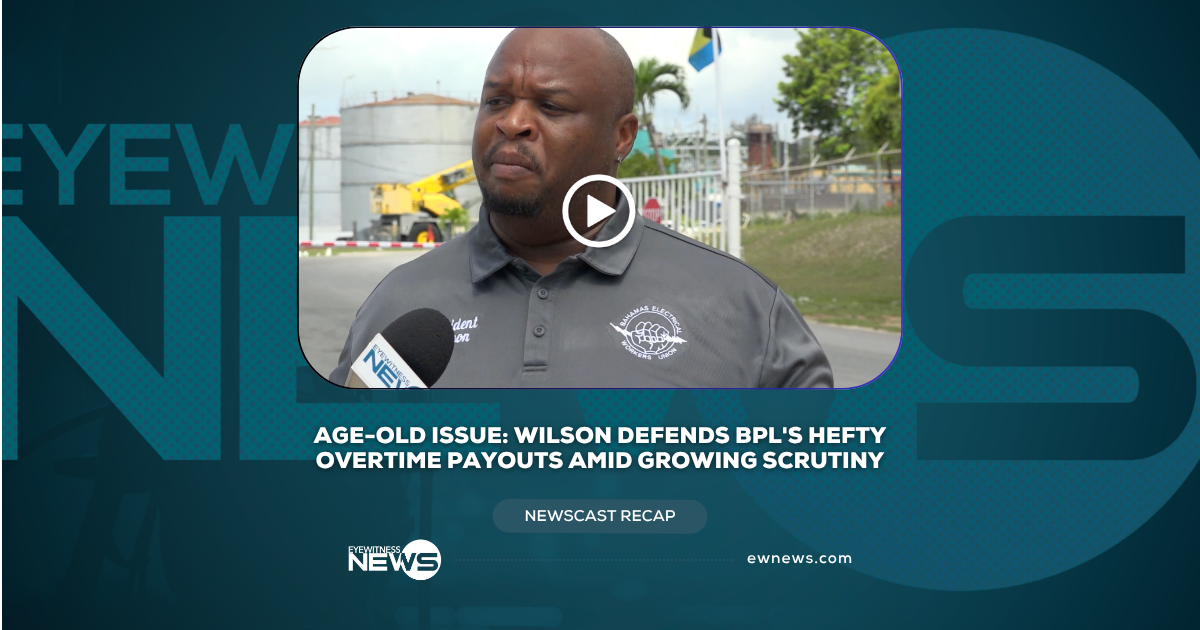
BEWU President Kyle Wilson has pushed back strongly against the overtime probe and new policy, accusing Alston of using the issue as a distraction from BPL’s ongoing power woes.
Wilson has defended the substantial overtime payouts, pointing to employees who he says have been putting in long hours to restore electricity amid the ongoing energy crisis. He has maintained that employees do not decide for themselves when they work overtime, saying: “Overtime is only at the discretion of management.”
Wilson has also argued that if overtime was worked and approved in accordance with the industrial agreement, the amount employees earned should not be the central issue. He questioned why concerns surrounding overtime were not addressed during negotiations for a new industrial agreement, which he said was signed in June.
The union has. reportedly instructed its members to work only their normal hours and go home afterwards, alleging that the new overtime policy was neither discussed with nor shown to the union and breaches Clause 30 of its industrial agreement.
Despite securing a trade dispute, Wilson has not indicated that industrial action is on the horizon. However, he has called for Alston’s removal as BPL’s executive chairman.
The government, meanwhile, said BPL’s review is intended to strengthen its systems and processes rather than target individual employees.
“Any suspected irregularity will be examined fairly and objectively,” the government said.
“Where wrongdoing, negligence or a failure of oversight is established, whether involving an employee, Manager, Director or other responsible officer, the appropriate action will be taken in accordance with the law, applicable industrial agreements, company policies and due process.”
The government added that BPL would not prejudge any individual or draw conclusions before the relevant facts have been properly established.
The overtime dispute comes as BPL and Bahamas Grid Company face intense scrutiny over repeated electricity outages during a difficult summer for the country’s power sector.
Addressing the union’s opposition, the government said it recognizes the right of union leaders to raise concerns and pledged that constructive dialogue would continue.
“Nevertheless, the Government has a responsibility to protect workers, safeguard public funds and ensure that BPL operates safely, transparently and in the national interest,” the statement said.
The government said it expects the overtime policy to be implemented “consistently and fairly” across BPL, with the cooperation of management, employees and union representatives.