



NASSAU, BAHAMAS – The debate over Bahama Rock Limited’s proposed expansion should not be framed as a choice between aggregate extraction and economic stagnation.
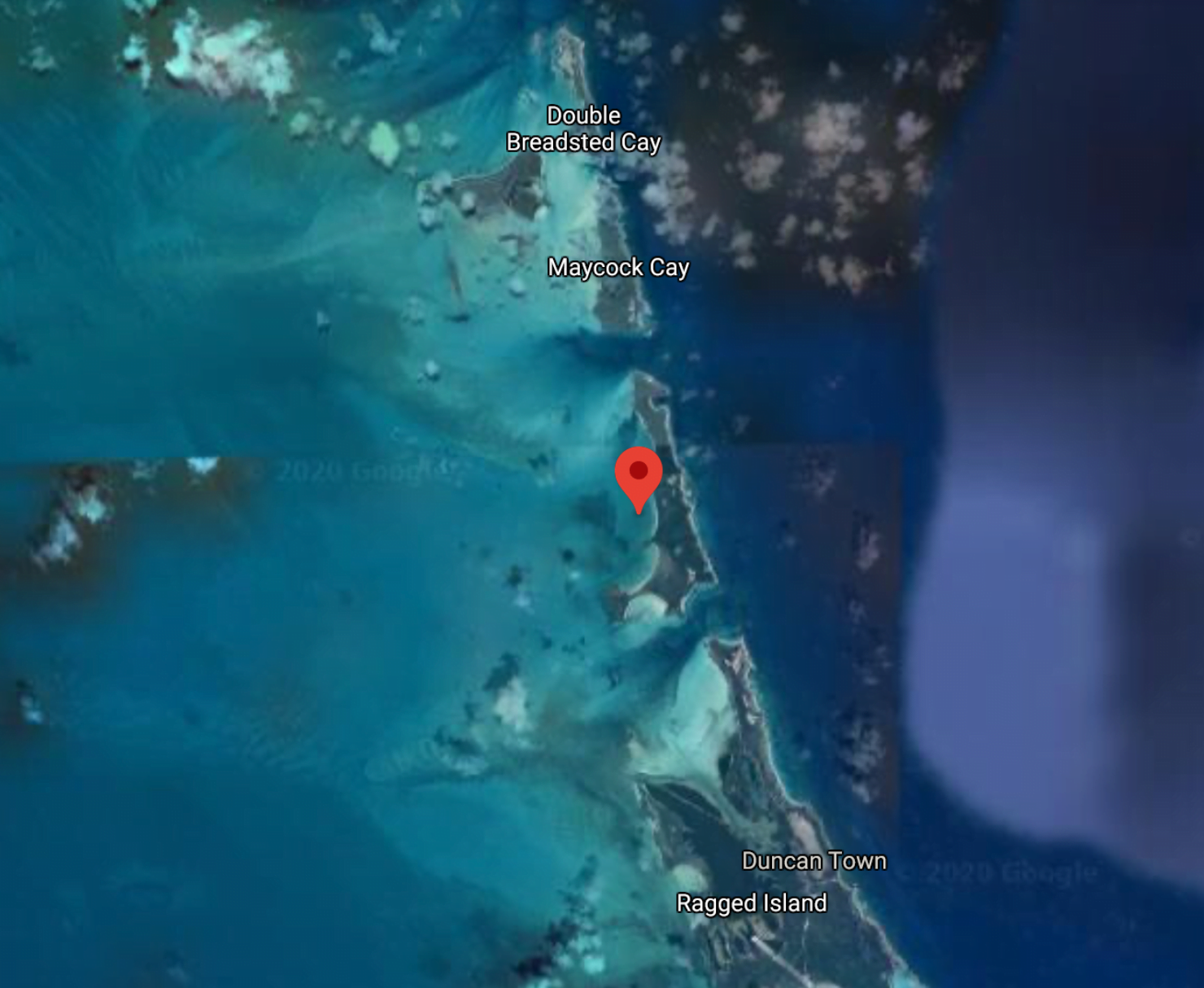
The real question is whether permanently excavating approximately 269.39 acres of strategically located land beside Freeport Harbour represents the highest and best long-term use of that property, or merely the first development proposal presented to the public.
The developer’s Environmental Impact Assessment (EIA) describes an extraction and harbor-expansion program that could continue for 15 to 20 years. It would involve demolition, land clearing, blasting, dredging, and aggregate removal before the excavated area ultimately becomes additional harbor turning space and deep-water berth capacity. The EIA presents economic benefits, including retaining approximately 82 to 84 Bahamian employees, maintaining aggregate supply, and potentially supporting future harbor-related commerce. While these benefits should be acknowledged and fairly evaluated, acknowledgment does not equate to automatic approval.
The EIA also recognizes potential adverse effects on the pineland and coppice habitat, coral reefs, groundwater, noise levels, dust, and surrounding communities. More importantly, the decision would be significantly irreversible. Once the land and geological material are removed, no future government, investor, planner, or generation could reconsider the property under identical terms.
This permanence creates an obligation to explore credible alternatives before the option value of the land is destroyed.
One alternative now being proposed is the creation of a “Grand Bahama Harbour-Edge Innovation District”, developed as: ‘O2 | Opportunity & Ownership | Innovation, Incubation, & Accelerator Hub’
The foundational pillars of this concept could be summarized as: AI. Business. Technology. Finance.
O2 is not being presented as a completed feasibility study, an approved development, a financing commitment, or a final master plan. It is a working concept intended to establish an essential fact: Grand Bahama has choices.
The concept would retain the land and explore its development as a mixed-use district for entrepreneurship, technology, education, research, tourism, housing, creative industries, clean energy, maritime applications, and Bahamian ownership. Instead of relying primarily on the one-time removal and sale of materials beneath the property, O2 would seek to create ongoing value through businesses, rents, services, exports, intellectual property, investments, visitor spending, and workforce development.
This distinction is crucial.
Rock can be excavated and sold once, while a functioning innovation district can repeatedly generate enterprises, knowledge, skills, services, and investments across generations.
The O2 district could open opportunities for individuals, entrepreneurs, researchers, investors, and established businesses in various sectors, such as the Digital Economy, Conceptual Economy, Knowledge Economy, AquaMarine Economy, Platform Economy, Passion Economy, Carbon Economy, Green Economy, Blue Economy, Ocean Economy, Orange Economy, Internet Economy, Knowledge-Based Economy, Data Economy, Shared Economy, Silver Economy, Circular Economy, Climate Economy, Crypto Economy, AI Economy, Technology Economy, Infrastructure Economy, Gig Economy, Blockchain Economy, Energy Economy, and Tokenization Economy.
It could also provide a physical ecosystem for companies and professionals in FinTech, RegTech, SupTech, PropTech, HealthTech, Blockchain, EdTech, MedTech, Biotech, GovTech, InsurTech, LegalTech, traditional finance, ProcureTech, DataTech, TravelTech, AgriTech, and PayTech.
These should not be treated merely as fashionable labels; each represents industries, services, intellectual property, training requirements, export opportunities, and employment pathways that could be deliberately organized around Grand Bahama’s existing advantages.
A well-structured district could include AI laboratories, software and data-service companies, cybersecurity operations, blockchain infrastructure, digital-payment businesses, regulatory technology, property technology, marine and ocean technology, renewable-energy systems, resilient construction research, biotechnology applications, medical innovation, digital education, film and media production, tourism technology, agricultural technology, financial services, business incubators, fabrication facilities, laboratories, studios, classrooms, offices, residences, hotels, and public spaces.
This initiative could help move Bahamian entrepreneurs from ideas to prototypes, from prototypes to companies, and from companies to international markets.
The proposal aligns with previous strategic thinking about Freeport, emphasizing the need for high-technology and knowledge-based export services, higher-value manufacturing, increased utilization of Grand Bahama’s maritime and logistics assets, blue-economy growth, digital expansion, nearshoring, entrepreneurship, and economic diversification.
Additionally, the Blue Action Lab concept envisions Freeport as a location where sustainable infrastructure, ocean innovation, ecosystem restoration, food security, circular economy systems, and disaster-resilience technologies can be tested, financed, and deployed at a meaningful scale.
O2 aims to consolidate many of these ambitions into a single, interconnected economic platform at the harbor’s edge.
However, this does not imply that O2 has been proven to be the best option. Factors such as land control, environmental suitability, infrastructure capacity, anchor tenants, commercial demand, financing, governance, community benefits, and Bahamian participation must be independently evaluated.
This is why irreversible excavation should not commence before conducting a thorough comparison.
The government, the Department of Environmental Planning and Protection, the Grand Bahama Port Authority, and relevant harbor stakeholders should establish a transparent process for evaluating alternatives. O2 should be assessed alongside the Bahama Rock proposal and any other credible non-destructive or less-destructive options.
The comparison should consider factors including the number and quality of jobs, levels of Bahamian ownership, domestic value retention, export potential, public revenue, environmental impacts, climate and groundwater risks, infrastructure demand, commercial feasibility, public waterfront access, workforce development, and the long-term benefits for Grand Bahama over 20, 50, and 100 years.
The conclusion may ultimately support O2, a modified version of O2, another alternative, limited harbor works, or a combination of uses. However, this conclusion should be based on evidence rather than the assumption that extraction is the only viable model.
This stance is not against investment, employment, or harbor development. Instead, it advocates for better development decisions.
Before Grand Bahama permanently removes what is beneath this land, a careful assessment of what can be built upon it should first take place.
Protect Our Natural Heritage. Build a Sustainable Future. Preserve the Land. Multiply the Opportunities. Expand Ownership. Build the Future.