


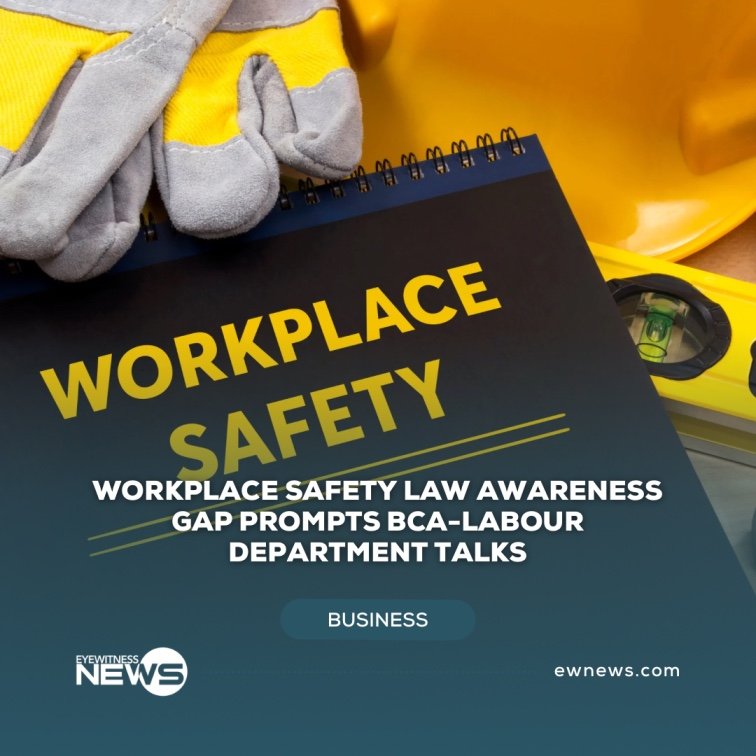
NASSAU, BAHAMAS — The Bahamas Contractors Association (BCA) is set to meet with the Department of Labour this week after a series of workplace inspections prompted concerns that the vast majority of Bahamian businesses remain unaware of the Health and Safety at Work Act, 2002, legislation that applies to virtually every workplace in the country.
The meeting comes days after the BCA hosted a workplace safety training seminar that was attended not only by contractors and business owners but also by Labour Department inspectors, who received practical instruction on identifying safety hazards on construction sites. The seminar was organized in response to five industrial-related deaths recorded over the past two months according to BCA President Leonard Sands.
Sands said the association fully supports the Department of Labour carrying out inspections and enforcing the law but believes a lack of education, rather than a lack of willingness to comply, is the biggest obstacle facing businesses.
“We do not have a challenge with the Department of Labour carrying out the provisions of the Health and Safety at Work Act, 2002. That’s their job,” Sands said. “Our concern is making sure employers understand what is required before they find themselves facing enforcement action.”
According to Sands, the Act is widely misunderstood as legislation aimed solely at the construction sector when, in reality, it applies to every employer.
“This is not just construction,” he said. “This is every workplace. This is law firms, doctors’ offices, media companies, manufacturing businesses — anywhere employees work.”
He estimates that 99 percent of businesses are not even aware the Act exists, largely because there has never been a sustained national public education campaign explaining employers’ obligations.
“There were no widespread public service announcements or ongoing education about how this affects businesses,” Sands said. “Right now, they don’t know what they should be doing because there is no requirement that they should know. That’s the gap we have to close.”
His comments follow recent inspections that resulted in prohibition notices being issued against several construction sites, temporarily halting work.
While Sands stressed that unsafe workplaces must be addressed, he questioned whether some businesses were given adequate opportunities to correct deficiencies before prohibition notices were issued. He noted that the legislation allows inspectors to issue improvement notices requiring employers to remedy safety concerns before taking the more serious step of shutting down a worksite.
The BCA has since written to the Department of Labour, and Sands confirmed that officials accepted an invitation to meet this week.
“We’re going to discuss some of the recommendations that we have and work out a plan,” he said. “More importantly, we want businesses to understand the Act so that when inspectors arrive, the workplace is already satisfactory. The goal isn’t to penalize contractors or business owners. The goal is to conduct inspections and find that businesses are operating safely.”
The association believes stronger collaboration between regulators and industry will improve compliance while reducing workplace accidents and unnecessary business disruptions.
Sands said the recent safety seminar highlighted the industry’s willingness to embrace higher standards. The event drew a large turnout from contractors and businesses. Because of strong demand, the BCA plans to hold another session in October.
He also noted that the Department of Labour’s inspectorate participated in the training, receiving practical guidance on construction site safety before beginning the recent round of inspections.
Looking ahead, Sands is calling for workplace safety education to become a mandatory part of contractor licensing in The Bahamas, similar to occupational safety requirements in the United States.
“In the United States, you cannot become a licensed contractor without taking OSHA training,” he said. “Here, there is no requirement. Most people don’t even know this law exists.”
“The necessity is ensuring that conditions are met before people are allowed to operate in an industry,” he said. “If you don’t have those conditions, you create an environment for abuse and accidents because people simply haven’t been given the knowledge they need to conduct business properly,” Sands noted.