


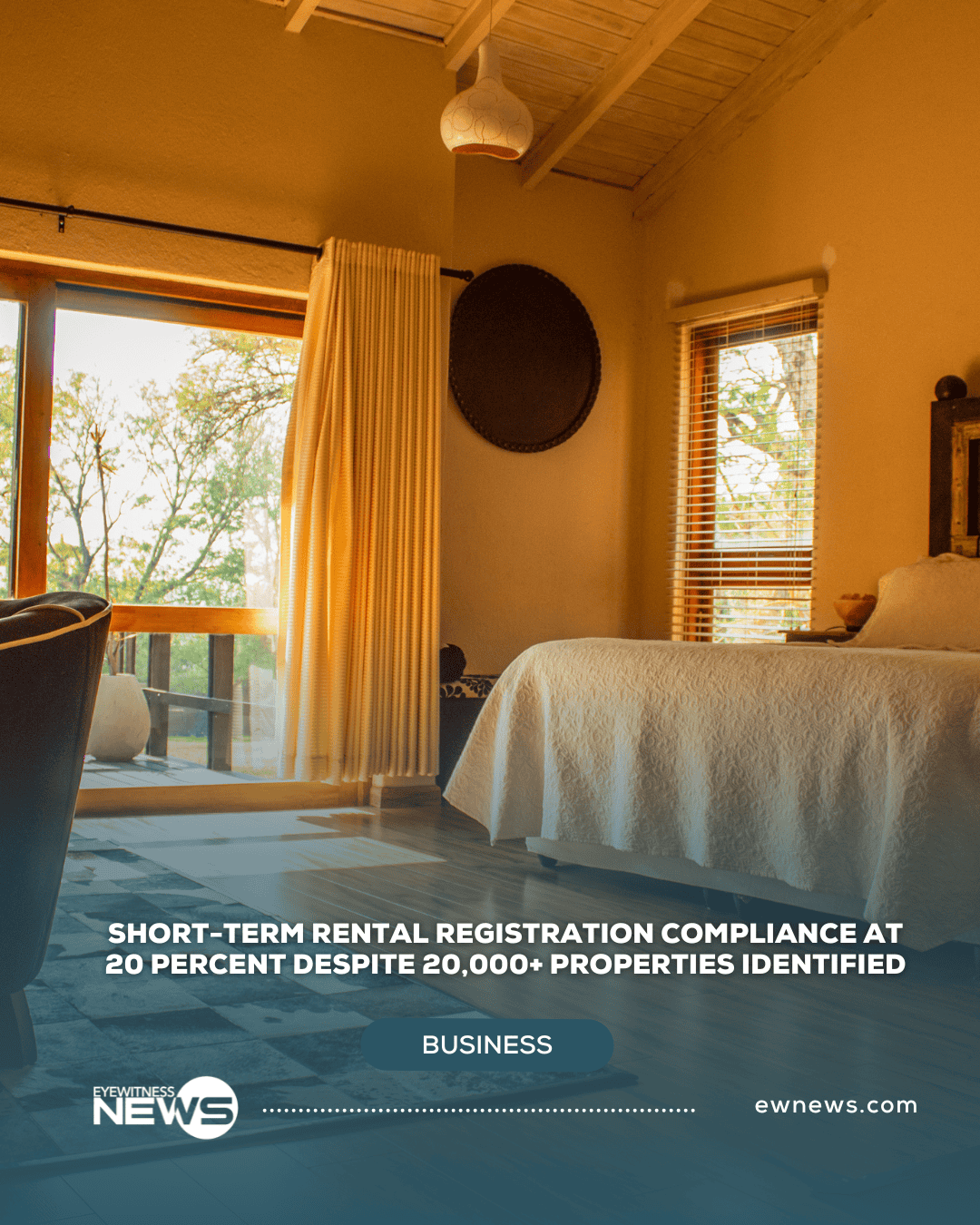
NASSAU, BAHAMAS – A senior Inland Revenue official has urged Bahamian and foreign property owners alike to ensure they are properly registered if they operate short-term vacation rentals, revealing that over 20,000 such properties have been flagged across the country, yet only 20 percent are currently registered in the government’s mandatory portal.
Shunda Strachan, Acting Comptroller at the Department of Inland Revenue, said there has been no new legislation related to Airbnb or short-term vacation rental properties, but confusion arose after the department issued notices to property owners. “There’s been no new amendments or no new legislation governing Airbnbs or the short-term vacation rentals,” she said. “It’s pretty much the same as it’s been for more than, I would say, two years now.”
She explained that the government’s Short-Term Vacation Rental Portal, launched in 2023, is not only used by the Inland Revenue but also by the Ministry of Tourism to track industry activity. “So by and large, we need to know that you are renting properties,” Strachan said. “Again, this first registration does not mean that we’re taxing you.”
Strachan emphasized that registration in the portal is compulsory for everyone in the business, regardless of nationality or location. “All short-term vacation rental owners, whether you’re Bahamian, whether you’re foreign, whether you have a property on the Family Islands or in New Providence, it doesn’t matter where, you should register your properties in the short-term vacation rental portal.”
She underscored that registering helps government planning. “It allows the government to gather information on who’s participating in the arena… so that if you’re gonna benefit from the government’s initiatives in the whole industry of short-term vacation rental, you need to register with us.”
Addressing the Family Islands specifically, Strachan clarified: “Bahamians do not pay real property tax on the Family Islands. There is a considerable amount of revenue that we’re not getting. For example, you have those Family Islands that we may not even have known that there was a property or an improved property being rented on the island and now we’re finding all of this out.”
She also highlighted concerns about short-term vacation rentals in the Family Islands, explaining, “The short-term vacation properties is really an issue for us. Properties being rented in the islands, but not rented or not being advertised or promoted by Bahamians, but by foreign realtors. “Those property owners are not paying that, they’re not, and they’re all foreign owned, so that’s a concern.”
Strachan made clear that foreign property owners must register and hold a business license regardless of income level. “If you are not a Bahamian and you own a property that you rent as an Airbnb, then you have to have a business license, you have to be registered for VAT even if your turnover is a dollar.”
She revealed that only 15 percent of those who should be paying VAT are currently registered. To enhance compliance, the government has partnered with a U.S.-based firm, Avenue Insights, to help identify short-term rental operators using data scraping from platforms such as Airbnb and VRBO. “They help us by what we call scraping all of these sites… that’s how we are able to determine there are more than 20,000 properties out there,” she said.
Strachan urged the public not to panic if they received a notice in error. “If you’re a Bahamian and you got a notice and you don’t have a short-term vacation rental property, that’s fine,” she said, adding that the system might flag properties in close proximity to active rentals or those using modern smart locks.
The broader goal, she said, is to grow the sector while offering support to Bahamians. “We’re hoping by doing that, we will really be able to expand the industry, help to incentivize the industry, of course, and to give benefits to those that want to participate.”
Strachan also reminded property owners that registration will become even more essential as the government looks to build out the “OneTax Bahamas” system. “We are all about bettering the tourism product,” she said. “And so if you register, it helps us to understand where the government needs to go to provide benefits or incentives for Bahamians that want to participate in that area.”