


NASSAU, BAHAMAS: The Privy Council has rejected Bahamian businessman and developer Captain Toby Smith’s claim that his company secured a binding 21-year lease over five acres of prime Crown land on Paradise Island, ruling that the proposed agreement remained subject to formal execution by the Minister responsible for Crown Lands.
In a judgment delivered on Thursday, the United Kingdom-based court dismissed an appeal by Smith’s company, Paradise Island Lighthouse and Beach Club Company Limited, upholding earlier decisions by the Supreme Court and the majority of the Court of Appeal.
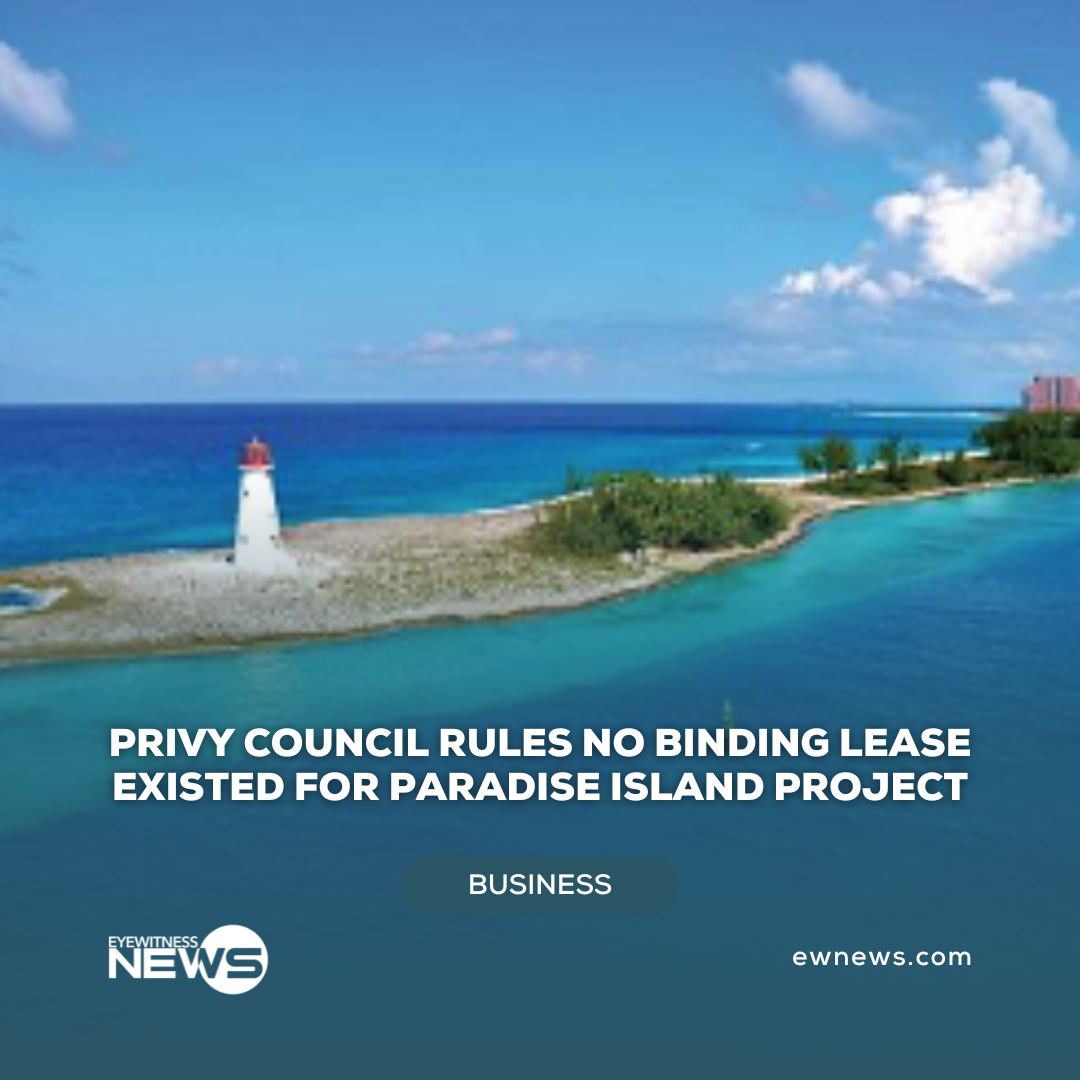
The land was intended for the development of recreational and entertainment facilities, including a beach club. Smith also proposed restoring and maintaining the historic lighthouse.
Smith first applied in April 2012 to lease 17 acres of Crown land at Paradise Island for the development and the restoration and upkeep of the lighthouse. Following years of engagement with government agencies, the Bahamas Investment Authority agreed in May 2018 to recommend approval of a 21-year lease covering five acres.
Smith incorporated Paradise Island Lighthouse and Beach Club Company Limited in June 2018 as the vehicle to receive the lease, if granted.
At the centre of the dispute was a January 7, 2020 letter from the Department of Lands and Surveys, which enclosed a lease for the company to sign. The company executed and returned the documents two days later, arguing that the correspondence confirmed an already concluded agreement for the lease.
However, the Privy Council found that the letter did not establish a binding agreement and that the parties objectively intended to become legally bound only after the Minister formally executed the lease.
The Board noted that the letter instructed the company to leave the date on the lease blank until the Minister signed it. It also stated that the documents would be returned to the company only “following Lessor execution.”
“If the agreement was already made then there was no need to delay the dating of the lease, nor would the documents need to be sent back to the appellant,” the judgment said.
The Board also found no evidence that all the detailed terms contained in the proposed lease had been agreed before the January 7 letter was issued. It said such an agreement would likely have been supported by detailed documentary exchanges, but no such evidence was presented to the court.
The Privy Council further noted that the documents sent to Smith’s company had not been signed by the Minister, the letter did not request payment of the initial rent and the company did not submit the rent when it returned the executed lease.
The proposed lease required an annual payment of $29,254.40. The company tendered a cheque for that amount on March 19, 2020, more than two months after returning the signed documents.
The Board found that the formalities surrounding the disposition of Crown land also supported the conclusion that the parties did not intend to be bound before the Minister’s execution.
Section 54 of the Conveyancing and Law of Property Act requires grants or dispositions of Crown land to be made under the Minister’s official seal.
The Privy Council said this requirement created “a further layer of formality” and supported the view that Crown land would not ordinarily be transferred without the deliberate and formal granting of a lease.
Smith’s February 12, 2020 letter requesting a “Comfort Letter” from the Prime Minister, who was then responsible for Crown lands, also weakened the company’s case.
According to the Board, the correspondence referred to the company’s Crown land “application” and stated that it had been “approved for the lease,” rather than asserting that a binding lease agreement already existed.
The Board said the request for comfort was also inconsistent with the company’s argument that the government was already legally obligated to grant the lease.
Smith’s company launched legal proceedings in May 2020, seeking a declaration that there was a concluded agreement for the lease or, alternatively, damages.
Chief Justice Ian Winder dismissed the claim in February 2023, finding that any agreement remained subject to the Minister’s execution. The Court of Appeal upheld that decision by a majority in March 2024, although then-Court of Appeal President Sir Michael Barnett dissented.
The Privy Council concluded that the Chief Justice applied the correct legal test and provided cogent reasons for finding that the proposed lease remained “subject to contract.”
“For all these reasons, the Board concludes that the courts below were entitled to hold that there was no agreement for a lease between the appellant and the Minister,” the judgment said.
The appeal was consequently dismissed.