


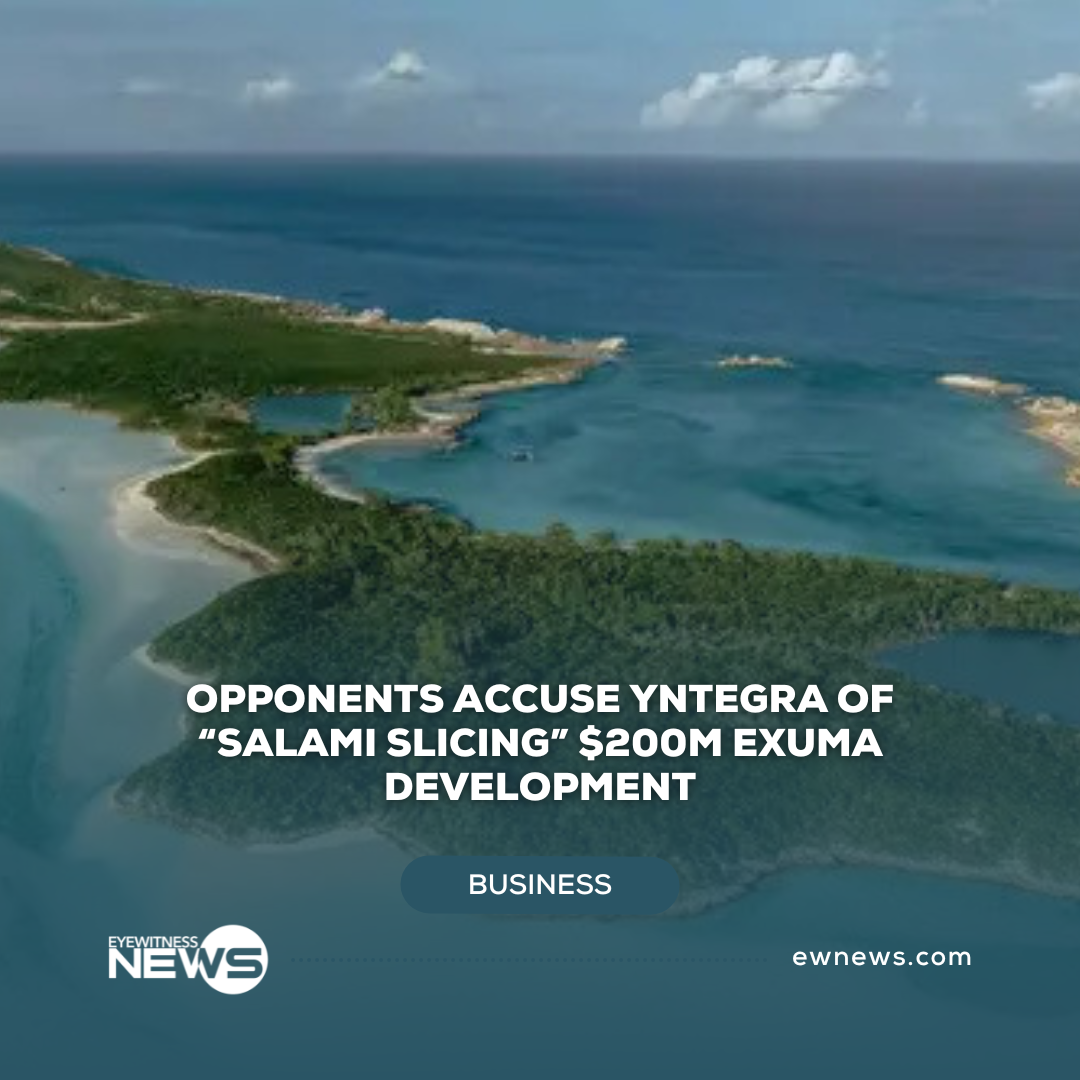
NASSAU, BAHAMAS — Opponents of Miami-based Yntegra’s proposed $200 million Rosewood Exuma development accused the company of “salami slicing” the project into smaller components to avoid a full assessment of its combined environmental impact.
Fred Smith KC, representing the neighbouring Turtlegrass Resort and Island Club, made the allegation during a Supreme Court judicial review hearing on Monday into environmental approvals for the Sampson Cay development.
Smith argued that the government’s Heads of Agreement and its amendment contemplate one project under a single master plan. He said the proposed resort and a planned 22-acre solar farm intended to power it are physically interdependent, and that incentives under the agreement are tied to completion of the development as a whole.
The solar farm was not part of the project when earlier applications for environmental clearance were granted. Smith argued that the plans as they now stand should be assessed together, allowing neighbouring properties and the public to consider their combined impact.
Turtlegrass is challenging Certificates of Environmental Clearance, or CECs, issued for parts of the development. It is also contesting extensions of a certificate after its expiry.
Smith alleged that the approval process failed to provide meaningful public consultation. He argued that some clearances were granted after consultation based on incomplete information, while others were issued without stakeholders knowing the relevant works had been proposed or approved.
In material released by Turtlegrass, the resort alleges that an early clearance covered land clearing, roads and dredging for a dock before neighbours were made aware of the full scope of those works. It also claims that changes to the proposed seawall and works on another part of Sampson Cay were not adequately put to the public.
Smith told the court that stakeholders were not given ready access to environmental assessments and management plans needed to evaluate the project. Turtlegrass says some documents became available only after consultation had closed or clearances had been granted. Smith argued that providing information later could not remedy shortcomings in the original consultation process.
He also alleged deficiencies in the environmental assessments and management plans themselves and argued that the Director of Environmental Planning and Protection failed to give reasons for granting the clearances.
A separate part of the challenge concerns repeated extensions of an expired CEC. Smith argued that once the certificate expired, the director should have required a fresh application and approval process, including appropriate consultation.
Turtlegrass has also alleged that clearing carried out on the property exceeded what the approvals permitted and raised concerns about the treatment of protected trees. Those claims form part of its broader argument that the regulatory process did not adequately account for the development’s environmental effects.
Smith distinguished the case from earlier litigation over development on Great Guana Cay. He argued that environmental protection legislation and public participation requirements now in place govern the Sampson Cay approvals.