


NASSAU, BAHAMAS – The media storm surrounding the opposition’s demands for a local police probe into the U.S. federal case involving a suspected Bahamian drug trafficker ignores the reality of parallel jurisdiction. Under the doctrine of sub judice, parallel domestic investigations risk compromising
an active, high-stakes judicial process. Because the primary suspect, physical evidence, and testimonies are bound to the U.S. District Court for the Southern District of New York, a local police inquiry is dead on arrival. Local law enforcement cannot cross-examine a suspect in U.S.
custody or compel evidence without finalized Mutual Legal Assistance Treaty (MLAT) disclosures. Demanding an immediate domestic probe is a rhetorical exercise that misunderstands cross-border criminal prosecution.
From Protesting to Probing
With a restricted parliamentary minority, the official opposition cannot pass binding legislation or force a Commission of Inquiry. Rather than burning political capital on performative demands, the opposition must pivot to institutional advocacy.
They should formally advocate for an extraordinary bipartisan parliamentary committee empowered to interface with the U.S. Department of Justice via diplomatic channels. While they cannot legislate, they can structurally agitate for the formal invocation of bilateral disclosure agreements to uncover the underacted identity of “Politician-1.”
This shifts strategy toward creating a structured mechanism for international information-sharing, forcing the administration’s hand.
The Gaming Act and Statutory Confidentiality
This pattern of institutional gatekeeping extends into national regulation. Senator Arinthia Komolafe’s critique of the Gaming Board exposes a dangerous pivot toward linguistic evasion. In defending controversial public appointments, the Board has leaned on general constitutional
qualifications for Cabinet, obfuscating the true statutory intent of the Gaming Act.
Sections 25 and 26 of the Act are stringent firewalls designed to prevent conflicts of interest and shield the jurisdiction from money laundering risks by scrutinizing beneficial ownership. Utilizing statutory confidentiality to hide whether appointees or their families hold financial stakes in
gaming houses does not protect the state—it actively gate keeps accountability and undermines regulatory integrity.
Administrative Absolutism and the Commonage Contradiction
A parallel crisis of transparency is unfolding on the floor of Parliament, spearheaded by Killarney MP Michela Barnett-Ellis regarding proposed amendments to environmental legislation. The environment, marine life, and natural resources of this archipelago are the
collective heritage of the Bahamian people. They belong to the commons, not to the state’s private custody. Amending legislation to grant a Director the absolute, arbitrary power to hand-pick whom they consult upends democratic oversight, turning a mandatory statutory
requirement into an optional, hand-picked echo chamber.
This governance standard is entirely contradictory.
Recently, the Minister of Family Island Affairs, Clay Sweeting—a former Chairman of the Spanish Wells Commonage Committee—reaffirmed the vital relevance of commonage land to the Bahamian identity as a sacred collective right. Yet, we see deep institutional hypocrisy.
The administration cannot defend localized commonage while simultaneously legislating the public out of the ultimate common. The air we breathe and the ecosystems we fish are the grandest commonage the Bahamian people possess. To champion collective rights on one hand
while granting a Director arbitrary power to gate keep environmental consultation on the other is a political double standard that cannot stand.
Conclusion
Whether through the redaction of international indictments, the masking of gaming stakes, or the containment of environmental consultation, the underlying theme remains unchanged. We are witnessing a steady consolidation of unchecked, centralized authority designed to exclude
the Bahamian public from the decisions that shape their destiny. True accountability requires dismantling these administrative gates, not hiding behind them.
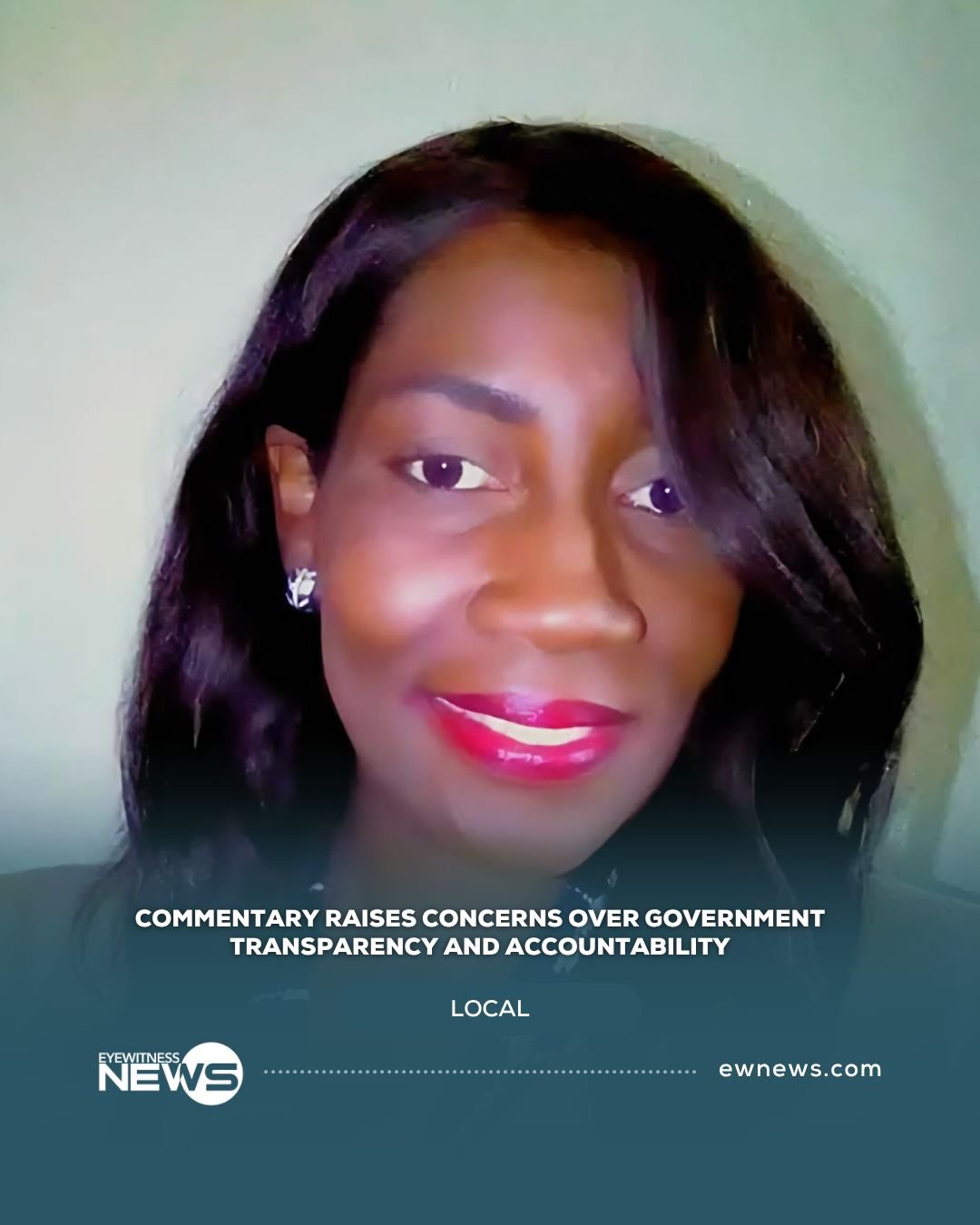
-Rochelle R. Dean is a syndicated columnist.