


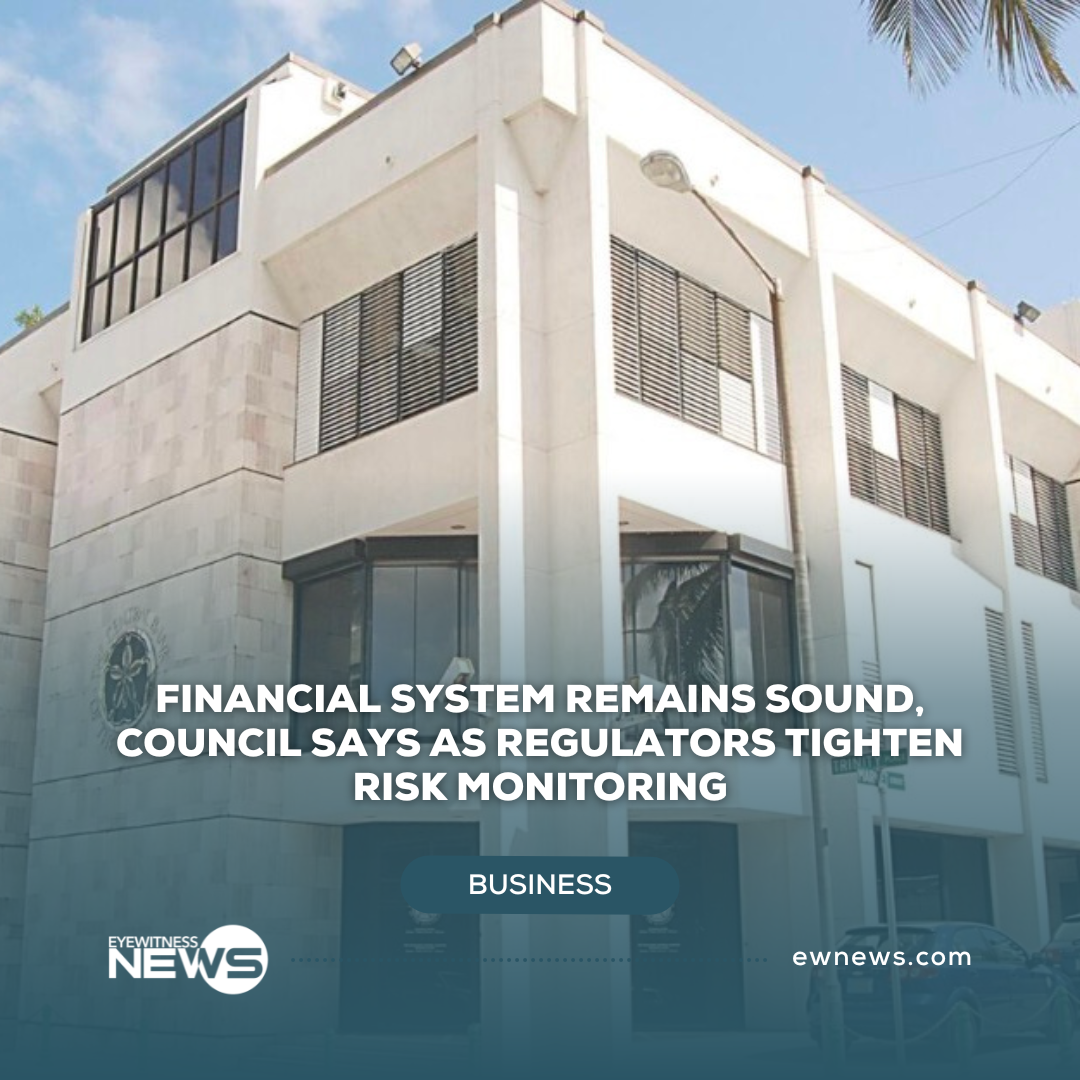
NASSAU, BAHAMAS- The Bahamas Financial Stability Council says the country’s financial system remains broadly stable, with risks largely contained and driven mainly by external factors such as global geopolitical tensions, inflation pressures, interest rate uncertainty, and growing cybersecurity and fraud threats.
The Council held its second meeting for 2026 on 17 June, where members reviewed recent financial stability indicators to assess whether the risk outlook had changed significantly since 2025. Preliminary findings suggest the financial sector continues to operate on a sound footing, with no major deterioration identified in key indicators.
However, officials noted that while domestic conditions remain steady, external shocks continue to shape the medium-term risk environment, particularly through potential impacts on inflation, borrowing costs, and digital financial security.
A key focus of the meeting was progress from the Council’s Data Working Group, which provided an update on ongoing efforts to strengthen data collection across financial regulators. The group also highlighted work to harmonise reporting standards and align domestic datasets with common financial stability indicators and regulatory templates.
The Council also continued discussions aimed at improving surveillance of sectors and activities that could pose systemic risks. Members examined the growing interconnections between non-bank financial activity and the wider financial system, building on previous discussions around the gaming industry.
As part of that work, the Council agreed to maintain engagement with the Gaming Board for The Bahamas to better understand how financial flows within the gaming sector interact with the banking system and broader economy.
Members also agreed to deepen analysis of real estate activity, with a focus on how developments in the sector may affect investment patterns, credit growth, and labour market conditions. In addition, the Council highlighted the need to strengthen assessment of concentration risks in credit and funding exposures among domestic financial institutions.
Another major outcome of the meeting was a commitment to enhance the region’s capacity to model climate-related financial risks. Officials said they intend to move beyond qualitative assessments and build more structured analytical tools to integrate climate considerations into financial stability monitoring.
The Council also reaffirmed its commitment to strengthening oversight of non-bank financial institutions through improved data collection and closer supervisory engagement, given their growing importance to the overall financial system.
The next meeting of the Financial Stability Council is scheduled for September 2026.