


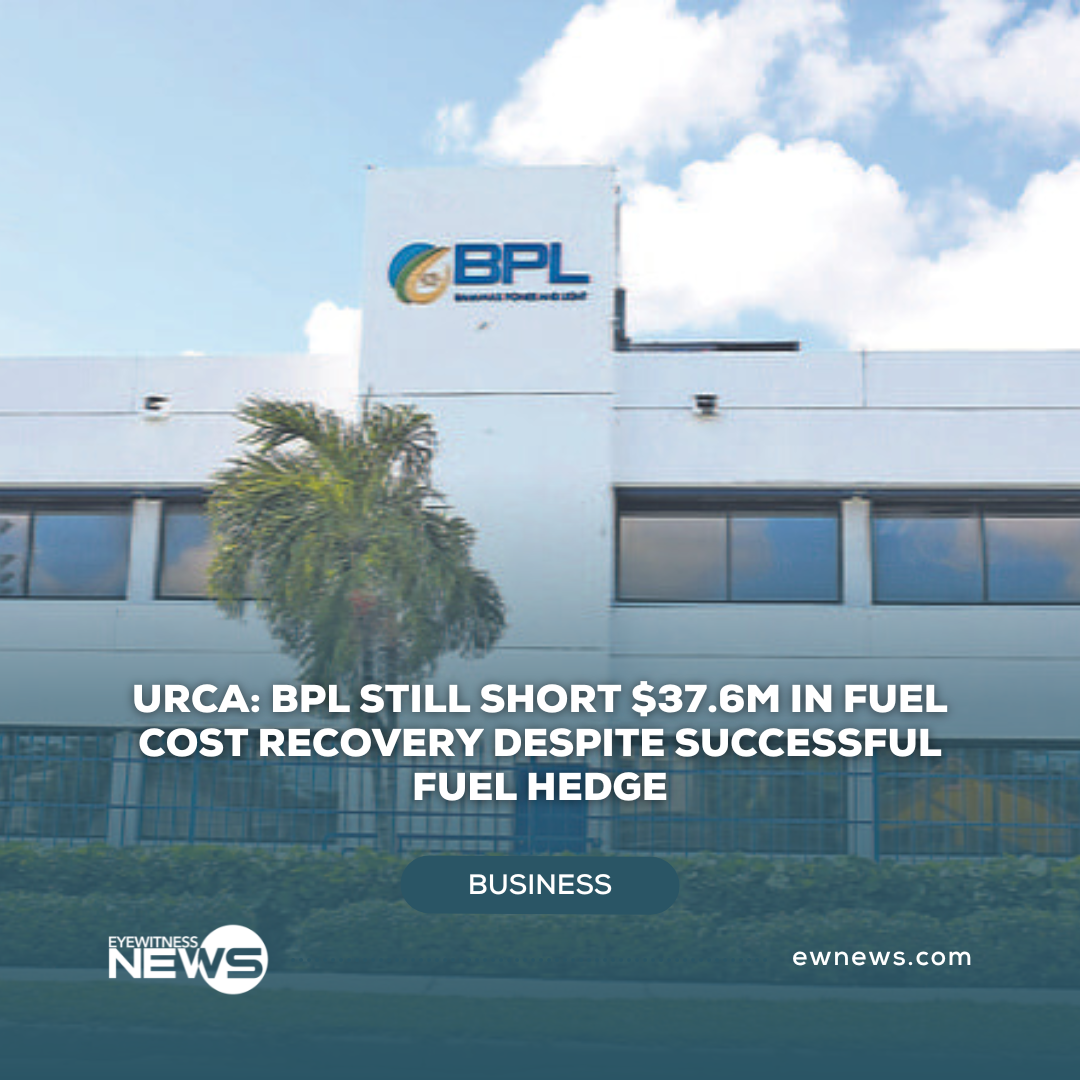
NASSAU, BAHAMAS — Bahamas Power and Light (BPL) failed to recover approximately $37.6 million in fuel costs during its 2022-2024 fuel glide path, despite implementing a series of fuel charge increases, according to a review by the Utilities Regulation and Competition Authority (URCA).
The regulator’s ex-post assessment found that “at no point during the study period did BPL’s billed fuel adjustment charges reflect the actual cost of fuel,” leaving the utility with a cumulative under-recovered fuel balance of about $37.6 million by March 2024.
At the same time, URCA concluded that BPL’s fuel hedging programme was a success, finding that “over the course of the study period, the hedge produced a net benefit to BPL customers.” The report said the hedge, initiated in 2020, shielded consumers from the dramatic spike in global fuel prices during 2022, while acknowledging there were legitimate commercial reasons why BPL did not increase its hedge position as fuel markets became increasingly volatile.
The findings are contained in Statement ES 21/2026, which reviews BPL’s temporary fuel glide path introduced in October 2022 to gradually recover escalating fuel costs following the global energy crisis.
Although the review found BPL’s fuel procurement accounts accurately reflected eligible fuel expenses and that operational decisions generally balanced efficiency with system reliability, URCA concluded that the glide path failed to consistently align customer fuel charges with actual fuel costs. The regulator also found the tariff structure shifted a greater share of fuel cost recovery onto commercial customers, effectively subsidizing residential users through the 800-kilowatt-hour tier implemented during the glide path.
URCA said the findings will inform BPL’s first full tariff review under the Electricity Act, 2024, ahead of new electricity tariffs expected to take effect in 2027. Before then, the regulator plans to establish new fuel charge regulations aimed at improving transparency, reducing the build-up of unrecovered fuel costs, smoothing bill impacts for customers, and creating incentives for more efficient fuel procurement and use.