


NASSAU, BAHAMAS – A sovereign wealth fund is essentially a government-owned investment vehicle established to manage and invest public resources for a country’s long-term benefit. Rather than spending all
available resources immediately, a government can place money in a fund and invest it in assets or projects expected to generate economic or financial value. Because these resources belong
to the state, the Fund ultimately belongs to the people. Sound investment principles, transparency, accountability and public trust must, therefore, guide its management. This is why the questions surrounding The Bahamas’ National Investment Fund (NIF) cannot simply be dismissed as political noise.
In December 2025, the NIF reportedly had $265.3 million. By March 2026, that balance had fallen to approximately $200,000. In just a few months, approximately $265 million was no longer reflected in the Fund’s reported balance. The question is simple: where are the receipts to show where the money went? This is precisely why the Free National Movement held a press conference on August 17, 2026, with Opposition Leader Hon. Michael Pintard publicly demanding answers from the Davis Administration.
The issue is not whether the Government can use the NIF. If the Fund was established to finance national development, then using it for legitimate investments is appropriate. The concern is whether Bahamians have received a clear accounting of how such a significant amount of public money was used. What specific projects (other than the airports) received these funds? Who authorized the withdrawals or transfers? What approvals were required? Were the requirements of the National Investment Fund Act followed? What documentation supports these transactions? Which private companies, consultants, or contractors were paid from these resources?
These questions matter because strong financial controls are one of the best safeguards against corruption and the misuse of public funds. When large sums of taxpayers’ money can be transferred or withdrawn without clear documentation, approval processes, and public reporting, it creates opportunities for individuals to put their hands in the “cookie jar.” Accountability is not about assuming that money was stolen. It is about creating a system where public money cannot be misappropriated, diverted, or misused without detection. Bahamians deserve to know where their money went, who authorized its use and what safeguards were in place to protect it.
At the time of writing, we are still awaiting a substantive government response on this matter. The position has been that the Opposition should await the publication of the Fund’s report, which will provide the appropriate accounting and details concerning the use of its resources. However, Section 27 of the National Investment Fund Act speaks specifically to quarterly and annual reporting. Those reports have not been consistently made publicly available to the Bahamian people. It is, therefore, difficult to tell the public to wait for a future report when the reporting framework contemplated by the legislation has not been consistently visible.
Bahamians should not have to rely on general explanations to understand what happened to hundreds of millions of dollars.
Transparency Must Be More Than a Promise
The Bahamas is not being asked to invent a new standard. Other countries already demonstrate what meaningful public reporting can look like. Norway’s Government Pension Fund Global publishes detailed information on its investments and performance. In our region, Trinidad and Tobago’s Heritage and Stabilization Fund publishes quarterly investment reports, annual reports, and audited financial statements.
The lesson is not that these countries have perfect systems. They do not. The lesson is that controversy is easier to resolve when the underlying financial information is publicly available. The Bahamas does not need to copy another country’s model. But we should expect our own National Investment Fund to operate on the same basic principle: public wealth should be accompanied by public reporting.
Accountability Cannot Be Political
For several years during the COVID-19 pandemic, Bahamians heard the question, “Where did the money go from the National Food Distribution Program?” The PLP was right to argue then that citizens deserved to know how their money was being used. That principle cannot change simply because the political party asking the questions is now in Government. The NIF does not belong to the Cabinet or to any political party. It belongs to the people of The Bahamas. Government is the custodian of those resources and has a responsibility to account for them.
As a young Bahamian, I believe this conversation matters beyond party politics. My generation will inherit the infrastructure, debt and investments created by the decisions being made today. We, therefore, have a legitimate interest in knowing whether our national resources are being managed wisely, transparently and in the best interest of the Bahamian people.
Again, I ask: where is the proof of the $265 million? What was the approval process? What specific investments or expenditures account for the reduction in the Fund’s balance? And, most importantly, where is the public record that allows Bahamians to verify these transactions? The answer should not require a political debate. It should be found in the Government’s accounts and reports. The Bahamian people deserve that information.
Transparency and accountability are not obstacles to progress. Transparency is the standard. Accountability is the responsibility. And when hundreds of millions of dollars of public money are involved, the Bahamian people deserve nothing less.
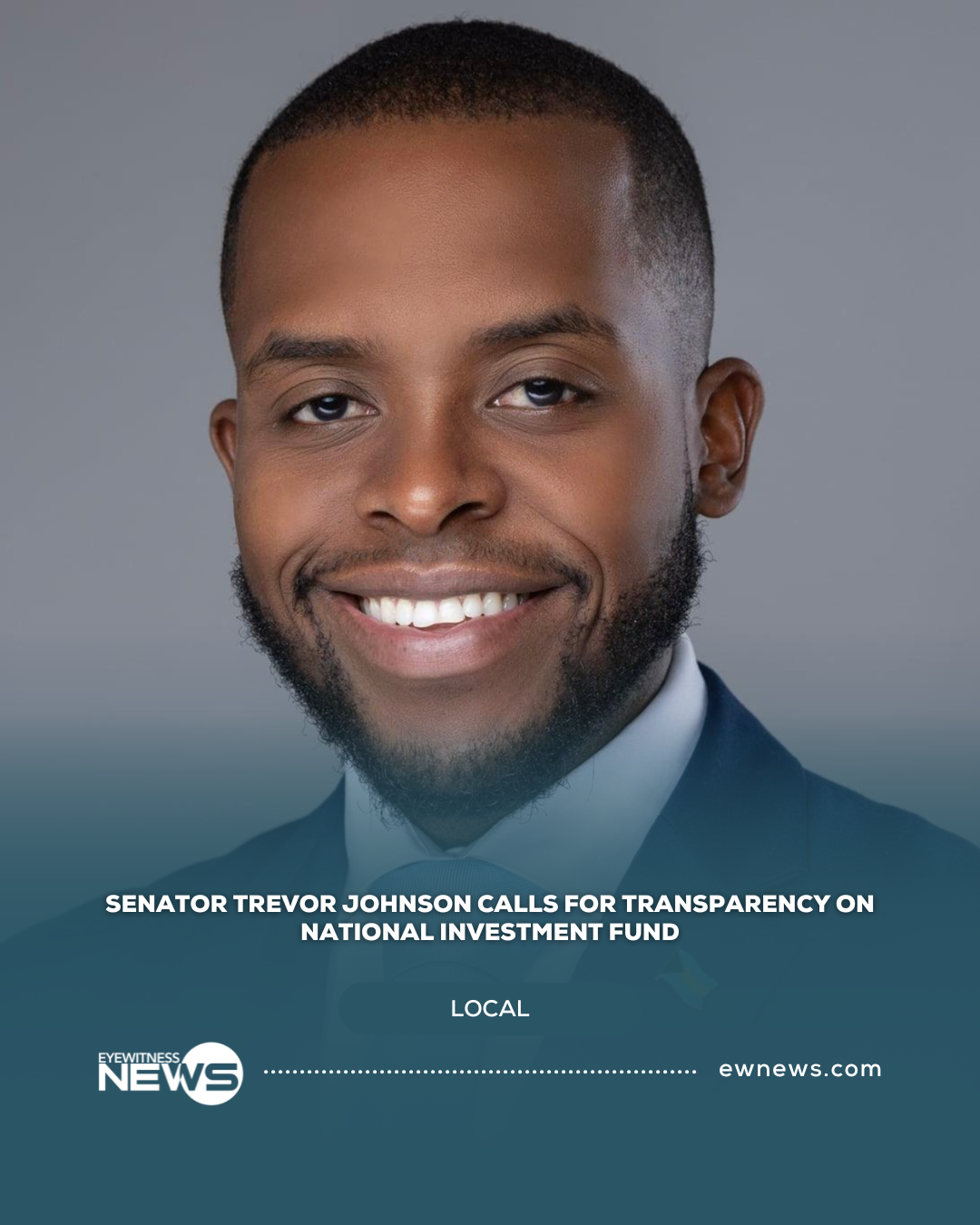
– Senator The Hon. Dr. Trevor Johnson, Opposition Senator