


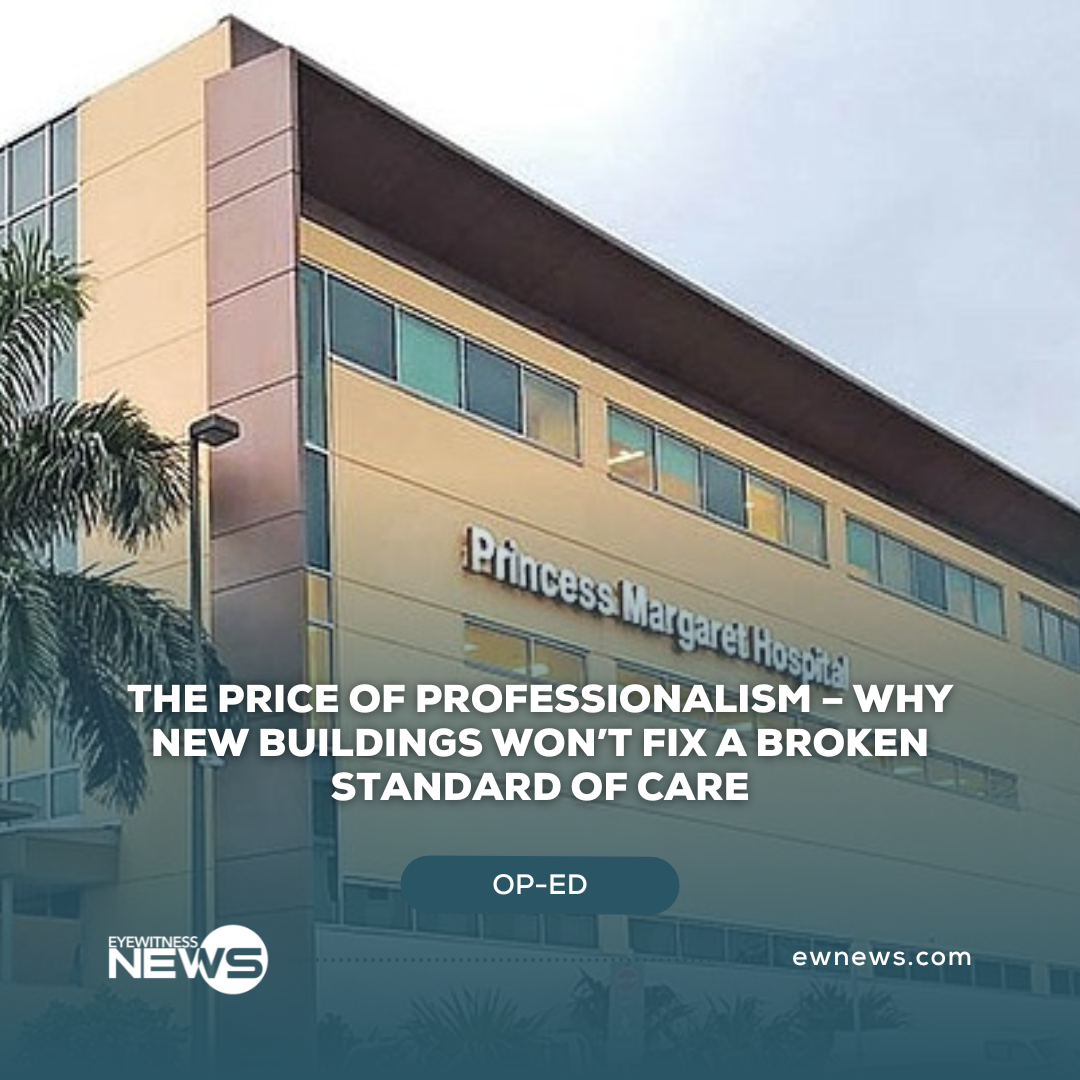
NASSAU, BAHAMAS – The heartbreaking details surrounding the death of Joshua Bullard, whose family has spent nearly a decade seeking a “day in court” that never seems to arrive, have once again turned the public’s eye toward the Princess Margaret Hospital (PMH). But as we navigate the claims of blood transfusion errors and neurological complications, we must be careful not to mistake the symptom for the disease. The real story isn’t just a single medical file; it is the documented, 40-year decay of the very foundation of our public healthcare system.
In early 2026, the leaders of our nursing and physician unions delivered a sobering verdict: PMH is in its worst state in four decades. This is not mere rhetoric used for industrial leverage; it is a systemic reality. We are operating within an infrastructure that was deemed overcapacity as far back as 1999. Today, that strain has evolved into a full-scale crisis of competency and care. When the Public Hospitals Authority (PHA) is forced to suspend outpatient clinics and cancel elective surgeries—as it did just weeks ago—it is an admission that the system can no longer guarantee a basic standard of care to the Bahamian people.
As a nation, we seem addicted to the “ribbon-cutting” cure. We point to a $268 million specialty hospital or a newly expanded Emergency Department as proof of progress. But a building is only as safe as the professionals who walk its halls. The Bullard case, and many others like it, highlights a “human resource erosion” that no amount of concrete can patch. We are currently facing an unsustainable overtime burden and a chronic shortage of specialized Bahamian practitioners. A failure to prioritize the ongoing expertise of our clinicians creates a dangerous void; in this environment, “never events” are no longer anomalies but the statistical byproduct of a system in decline.
Furthermore, the gap between policy and practice has never been wider. While policy discussions center on the “National Health Strategy 2026–2030” and data-driven accountability, the procedural reality tells a different story. We see legal matters, regardless of their eventual merit, remaining unresolved for nearly a decade within the Attorney General’s Office. Similarly, the issuance of emergency travel documents for specialized care remains a hollow gesture when the financial mechanisms to support such transfers for the indigent are functionally non-existent.
If we want the “best” healthcare, we must stop treating professional competency as a luxury and start treating it as a baseline. We need a radical restructuring of how we certify, retain, and protect our healthcare workers. We must ensure that the individuals tasked with our lives are not just “present,” but are the most medically qualified and supported professionals in the region.
Until we address the structural rot—both in our buildings and in our professional standards—we are simply moving an old crisis into a new facility. Justice for the Bahamian patient will not be found in a settlement check or a groundbreaking ceremony; it will be found when we finally decide that a Bahamian life is worth more than the cost of the system’s failure to fix what it broke.
By Rochelle R. Dean