


NASSAU, BAHAMAS — Minister for Grand Bahama Ginger Moxey moved a resolution in Parliament to approve a $1.86 million government guarantee agreement with the African Export-Import Bank, describing the proposed Afro-Caribbean Marketplace and Logistics Center as a “game changer” for trade, tourism, and economic diversification on Grand Bahama.
Moxey, the Pineridge MP said the resolution would allow The Bahamas to enter a guarantee agreement supporting project preparation for an integrated marketplace and logistics hub designed to boost trade and connectivity between Africa and the Caribbean, while positioning Grand Bahama as a regional center for commerce and culture.
“The overarching theme of this project is to boost trade, investment and connectivity between Africa and the Caribbean,” Moxey told Parliament, adding that the initiative could unlock “game-changing opportunities” for the island.
She stressed that the government is not underwriting construction costs but rather the preparatory phase needed to make the development commercially viable and attractive to private investors as a public-private partnership. The project, she said, aligns with the administration’s strategy to harness Grand Bahama’s maritime and logistics strengths as its leading industry.
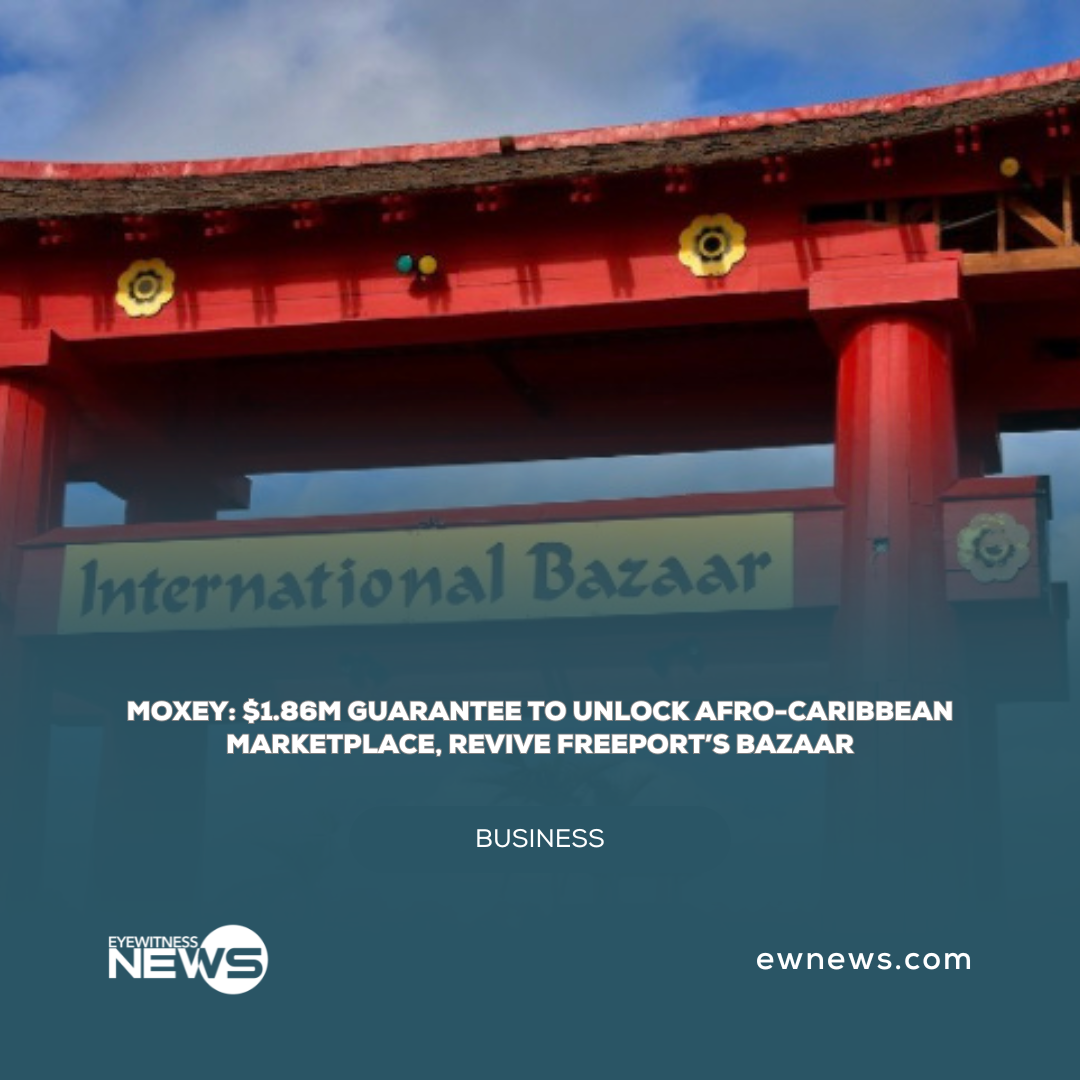
Central to the plan is redevelopment of the long-dormant International Bazaar and Royal Oasis properties into a mixed-use complex featuring exhibition pavilions for African and Caribbean nations, retail and cultural spaces, conference facilities, and a smart logistics hub with warehousing and trans-shipment capabilities.
“With trade as a hot-button issue in the world… this is indeed a game changer,” Moxey said, pointing to Grand Bahama’s proximity to the United States, its major trans-shipment terminal, and new cruise investments expected to bring millions of visitors to the island.
She said the marketplace would also create opportunities for small and medium-sized enterprises, foster cultural exchange, and strengthen ties between Africa and Caribbean nations, while enhancing The Bahamas’ role in global maritime networks.
Moxey argued that the relatively modest $1.86 million facility is critical to “getting it right,” funding feasibility studies, architectural designs, and engineering work needed to ensure long-term success and bankability.
Addressing criticism, she said the resolution is a required precondition of the loan agreement with the bank and reflects a strategic commitment to a sustainable, private-sector-driven project.
The minister also framed the development as a solution to long-standing urban blight in Freeport, noting that the government has moved to acquire the fragmented International Bazaar properties through the Acquisition of Land Act to accelerate redevelopment and compensate owners.
“For nearly two decades, the former International Bazaar site has stood as a daily reminder of what Grand Bahama used to be,” Moxey said, calling its transformation long overdue.
Deputy Prime Minister and Minister of Tourism, Investments and Aviation Chester Cooper who seconded the resolution told Parliament that the proposed $1.86 million borrowing from the African Export-Import Bank represents a critical first step toward a transformative Afro-Caribbean Marketplace and logistics hub on Grand Bahama, positioning the island at the center of expanding trade between Africa and the Caribbean.
Cooper said the funding is intended to accelerate development of the integrated marketplace project, stressing that the bank has signaled its commitment “to continue to support this project to the very end,” with the initial sum serving as preliminary financing to solidify the broader deal.
Citing global economic trends, he pointed to projections from the International Monetary Fund that Africa will be the fastest-growing continent in 2026, while the Caribbean is expected to be the fastest-growing region, arguing that linking Africa, the Caribbean, and Grand Bahama creates a powerful economic alignment.
“When we put Africa and the Caribbean and Grand Bahama together, this is simply a match made in heaven,” he said.
Cooper credited Minister for Grand Bahama Ginger Moxey with advancing the vision, calling it bold and revolutionary, while acknowledging the island’s prolonged economic challenges and the need for sustained, long-term recovery efforts rather than quick fixes.
He emphasized that construction will not begin immediately, framing the initiative as part of a strategic plan to rebuild confidence, stimulate investment, and create conditions for sustainable growth after years of economic decline.
The deputy prime minister outlined plans for approximately 90 outlets featuring African, Caribbean, and Bahamian products from more than 55 African countries, 20 Caribbean states, and 16 Bahamian islands, to be located at the former International Bazaar site in Freeport as part of a broader urban revitalization effort.
He said the development could also serve as the foundation for a trans-shipment and logistics component positioning The Bahamas as a Caribbean hub for African trade with the Americas, while enhancing Grand Bahama’s tourism offering with culturally rich experiences designed to increase visitor spending and length of stay.
Opposition Leader Michael Pintard signaled conditional support for redeveloping Freeport’s long-derelict International Bazaar site but sharply criticized the government’s plan to guarantee $1.8 million in borrowing for the proposed Afro-Caribbean Marketplace and logistics project.
“We support the transformation of that site. We want that eyesore to be removed and transformed into a productive asset for the Bahamian people — Grand Bahama in particular,” he said.
However, Pintard questioned the need for the government to borrow or guarantee borrowing for preparatory work on the project, arguing that the amount could have been sourced internally given reported increases in public revenue.
“What makes this mind-boggling is… a government that talked about increased revenue of around $1 billion… is seeking to guarantee to borrow $1.8 million,” he said.
While affirming the opposition’s willingness to partner on initiatives that benefit the country, Pintard suggested the focus on a single redevelopment site risked overlooking broader economic challenges across Grand Bahama, including stalled commercial districts and declining business activity.
“We would love to partner with the government in doing productive things to revitalize all of Grand Bahama,” he said, adding that multiple areas across the island require urgent attention.
Pintard also expressed concern about what he described as overpromising on economic recovery, cautioning that residents remain frustrated by slow progress despite repeated assurances of growth.
Still, he emphasized that the opposition supports strengthening ties with Africa and expanding trade relationships, describing the continent as “teeming with opportunities” for long-term collaboration with The Bahamas and the wider Caribbean.