


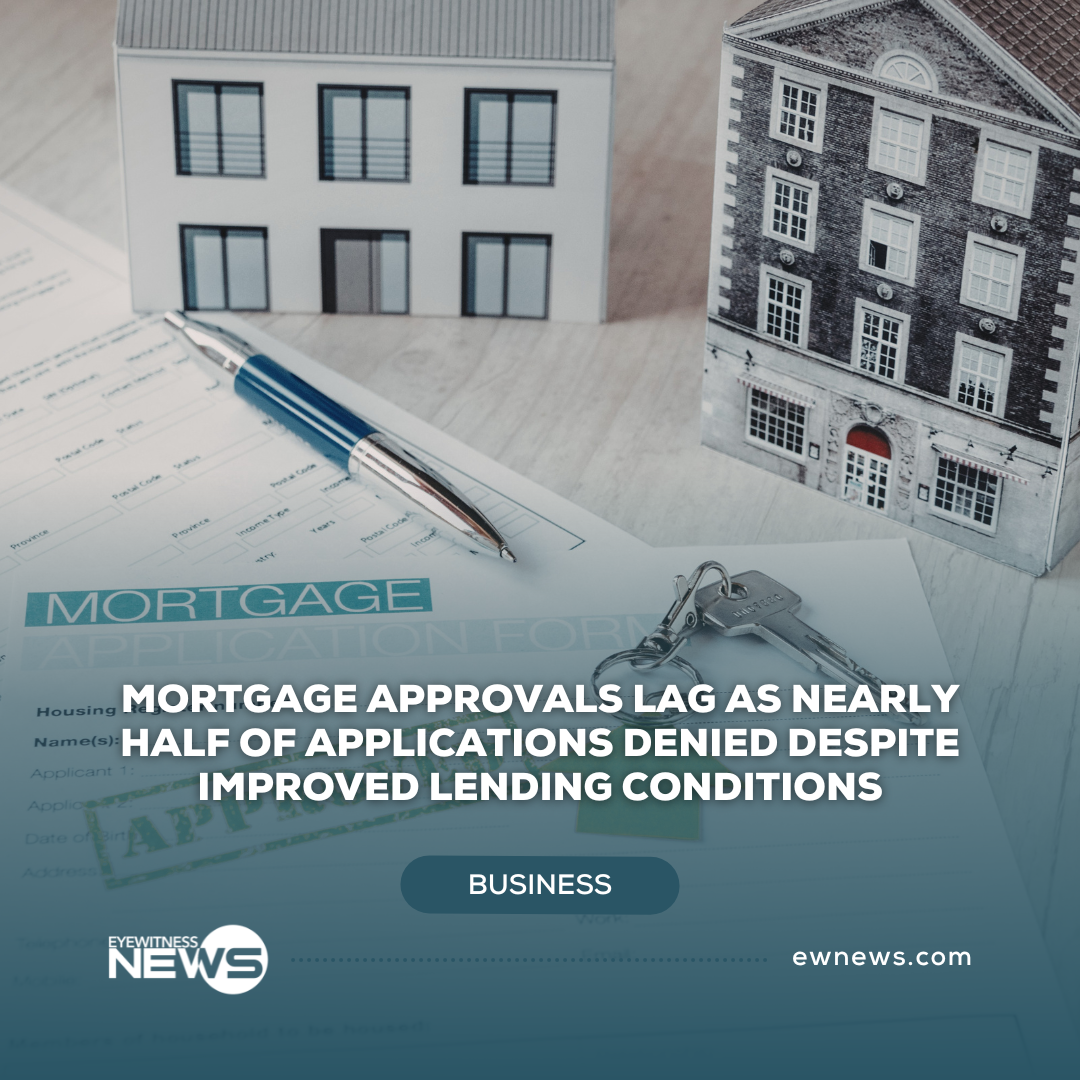
NASSAU, BAHAMAS- Mortgage lending remained the weakest segment of the credit market in the second half of 2025, with approval rates at just 50.6 percent and nearly half of all applications denied, even as overall lending conditions improved, according to the Central Bank of The Bahamas.
The Central Bank said in its Bank Lending Conditions Survey Report for December 2025 that the subdued mortgage outturn came amid a 24.6 percent decline in residential applications year-on-year, reflecting reduced demand for existing homes and renovation projects, despite a surge in new construction financing.
Overall, banks processed 20,376 loan applications during the period, a 1.1 percent increase over the previous year. Of those, 17,461 were approved, while 1,409 were denied.
Consumer borrowing remained the primary driver of credit demand, with applications rising 2.7 percent year-on-year to 19,450. The largest share of these requests fell under miscellaneous purposes at 32.0 percent, followed by credit cards at 22.3 percent, debt consolidation at 17.6 percent, private vehicles at 12.1 percent and travel at 9.8 percent.
Approvals for consumer loans rose at a faster pace than applications, increasing 9.1 percent, with the average approval rate improving to 86.7 percent. Only 13.3 percent of consumer applications were denied, with lenders most frequently citing miscellaneous risk factors, high debt service ratios, prior delinquencies and insufficient job tenure.
Banks processed 547 residential mortgage applications during the six-month period. New construction accounted for 44.6 percent of all requests, followed by existing dwellings at 37.7 percent and renovations at 17.7 percent.
Despite stronger interest in new construction, approval rates varied widely, with financing for existing homes approved at 90.3 percent, compared to just 34.8 percent for new builds and 6.2 percent for renovation projects.
Lenders attributed mortgage denials primarily to miscellaneous factors such as risk concerns or incomplete information, along with high debt service ratios, underemployment, difficulty verifying income and lack of down payments.
Commercial lending activity also declined, with banks reviewing 379 applications, a 21.7 percent decrease from the previous year. Despite the drop in demand, approval rates remained relatively high at 87.1 percent.
Denials in the commercial segment were most often linked to risk-related factors, inability to verify income, lack of down payments and high debt service ratios, with additional concerns including insufficient collateral and prior delinquencies.
Overall, while credit conditions improved—driven largely by consumer lending—the mortgage market continues to lag, reflecting tighter constraints and lower approval rates compared to other segments.