



NASSAU, BAHAMAS: The Bahamas Chamber of Commerce and Employers’ Confederation (BCCEC) says it welcomes the latest Labour Force Survey with “cautious optimism,” but warns that while the latest employment figures are encouraging, they “do not fully capture the realities employers continue to face” across the country. The Chamber said “equally as concerning” is the persistent mismatch between the qualifications many job seekers possess and the competencies employers require, describing the issue as one of the greatest constraints on economic growth despite rising employment and labour force participation.
The statement follows the release of the Bahamas National Statistical Institute’s (BNSI) Preliminary Labour Force Survey for the third and fourth quarters of 2025.
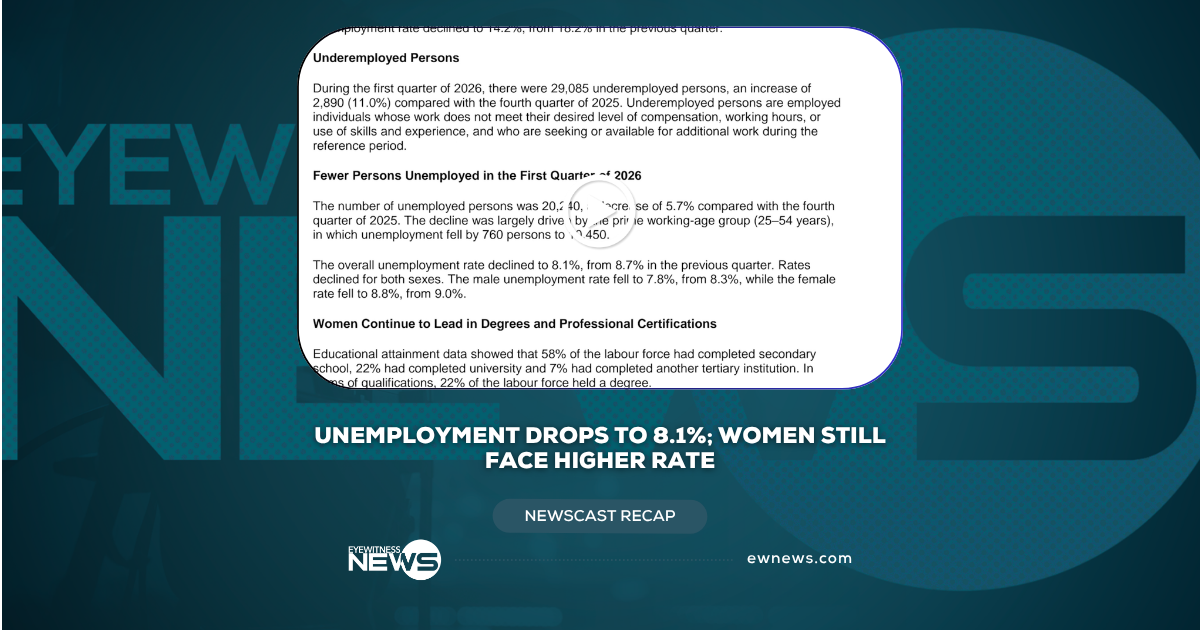
According to the survey, the national unemployment rate remained largely unchanged, moving from 8.8 percent in the third quarter to 8.7 percent in the fourth quarter. During the same period, employment increased by 3,450 persons, rising from 222,575 to 226,025, while the labour force expanded by 3,350 persons to 247,490.
Growth in the female labour force accounted for more than 70 percent of the overall increase, while employment among persons aged 25 to 54 represented the largest share of total employment growth. The survey also found that the number of discouraged workers declined by 475 persons, or 15.2 percent, compared with the third quarter.
In its response, the BCCEC said the findings signal continued improvement in employment and labour market participation, reflecting the resilience of the Bahamian economy and the confidence businesses have shown by continuing to invest, expand and create jobs.
The Chamber also commended both the public and private sectors for contributing to the positive results, noting that sustained growth in tourism, construction, financial services and other productive sectors has translated into greater employment opportunities for Bahamians.
However, the organization stressed that the headline numbers do not tell the full story.
“While these headline indicators are encouraging, they do not fully capture the realities employers continue to face across nearly every major industry and island or cay,” the Chamber said.
It added that the growing shortage of skilled labour remains one of the country’s greatest barriers to sustained economic growth.
“Businesses across hospitality, construction, healthcare, information technology, financial services, manufacturing, retail, and the professional services continue to report significant difficulty recruiting candidates with the technical competencies and practical experience required to fill available positions.”
The Chamber also highlighted ongoing concerns about employee retention, saying competition for experienced workers has intensified, driving up recruitment and training costs while creating operational challenges for businesses of every size.
According to the BCCEC, high employee turnover affects productivity and limits the ability of companies to expand, innovate and consistently deliver high levels of service.
The organization said another major concern is the disconnect between education and workforce needs.
“Equally as concerning is the persistent mismatch between the qualifications many job seekers possess and the competencies employers require,” the Chamber said.
It noted that while educational attainment has improved in many respects, employers continue to identify significant deficiencies in workplace readiness, including communication, critical thinking, problem-solving, professionalism, adaptability, punctuality, customer service and other essential soft skills.
The Chamber said the findings underscore the need for stronger alignment between the country’s education system, vocational training institutions and the evolving needs of the private sector.
It called for greater collaboration among government, educators, employers and industry leaders to ensure curricula, certification programmes, apprenticeships, internships and workforce development initiatives better reflect the realities of today’s economy.
The BCCEC said labour force development must remain a national priority, urging continued investment in technical and vocational education, digital literacy, management training, entrepreneurship and lifelong learning.
The Chamber concluded that while the latest labour market figures are encouraging, they should not be viewed as the finish line.
“The encouraging labour market results released by the BNSI should be viewed not as the conclusion of our work, but as an opportunity to build a stronger, more skilled, and more competitive Bahamian workforce capable of sustaining economic growth for years to come.”