


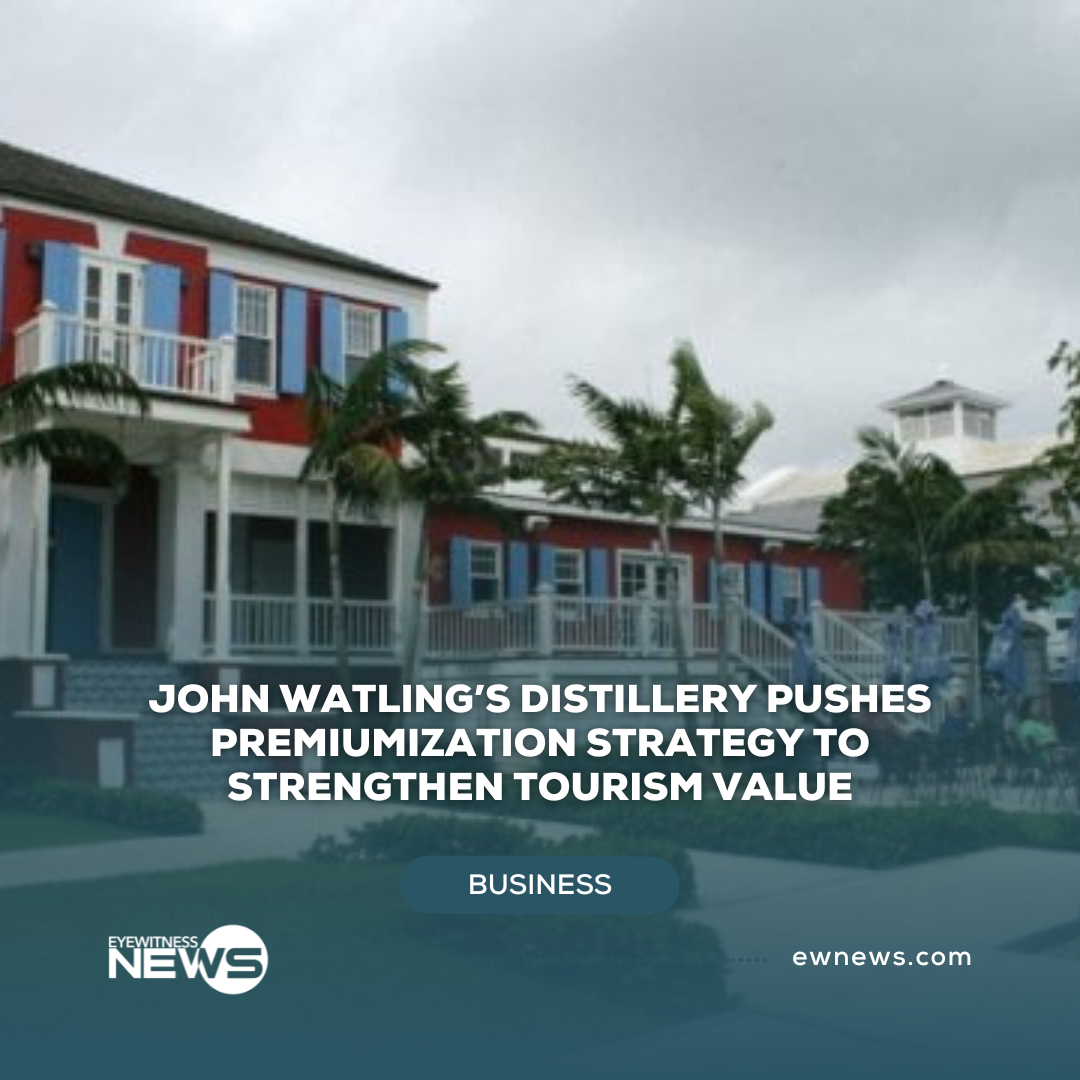
John Watling’s Distillery executives say “premiumization” is critical to strengthening The Bahamas’ position as a high-value tourism destination, with Managing Partner Pepin Argamasilla arguing that authentic experiences and quality local products encourage visitors to spend more and keep tourism dollars in the local economy.
This year, the company’s Paradise Rum secured three significant international honours, including a Gold Medal and 94-point rating from the Beverage Testing Institute (BTI) in Chicago, recognition by Forbes among the world’s best rums, and a Two-Star Superior Taste Award from the International Taste Institute in Brussels.
Argamasilla said the awards validate the company’s commitment to producing world-class Bahamian rum while highlighting the growing international appeal of locally-made products.
Speaking on broader economic opportunities, he pointed to downtown Nassau’s ongoing transformation as a key component of The Bahamas’ tourism future.
“This market here is a very, very expensive country, both for tourism and to live here,” Argamasilla said. “I was really happy with the new minister’s comments on revitalizing downtown. I think that this is a huge opportunity for the country, absolutely huge.”
With more than 12 million visitors arriving annually, he argued that downtown Nassau should become a premium destination where tourists can immerse themselves in Bahamian culture, shop locally and experience products made in The Bahamas.
“You see the 12-plus million tourists that come to The Bahamas. Downtown should be, and it’s come a long way in the last few years, a premium destination where tourists are able to walk around, go to shops, experience our rums, experience the different experiences within the downtown sector,” Argamasilla said.
“And again, what that does is it leaves more money at home. We really need to raise the spend per visitor in this country, and the only way we’re going to be able to achieve that is by premiumization.”
Argamasilla said businesses must focus on delivering the experiences visitors actually want rather than what operators believe they should want.
“It’s all about being consumer-focused,” he said. “That’s the big takeaway from what we’re trying to do here at John Watling’s, which is, again, what does the visitor want? What does the visitor need to make their vacation a great time and to hopefully come visit again and hopefully buy our products, whether it be John Watling’s or any other Bahamian products, within their respective markets?”
That philosophy has led the distillery to expand its experiential offerings beyond traditional tours. Visitors can participate in mixology classes where they learn to make three cocktails, while others can take part in guided rum tastings featuring all six expressions produced by the company.
The experiences are designed to create memorable interactions with the brand. One of the most popular attractions has been allowing visitors to harvest fresh mint from the distillery’s garden before making their own mojitos.
“You even get to go into the back garden where we planted mint,” Argamasilla said. “It was incredible to see during the wintertime. We had tourists come in and they’d go up to the bar, ask for a mojito, and we’d give them a little bag and say, ‘Okay, go pick your mint.'”
“The response was huge just because of that little interaction that they were able to do. They had a great experience.”
The distillery’s rum tasting programme also gives visitors access to areas normally closed to the public, including its aging warehouse.
“The rum tasting class, you’re able to sample all six expressions of John Watling’s, but as well you’re able to go inside the warehouse where we actually open a barrel of six-year-old rum and we give you a sample, and you’re able to taste the product,” Argamasilla said.
He argued that these types of immersive experiences help create emotional connections between consumers and Bahamian brands, increasing the likelihood that visitors will become long-term customers after returning home.
“There’s something called love marks,” he said. “You want to create love between your product and the consumer.”
“I’m sure after somebody comes down here during winter and they go back home where it’s gray, where it’s snowing, they’re going to be telling the story of, ‘You know what? I ended up picking mint and making my own mojito and it was the best mojito I ever had.’ Or, ‘I went into the warehouse, into the distillery, and I got to sample rum out of the barrel.'”
According to Argamasilla, those stories become powerful marketing tools that help differentiate The Bahamas from competing destinations while supporting efforts to move the country’s tourism product further upmarket.
“These are the different things that people need to be thinking of to be able to give something different to the consumer, to be able to again uplift and premiumize the product,” he said. “The water is here. You’re not going to beat the water. You’re not going to beat that from this country. But again, it’s all about giving new experiences and providing interaction between the consumer and the different brands to be able to uplift and premiumize the product.”