


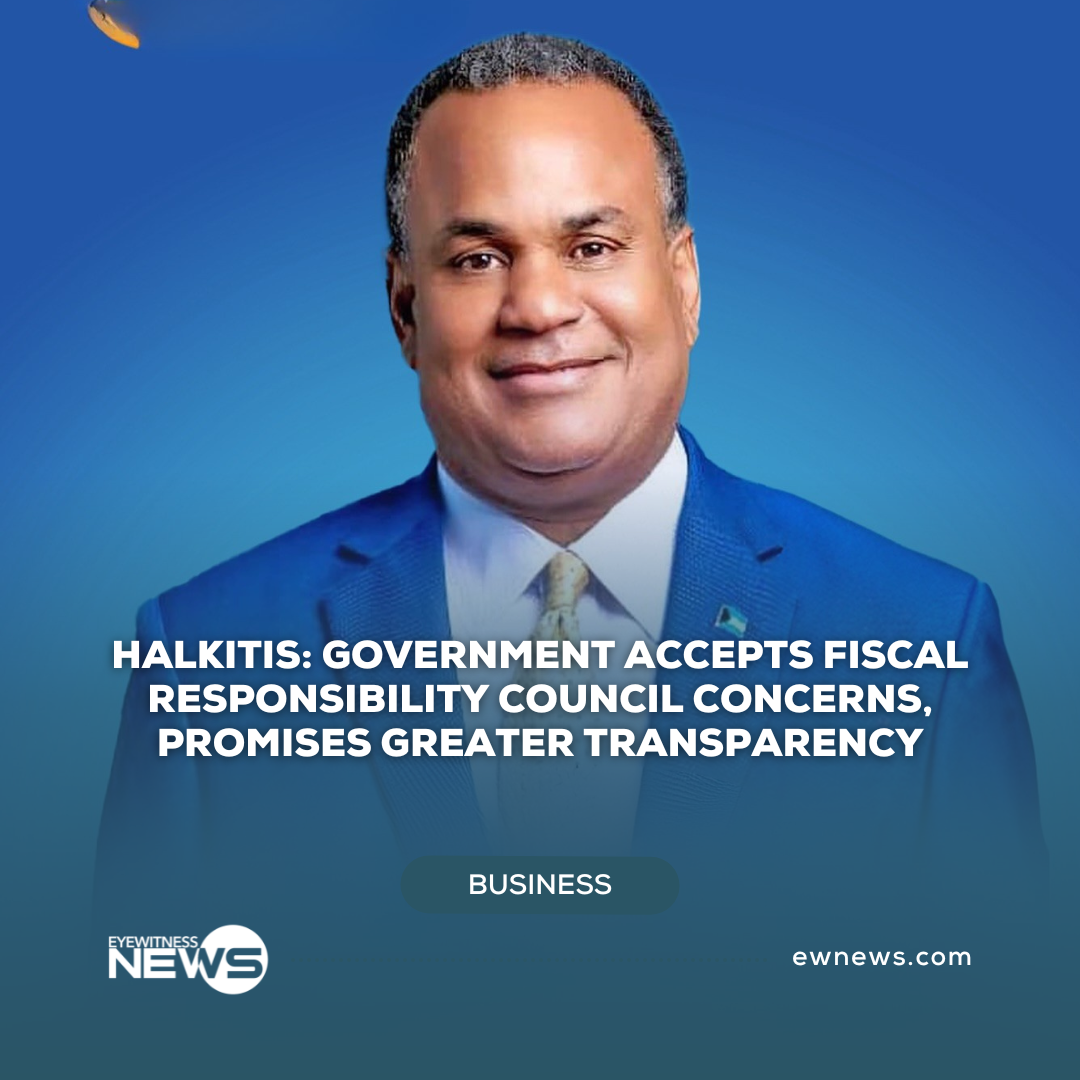
NASSAU, BAHAMAS: The government has acknowledged shortcomings in the presentation of its debt forecasts and other fiscal disclosures, with Economic Affairs Minister Michael Halkitis pledging greater reconciliation of competing projections as he pushed back against suggestions that concerns raised by the Fiscal Responsibility Council point to weaknesses in the country’s fiscal framework.
Addressing Parliament on Wednesday, Halkitis said the government accepts the independent council’s recommendations and intends to strengthen its reporting, while maintaining that differences between debt projections contained in various government documents largely reflect the use of different methodologies, assumptions and time horizons rather than conflicting fiscal policies.
His comments came as he addressed the Fiscal Responsibility Council’s reviews of the government’s Fiscal Strategy Report and 2026/2027 Budget, which have generated public discussion over fiscal reporting, debt projections and public-private partnership obligations.
Halkitis said the government views the council’s findings as constructive and stressed that the relationship between the Ministry of Finance and the independent fiscal watchdog should not be viewed as adversarial.
“The relationship between the Ministry of Finance and the Fiscal Responsibility Council is not adversarial. It is collaborative,” Halkitis told Parliament.
He said both institutions share the objective of improving transparency, accountability, fiscal sustainability and public confidence in the management of the country’s finances.
According to Halkitis, the Fiscal Responsibility Council found the “overwhelming majority” of the Fiscal Strategy Report’s statutory requirements to be compliant, while several areas showed improvement over the previous year.
Those areas included macroeconomic forecasting, data disclosures, debt reporting, long-term fiscal projections and reporting on major investment priorities.
Halkitis argued that the findings demonstrate that the fiscal framework established under the Public Finance Management Act is operating as intended, although he acknowledged that the reporting system continues to evolve.
“The reporting process is maturing,” he said, adding that standards are becoming more robust as both the Ministry of Finance and the Fiscal Responsibility Council gain experience implementing what remains a relatively new fiscal governance framework.
The minister acknowledged, however, that the council identified areas requiring improvement and said the government intends to act on several of those recommendations.
One of the key issues highlighted was differences between debt projections contained in various government documents.
Halkitis said the government agrees with the council that greater reconciliation between its different forecasting frameworks would improve transparency and make the information easier for the public to understand.
He explained that the Ministry of Finance has significantly expanded its forecasting capabilities in recent years, moving beyond a traditional focus on the annual budget and medium-term outlook.
According to Halkitis, the ministry is now producing projections extending more than six years into the future as part of a broader medium- and long-term fiscal planning framework.
He said different projections can emerge because the government and international institutions use models designed to answer different questions.
The International Monetary Fund’s debt sustainability analysis, he noted, uses an internationally recognised framework to assess sovereign risk and long-term debt sustainability under alternative scenarios.
The Ministry of Finance’s debt forecasting model, meanwhile, is designed to project the government’s fiscal position, financing requirements, refinancing activities, borrowing plans, debt-service obligations and debt portfolio composition over the medium term.
“Because these models are intended to answer different analytical questions, variations in projected outcomes can occur,” Halkitis said.
He stressed that the differences do not represent competing government policy positions or uncertainty over its stated debt-reduction objectives.
“Rather, they reflect differences in modelling assumptions, methodologies, time horizons and analytical purposes,” he said.
Still, Halkitis conceded that readers would benefit from a clearer explanation of why the numbers differ.
He said future fiscal reports will therefore seek to provide enhanced explanations and reconciliation between the various forecasting frameworks used throughout the Ministry of Finance’s reporting documents.
The ministry, he added, has invested in modern economic and debt-forecasting tools and specialised training for staff, with further efforts planned to incorporate international best practices in macroeconomic forecasting, debt sustainability analysis and fiscal reporting.
The Fiscal Responsibility Council also raised concerns surrounding public-private partnerships and the disclosure of obligations associated with those arrangements.
Halkitis said the government accepts the need for stronger disclosure and reporting of PPP-related obligations and considers the council’s recommendations consistent with its broader efforts to improve fiscal transparency and risk management.
He maintained that PPPs are not undertaken outside the government’s fiscal and legislative framework, saying they form part of broader fiscal planning and risk assessment and are subject to oversight under the Public Finance Management Act.
The government, however, agrees that the policy and institutional framework governing PPPs can be strengthened, he said.
Halkitis disclosed that the Ministry of Finance engaged MSCA Advisors Limited to develop a comprehensive PPP assessment framework intended to modernise the existing framework established in 2018.
The work is aimed at strengthening transparency, project identification and appraisal, risk allocation and approval procedures, while introducing internationally recognised value-for-money assessments, fiscal affordability analysis and stronger fiscal-risk evaluation.
Halkitis characterised the Fiscal Responsibility Council’s findings as part of the oversight process envisioned under the country’s fiscal responsibility legislation.
“The observations contained in the Fiscal Responsibility Council’s reports should not be viewed as evidence of a system that is failing. Rather, they are evidence of a system that is working,” he said.
He added that independent oversight bodies are expected to review government reports, identify weaknesses and recommend improvements.
“We welcome constructive criticism. We welcome recommendations that improve transparency, strengthen reporting and enhance public confidence in the management of the nation’s finances,” Halkitis said.
The minister said many of the issues identified by the council relate to the evolution of fiscal reporting standards, forecasting methodologies and disclosure practices rather than fundamental changes in fiscal policy.
He said the government has already begun strengthening its macroeconomic and debt-forecasting capabilities, investing in analytical tools, improving staff capacity and advancing reforms to the PPP framework.
Halkitis maintained that the government remains committed to fiscal discipline, transparency and responsible debt management, while continuing to work with the Fiscal Responsibility Council and Parliament.
“Our objective remains unchanged,” he said. “We remain committed to fiscal discipline. We remain committed to transparency and responsible debt management, and we remain committed to achieving a stronger, more resilient and more sustainable fiscal future for the people of The Bahamas.”