



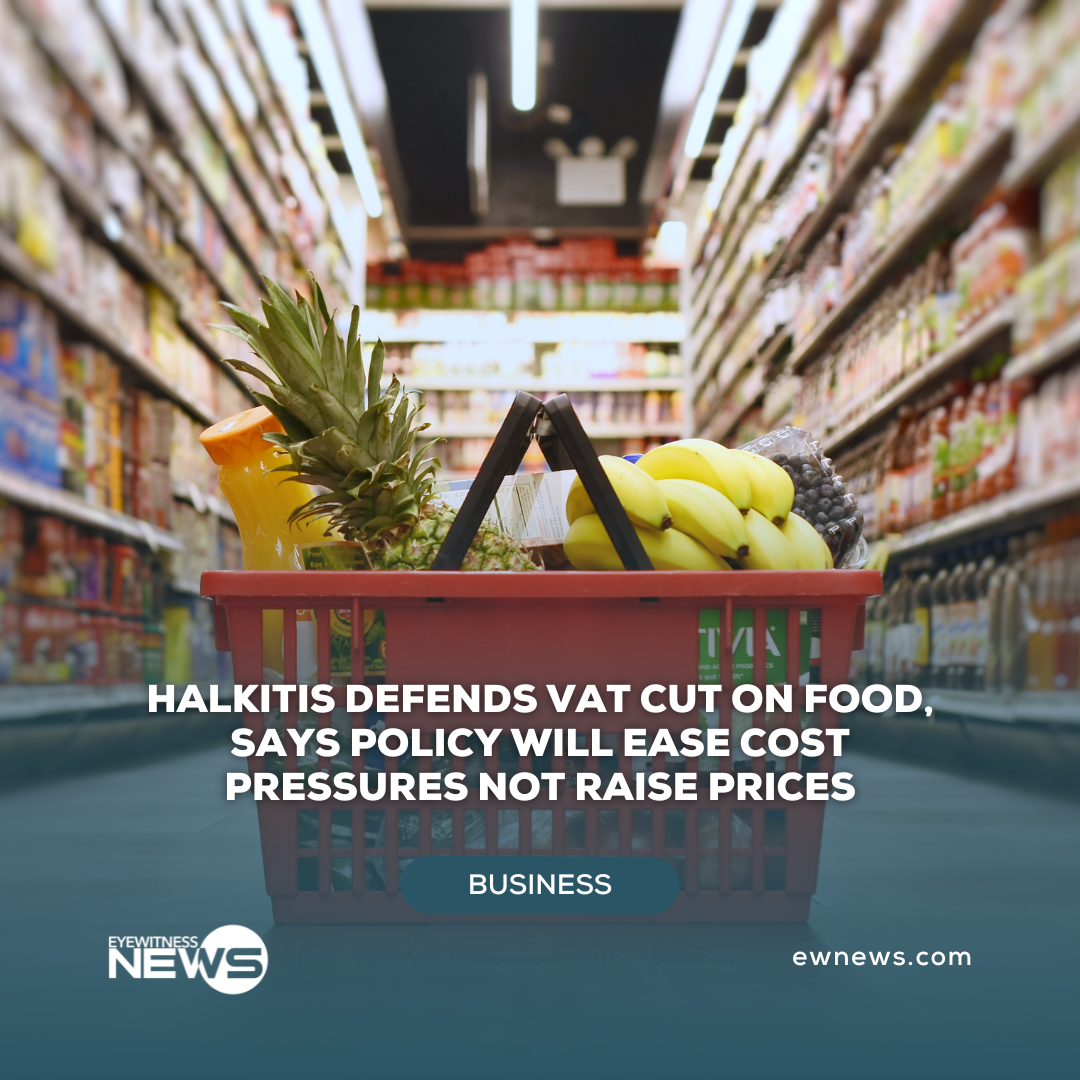
NASSAU, BAHAMAS- Finance Minister Michael Halkitis has defended the government’s VAT cuts on food, amid public concerns that the changes could increase prices and add further pressure to the cost of living.
Halkitis acknowledged that Bahamians are “rightly concerned” about rising living costs but said a significant part of the challenge is driven by external global pressures, especially fuel prices. He explained that as a small import-dependent economy, The Bahamas is highly exposed to international oil market fluctuations, which directly affect transportation costs, electricity prices, and ultimately the price of goods on store shelves.
He said the government is operating in a “difficult global environment” but has still managed to maintain relatively stable prices compared to regional peers. According to Halkitis, this stability is not accidental but reflects deliberate economic management aimed at shielding households from the worst of global inflationary shocks.
Halkitis also highlighted the structure of the government’s latest VAT changes, under which Value-Added Tax on unprepared food and essential grocery staples has been reduced from 5% to 0%. This applies to items such as fresh produce, uncooked meats, and baby food. However, prepared deli meals, sugary drinks, and restaurant food remain subject to the standard 10% VAT.
Turning to concerns raised by retailers, Halkitis rejected claims that supermarkets would be forced to increase prices as a result of the policy. He argued instead that the reform delivers direct relief to consumers by reducing prices at the checkout, thereby increasing purchasing power for Bahamian families. As prices fall, he said, households should be able to buy more or reallocate spending in ways that improve their overall standard of living.
However, food store operators have argued that because the government classified the change as an “exempt” rather than “zero-rated” category, retailers are unable to reclaim VAT paid on their own input costs such as electricity, rent, and other overheads. Major grocers have warned that this structure could cost the sector millions annually.
Despite this, Halkitis dismissed suggestions that the reform would negatively impact businesses, saying it is in fact a net positive. He noted that lower prices should stimulate demand, leading to higher sales volumes, which in many cases can offset or even exceed any cost pressures faced by retailers.
He further pointed to existing government measures aimed at reducing one of the largest operating costs for food retailers outside of labour—electricity. He said businesses selling food already benefit from this approach, and new businesses are able to offset VAT costs on electricity, improving their operating environment.
Halkitis described the combined effect as a “double positive,” with lower prices for consumers and stronger conditions for efficient, competitive businesses. He rejected claims that the reforms would be catastrophic or drive higher prices, saying such assertions are not supported by the evidence and that the policy is designed to reduce costs, stimulate demand, and strengthen both households and the wider economy.