


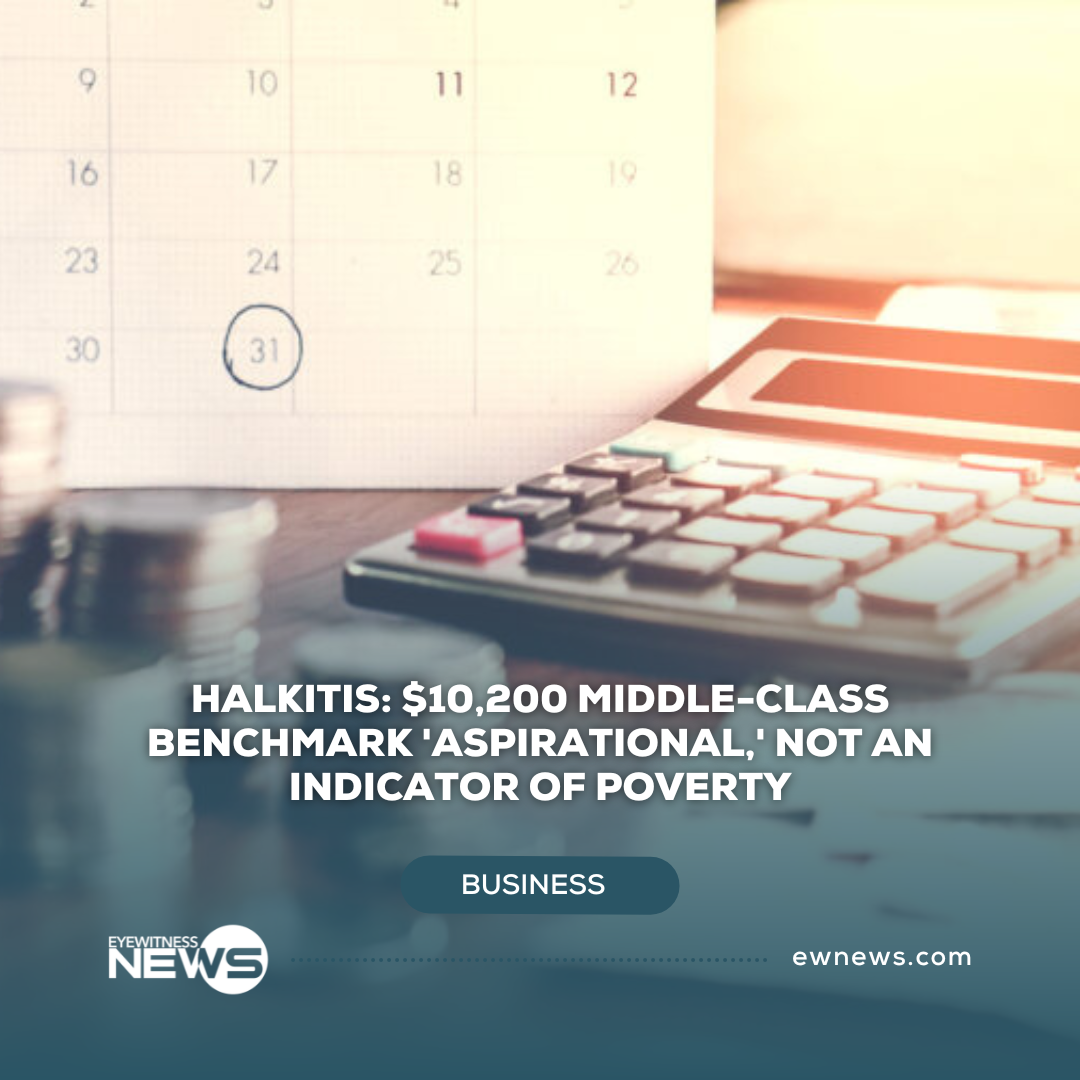
NASSAU, BAHAMAS — Economic Affairs Minister Michael Halkitis told the Senate on Monday he was “taken aback” by the findings of a recent study, which concluded that a middle-class family of four in New Providence needs $10,200 per month to maintain a decent lifestyle. However, he emphasized that the figure, while based on the study’s methodology, is “aspirational” and does not equate to being mired in poverty if unmet.
During the Senate debate on the Domestic Top-Up Tax Bill, Halkitis referenced the study, stating the he too “was taken aback.”
A recent academic study authored by University of The Bahamas researcher Lesvie Archer found that middle-class families of four require $10,200 per month in New Providence and $10,100 in Grand Bahama to sustain a basic lifestyle.
The study highlighted that while food and “non-food, non-housing” (NFNH) costs are approximately $350 higher in Grand Bahama, housing and utilities are $450 lower than in New Providence, resulting in a one percent cost-of-living difference.
Expanding on the 2020 Bahamas Living Wages Survey, which estimated minimum living expenses at $4,400 for a family of four in New Providence and $5,750 in Grand Bahama, this study updated the cost-of-living figures to reflect middle-class standards. Adjusted for inflation, the 2024 cost-of-living estimate for working-class families is $5,000 per month in New Providence and $6,600 in Grand Bahama.
Key findings showed that middle-class living costs are over 104 percent higher than lower-income family expenses in New Providence and 53 percent higher in Grand Bahama. Middle-class families’ preferences for housing, shopping, and private education were identified as primary drivers of this disparity. The study estimated that an annual income of $122,400 is needed to maintain a middle-class lifestyle in New Providence, while $121,200 is required in Grand Bahama. These estimates included basic savings but excluded life insurance, private health insurance, taxes, debt, and homeownership costs.
Rental costs were a focal point, with New Providence prices ranging from $800 for unfurnished units in areas like Stapleton to $3,000 in Cable Beach. Upper-middle-income rentals ranged from $3,000 to $8,000 monthly in neighborhoods such as Sandyport and Paradise Island. In Grand Bahama, rentals ranged from $1,200 for a two-bedroom unit in Dolphin Cove to $3,000 in Lucaya Beach. The study, published on October 23, 2024, in the International Journal of Bahamian Studies, used Anker and Anker’s methodology alongside data from surveys, interviews, and national statistics. Data collection included fieldwork in New Providence communities such as Yamacraw Hill Road and Cable Beach, as well as Grand Bahama locations like Freeport and Eight Mile Rock.
Halkitis acknowledged the study’s value, stating: “It’s not as if you don’t have $10,200, you’re drowning in a sea of poverty, hunger, despair, and homelessness. It’s aspirational.” He added: “I want to thank the author for publishing the study because it creates debate. A big part of the mandate of the government and public policy institute is to study issues, create reports to engender healthy debate in the country, and inform government policy.”