


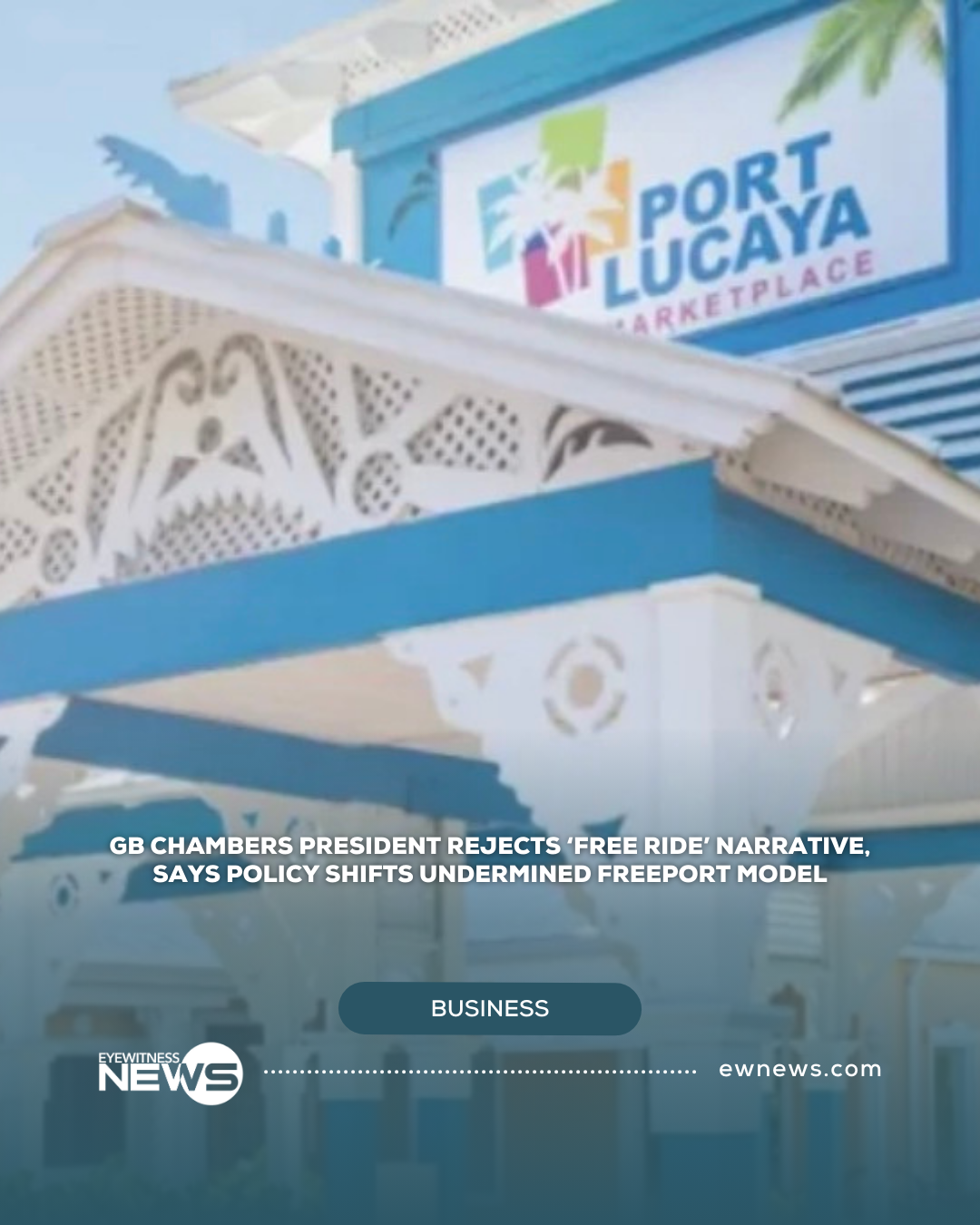
NASSAU, BAHAMAS — Grand Bahama Chamber of Commerce President Dillon Knowles on Thursday rejected the notion that the island has benefited from a “free ride,” telling attendees at the 27th Grand Bahama Business Outlook that Grand Bahama has paid its own way for decades and significantly subsidized other islands through its tax contributions.
Speaking at the annual economic forum, Knowles said that despite perceptions held by some in New Providence, Grand Bahama has been largely self-sufficient while contributing billions of dollars to the public purse over the past 70 years.
“It has not had a ‘free ride’ like some of my Nassau family and friends espouse,” Knowles said. “It has paid its own way and significantly subsidized other islands.”
Knowles argued that Freeport’s early success was driven by the Hawksbill Creek Agreement, the 1955 Act of Parliament that established the Freeport free trade zone and enabled large-scale private investment. He said that within two decades the area was transformed from pine forest into an industrial, commercial and tourism hub.
However, he said subsequent policy decisions altered the regulatory structure that underpinned that growth.
“But then, the brakes were slammed,” Knowles said. He added that Bahamians had been locked out of aspects of the city’s social structure and that instead of addressing those concerns through inclusion, policy changes “torpedoed the very foundation of our success.”
“Investors fled. The Bahamas’ Free Trade Zone was neutered,” he said.
Knowles stated that Grand Bahama today accounts for approximately 10 percent of the national population and contributes an estimated 12 percent of gross domestic product, comparable to the combined output of the other Family Islands.
He said the regulatory environment remains central to the island’s future performance, noting that the Chamber advocates across four pillars of commerce: the regulatory framework, businesses, employees and customers.