


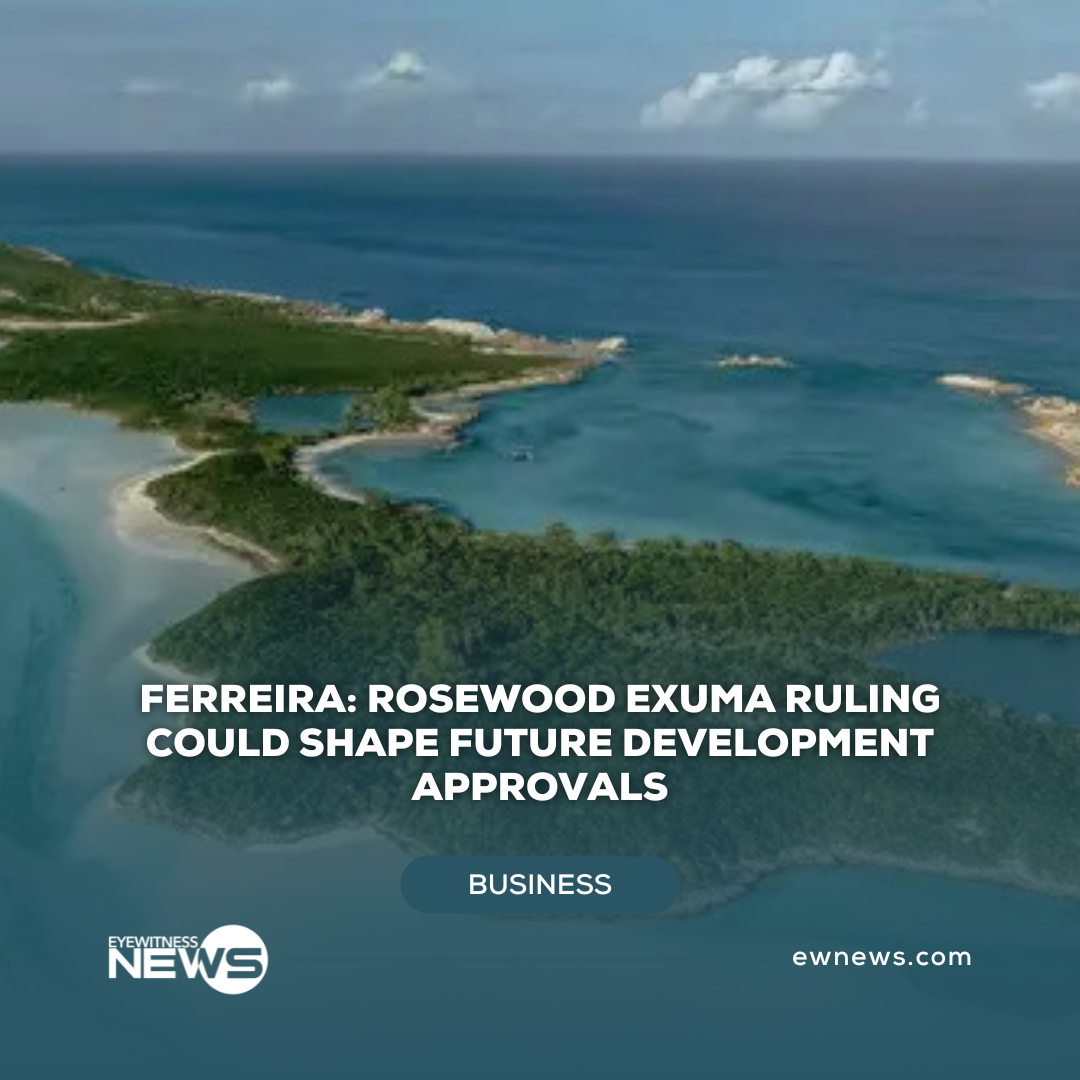
NASSAU, BAHAMAS — The Supreme Court’sdecision in the Rosewood Exuma dispute could determine how future developments across The Bahamas are required to comply with the country’s environmental laws, according to former Environment Minister Romauld Ferreira.
Ferreira, who represents Over Yonder Cay in its challenge to environmental approvals granted to Yntegra for its proposed Rosewood Exuma development at East Sampson Cay, told the court there was “a lot at stake” in what he described as the first serious legal test of legislation he helped introduce while serving as environment minister.
“This is the first set of litigation, serious litigation, that takes a deep dive into the Environmental Planning and Protection Act and the environmental impact assessment regulations,” he added. “There’s a lot at stake here.”
Ferreira argued that the court’s interpretation of the legislation could establish an important benchmark for what other developers must do to secure environmental approvals.
“What we decide here really determines what other developers have to comply with,” he said. “If we make the decision, based on the evidence that has been produced before the court, that the salami slicing was in fact lawful, then we can expect other developers to follow the trend.”
“A great deal of what will be considered in this case sets the stage for what’s to come for future development in the country,” Ferreira said.
Over Yonder Cay has joined neighbouring Turtlegrass Resort and Island Club in challenging environmental approvals granted to Yntegra for its proposed Rosewood Exuma project.
The challengers contend that the development was unlawfully fragmented into separate components — described during the proceedings as “salami slicing” — rather than being considered as a single project for the purposes of assessing its overall environmental impact.
Ferreira adopted the submissions previously advanced by Fred Smith, KC, on behalf of Turtlegrass, arguing that information was withheld and portions of the development were separated during the approvals process.
“I couldn’t agree more that information was withheld, it was salami slicing, portions of the development were carved out,” Ferreira said. “That is so self-evident, because none of the CECs are identical. They’re all carved out of each other.”
Over Yonder Cay’s grounds broadly mirror those advanced by Turtlegrass, including alleged unlawful fragmentation of the project, an unlawful consultation process, failure to make documents available to the public and a failure to conduct further consultation following changes to the development.
Turtlegrass has separately argued that Director of Environmental Planning and Protection Dr Rhianna Neely-Murphy breached her statutory and common law duties by approving aspects of the project without ensuring the public had access to all relevant environmental information.
Smith told the court that the project’s Environmental Management Plan was not available during the public consultation period. A draft EMP was submitted in February 2025 and subsequently revised, but the draft was never made available for public consultation, according to the submissions.
He argued that key studies concerning the proposed North Bay service dock were also submitted only after the consultation period had ended and that the environmental effects of certain approved works were not considered in the final environmental documents.
The challengers have also taken issue with approvals for dredging and other marine works in North Bay, arguing that Turtlegrass had previously been specifically restricted from carrying out extensive dredging and marine works in the same area.
Smith further argued that the Department should have undertaken another consultation after changes were made to the proposed development, contending that the public should have been given an opportunity to consider a single, complete set of environmental documents.