


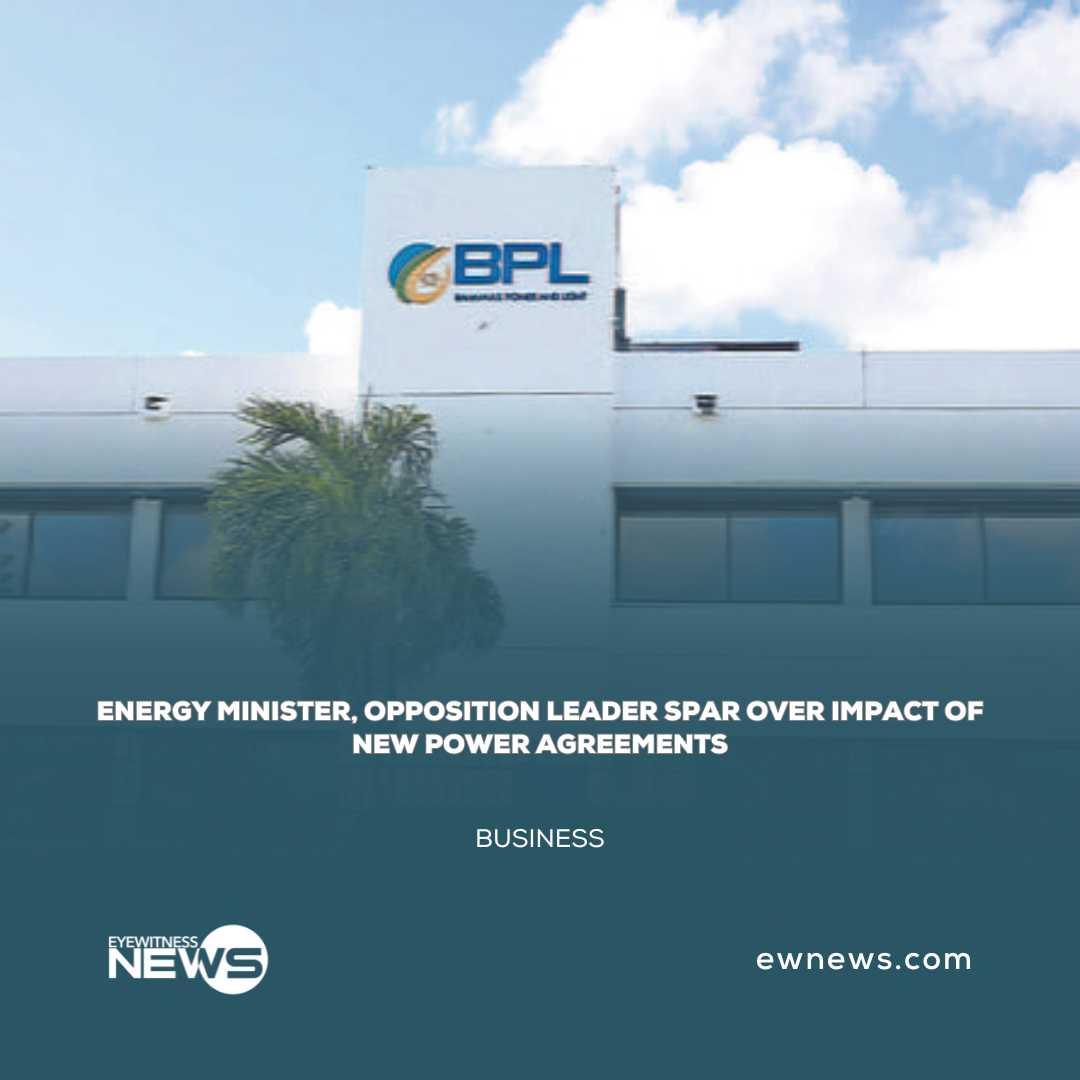
NASSAU, BAHAMAS- Energy Minister JoBeth Coleby-Davis and Opposition Leader Michael Pintard continue to clash over the government’s new energy agreements, with the minister defending the reforms as essential to stabilizing Bahamas Power and Light (BPL) while the Opposition warns the deals will drive electricity bills higher.
In a lengthy response, Coleby-Davis said the Opposition’s criticism is rooted in “a series of serious misunderstandings,” insisting the reforms are designed to fix a utility burdened by roughly $500 million in debt, aging infrastructure, and tens of millions of dollars in annual subsidies and rental generation costs.
“The starting point is the true position of Bahamas Power and Light,” she said, noting the company spends more than $50 million annually to subsidize Family Island electricity and about $25 million a year renting generation. “That is the system that had to be fixed. Any alternative to the reforms has to do better than that.”
Coleby-Davis argued that the Opposition’s calculations wrongly combine fuel costs with base tariff figures, creating what she described as an artificial shortfall. She stressed that a key figure cited by critics — 4.625 cents per kilowatt hour for New Providence — is not a base rate increase but part of a Power Purchase Agreement cost that appears in the fuel line of bills, which is a pass-through charge rather than operational revenue.
“This structure is what allows the projected ninety-seven million dollars in savings for consumers as the system moves fully into LNG and more efficient plant,” she said, adding that savings would materialize in the fuel component of bills once reforms are fully implemented.
The minister also defended agreements with independent providers and the Bahamas Grid Company, saying they replace costly rental engines and could cut Family Island subsidies roughly in half, saving about $25 million annually while introducing utility-scale solar, battery storage, and modern gas-fired generation.
Coleby-Davis extended an invitation to Pintard, his advisers, and the media to attend a technical briefing with ministry officials and BPL experts, saying the government is prepared to “answer any question on any line of these agreements.”
Pintard, however, maintains the contracts will strain BPL’s finances and ultimately consumers. In his statement, he said minimum annual payments to private operators under the agreements total about $223.7 million, compared with projected revenue collections of roughly $197 million.
“The math is clear,” Pintard said. “BPL faces a projected structural shortfall of more than $25 million annually,” before accounting for operating costs, fuel, salaries, maintenance, and debt servicing.
He warned that most of the agreements are binding “take or pay” contracts requiring payment regardless of BPL’s financial performance, arguing there is no credible mechanism to absorb the costs without raising electricity rates or increasing taxpayer-funded subsidies.
“When fixed contractual payments exceed income, there are only three possible outcomes: higher base rates, higher fuel charges, or increased government subsidies funded by taxpayers,” Pintard said, adding that households should prepare for higher bills.
Coleby-Davis countered that the reforms must be viewed against what the government inherited — aging plants nearing end of life, incomplete projects, mounting debt, and a fragile transmission network — arguing that doing nothing would result in higher costs, more blackouts, and continued environmental and maintenance expenses.
“The real question is whether we keep paying more than fifty million dollars a year in subsidies… and keep renting engines,” she said, describing the reform programme as “a structured response to a utility that had been pushed to the edge of failure.”