


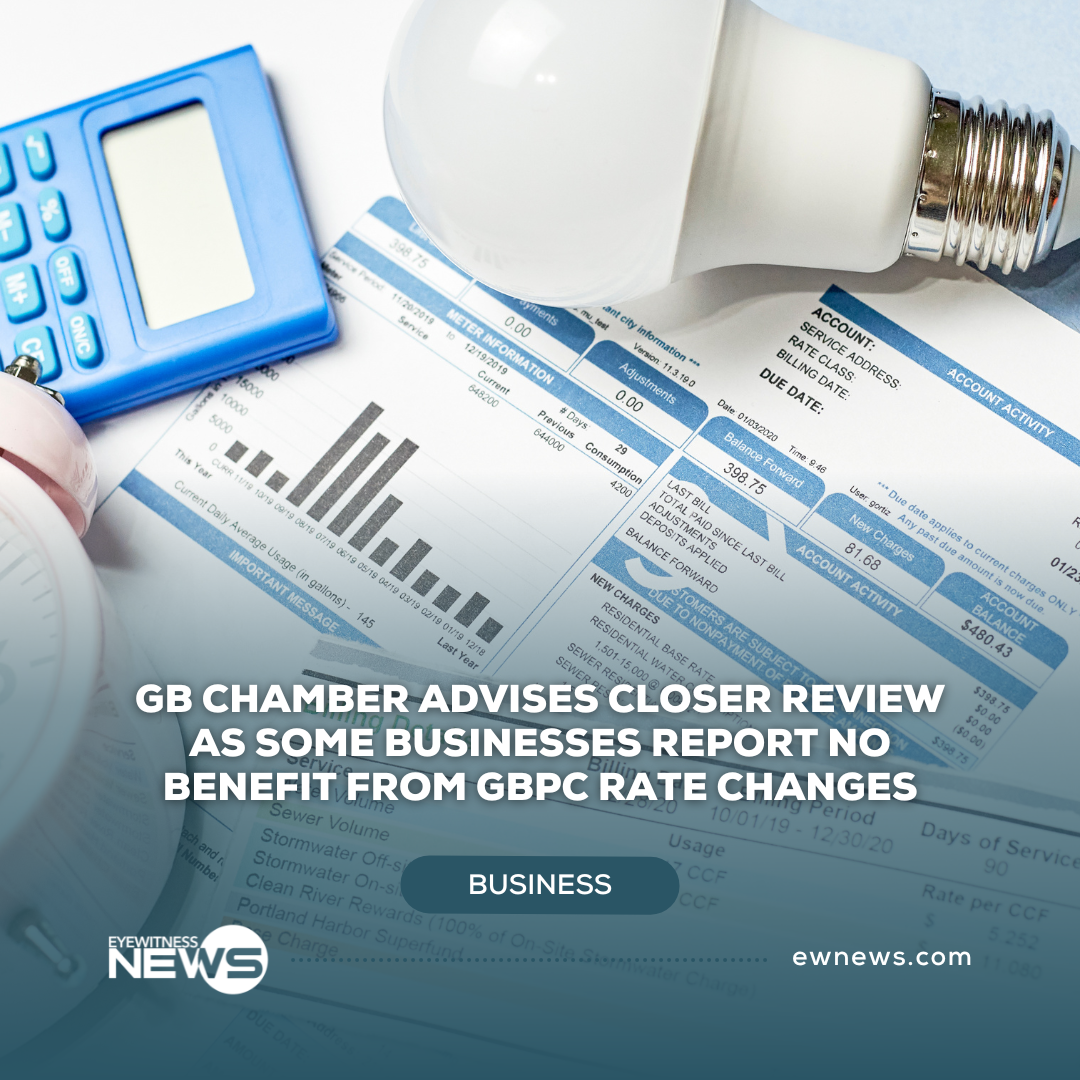
NASSAU, BAHAMAS — The Grand Bahama Chamber of Commerce is encouraging businesses to assess their previous electricity bills and consumption levels before determining whether they are benefiting from Grand Bahama Power Company’s (GBPC) new commercial rate structure.
GB Chamber President Ralph Hepburn said some Chamber members have indicated that they have not noticed a reduction in the total dollar value of their electricity bills since the revised rates took effect in June.
“A lot of them are saying they’re not noticing any decrease in their billing,” Hepburn said, noting that businesses were referring to the dollar value of their bills rather than the cost based on consumption.
The Chamber has advised businesses to compare their recent electricity consumption and charges with those recorded before the rate adjustment, as well as during the same period last year.
“I’ve asked a few of them to go back and compare the consumption this month or the previous two months with consumptions prior to the change coming in, which would have been April and May or previous months, as well as the same period last year,” Hepburn said.
He explained that businesses should examine both their consumption and the amount charged to accurately determine whether they are benefiting from the revised rates.
“A lot of persons are looking at the bill based on the dollar amount and actually not taking into consideration the consumption use for the periods,” Hepburn said.
The Chamber noted that unusually high temperatures this summer may have increased electricity consumption as businesses rely more heavily on air-conditioning units, refrigeration systems and other equipment.
“We’ve been experiencing hotter months this summer than previous times, so some persons are using more power to run not only equipment and AC units, but basically everything,” Hepburn said.
He added that refrigerators and other appliances may also be consuming more electricity because of the extreme heat.
“It’s a matter of looking at the consumption rather than the dollar value, but a lot of people are saying they don’t see it—not that it’s not there, but based on what they’re looking at, they don’t see it,” Hepburn said.
According to Hepburn, information provided by GBPC indicates that electricity costs have declined across the residential, commercial and industrial sectors.
“It’s just a matter of having to go back and look at it and analyze it properly to see whether there are any adjustments to your personal bill, whether it’s in the residential, commercial or industrial sector,” Hepburn said.
GBPC says businesses across Grand Bahama are benefiting from a new electricity rate structure designed to create lower costs, greater transparency and a more equitable billing system.
For commercial customers, one of the most significant changes is the elimination of tiered energy rates. Under the previous structure, businesses paid energy charges ranging from approximately 17 cents to more than 20 cents per kilowatt-hour.
GBPC has stated that commercial customers will now pay a single fixed base energy rate of 14.5 cents per kilowatt-hour, regardless of monthly consumption. Customers will also no longer be subject to the KVA demand charge.
General Service Large and industrial customers have transitioned into a new general service customer class. Under the revised structure, the first 900,000 kilowatt-hours of monthly energy consumption will be billed at 10 cents per kilowatt-hour, with additional consumption billed at nine cents per kilowatt-hour.
GBPC has previously indicated that 98 percent of commercial and general service customers will see a credit reflected under the miscellaneous charges section of their July electricity bills. The credit represents the difference between the previous commercial rates and the newly approved rates, including applicable taxes, which took effect in June.