


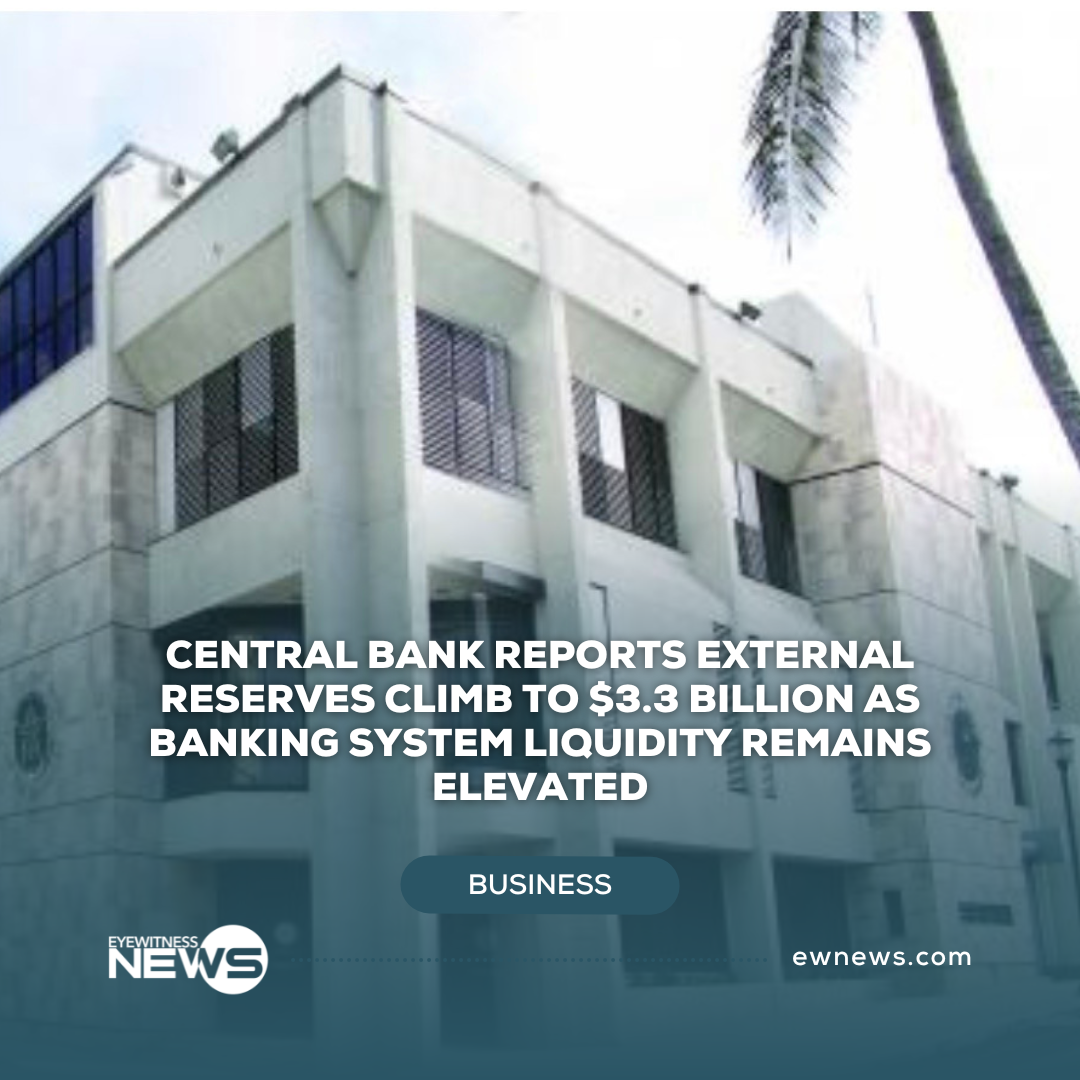
NASSAU, BAHAMAS: The Bahamas’ external reserves continued to strengthen through the first half of 2026, reaching $3.3 billion despite a slower pace of growth in June, while the domestic banking sector maintained high levels of liquidity, according to the Central Bank’s latest Monthly Economic and Financial Developments report.
The Central Bank said external reserves increased by $45.7 million in June to close the month at $3.295 billion, although the gain was significantly below the $178.4 million increase recorded during the same period in 2025.
The slower monthly accumulation was attributed largely to a sharp reduction in the Central Bank’s net foreign currency purchases from the public sector, which fell to $0.8 million compared with $172.3 million in June 2025.
However, the overall reserve position remained stronger on a year-to-date basis, with external reserves expanding by $481 million during the first six months of 2026, compared with $354.9 million during the same period last year.
The Central Bank noted that increased foreign currency inflows from commercial banks and their customers supported the improvement. Net purchases from commercial banks rose to $452.1 million year-to-date, while commercial banks’ net foreign currency intake from customers increased to $513.9 million.
Meanwhile, the domestic banking system continued to maintain substantial liquidity, although the narrow measure of liquidity—excess reserves—recorded a marginal decline during June.
Excess reserves fell by $200,000 to $2.027 billion, as growth in Bahamian dollar deposits helped offset increased domestic credit activity.
A broader measure of liquidity, excess liquid assets, moved in the opposite direction, rising by $120 million during June to $3.577 billion.
For the first half of 2026, excess reserves increased by $182 million, while excess liquid assets expanded by $465.7 million, reflecting continued strength in the banking sector’s liquidity position.
The Central Bank also reported that foreign currency sales for current account transactions declined by $25.1 million in June to $866.6 million compared with the same month last year.
The reduction was driven mainly by lower factor income remittances and reduced “other” current payments, including debit and credit card transactions. However, spending on oil imports, non-oil imports and travel-related expenses increased during the month.
For the six months ended June, foreign currency sales for current account transactions rose by $127.3 million to $4.14 billion, reflecting higher payments for imports, travel and other current expenses.