


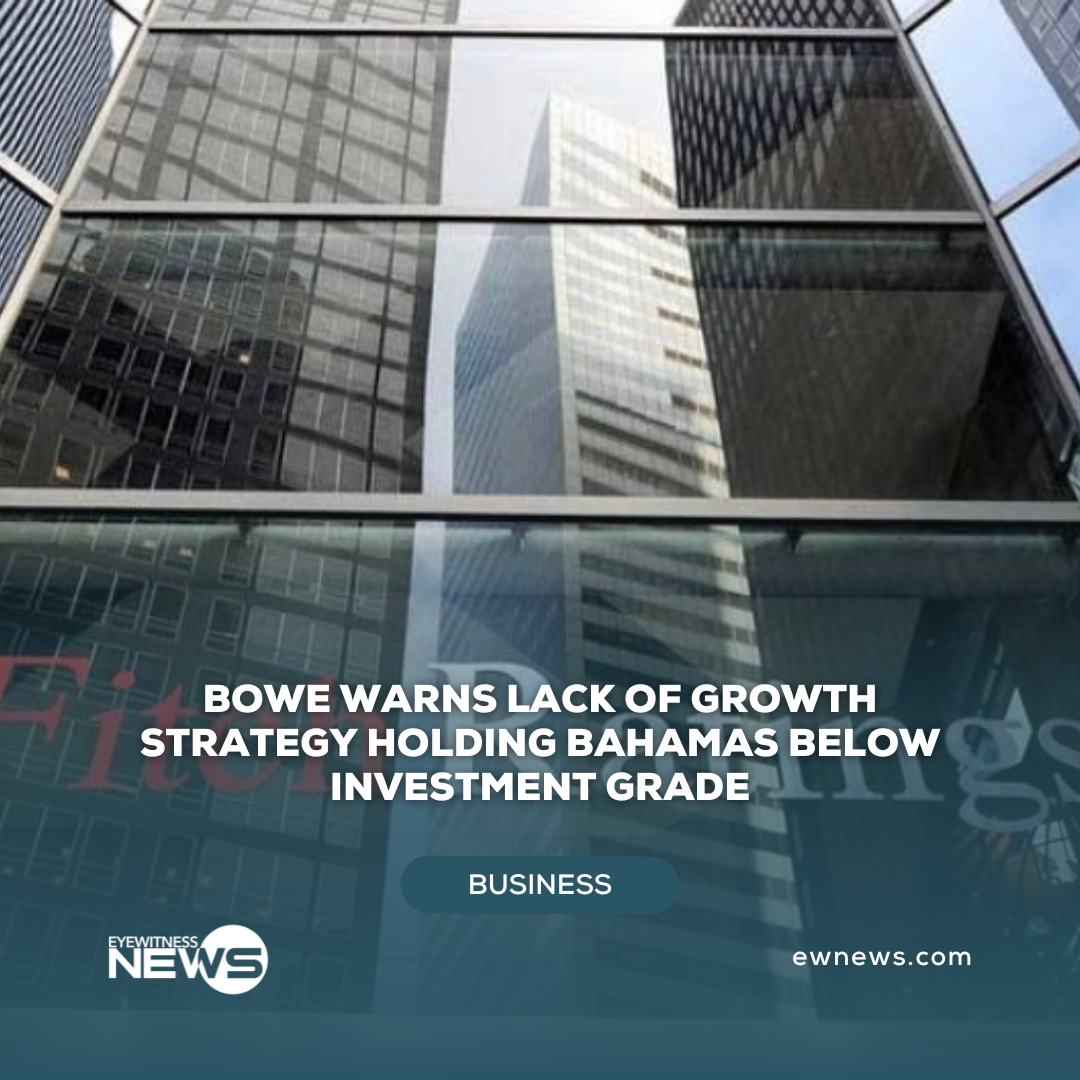
NASSAU, BAHAMAS-Fidelity Bank’s chief executive Gowon Bowe says The Bahamas still has “many miles to travel” before reaching investment grade status, warning that the country’s failure to clearly define how it will grow its economy continues to weigh on its credit outlook.
Responding to the latest report from Fitch Ratings, which affirmed The Bahamas’ sovereign rating at ‘BB-’ with a stable outlook, Bowe said the assessment should not come as a surprise.
“It was a report that should have been expected because it only regurgitated matters that we are fully aware of, but do not always take appropriate actions in relation to,” he said.
Bowe argued that one of the most important — but often overlooked — messages in the report relates to the country’s growth model.
“When they speak about challenges with economic growth… if we step back and understand what that statement really means, it means that The Bahamas is lacking a sort of strategic model that is clearly demonstrating how it’s going to expand its economic growth,” he said.
“That is a very telling statement, even though implicit in the language, as opposed to an explicit condemnation.”
According to Fitch Ratings, the Bahamian economy expanded by 2.8 percent in 2025, following 3.4 percent growth in 2024 and a strong post-pandemic rebound averaging 8.7 percent between 2021 and 2024. However, growth is projected to slow to 2.2 percent in 2026 as tourism momentum eases.
While the agency pointed to continued fiscal improvement — including a deficit narrowed to 0.5 percent of GDP and a projected move toward balance — it said the country’s credit profile remains constrained by “low potential growth,” high debt levels and vulnerability to external shocks, including climate-related events and global economic conditions.
Bowe said the report reflects a “balanced” view of the economy.
“There’s been fiscal consolidation and improvement. There’s been positive economic rebound… but then they balance it and demonstrate that with all those positives, there are continuing elements that require structural reform,” he said.
Among those concerns, he noted, is the lack of clarity around where future growth will come from.
“We are failing ultimately to identify where growth is going to come from,” Bowe said, adding that this uncertainty continues to weigh on investor confidence and long-term planning.
He also pointed to the report’s focus on fiscal risks, including contingent liabilities linked to state-owned enterprises and public-private partnerships.
“They didn’t sort of praise or condemn… but they highlighted the absence of clarity on the impact that could have on our contingent liabilities,” Bowe said, referencing potential government exposure from projects such as the proposed acquisition of the Grand Bahama Power Company.
Fitch Ratings similarly warned that while government debt has declined from pandemic-era highs, it remains elevated at over 75 percent of GDP and is still well above the ‘BB’ median. The agency added that without stronger growth or faster fiscal consolidation, The Bahamas will struggle to meet its debt reduction targets.
Bowe said the stable outlook assigned by Fitch should be interpreted cautiously.
“They’ve put it on a stable outlook, which means they don’t expect any downgrades, but they equally don’t expect any upgrades,” he said.
“S&P has now moved there, and they’re on par… Moody’s has just completed their country visit, so it will be interesting to see if they fully converge.”