


NASSAU, BAHAMAS – A multinational hospitality company has asked a Florida court to dismiss the lawsuit brought against their company and other parties by the family of a 15-year-old girl who was allegedly raped at Baha Mar last year.
Hyatt Hotels Corporation (HHC) says it has no connection to the matter and that a Bahamian court, not a Florida court, would be the more suitable jurisdiction for any legal action involving the matter.
The family of the girl filed the lawsuit in the United States District Court Southern District of Florida Miami Division on March 28th, 2022 after Henry Richard “Ricky” Nixon allegedly raped the girl on April 4, 2021.
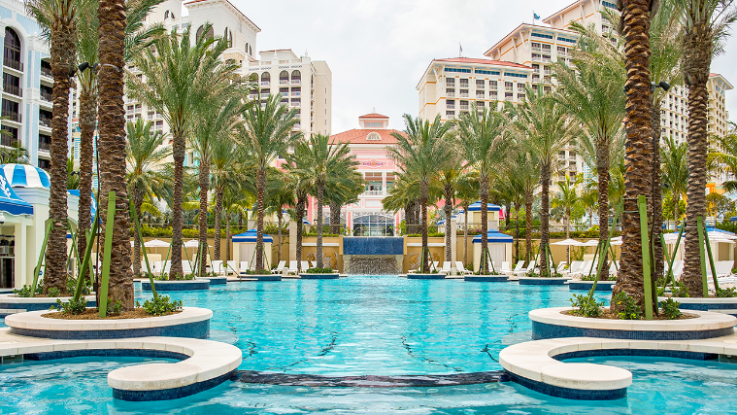
 According to the family, the girl briefly left her hotel room and went to the lobby to talk to a friend on the phone when the 58-year-old Nixon lured her to a closed poolside cabana, overpowered and raped her.
The father allegedly ripped Nixon off of his daughter and found her curled up on the ground, crying in disarray with her undergarments pushed to the side.
Nixon was later arrested and charged with statutory rape. His trial was expected to begin in May.
The family blamed poor security for the incident.
The defendants in their lawsuit are Hyatt Hotels Corporation, Grand Hyatt Baha Mar and CTF BM Operations LTD.
Hyatt, in documents filed on June 30, argues the plaintiffs have sued the wrong parties and invented one that does not exist.
The company says while the hotel at Baha Mar bears the “Hyatt” brand, it is not owned by HHC or any Hyatt-related entity.
“HHC does not own, operate or franchise the hotel or any part of the resort and does not share in their profits and losses,” court documents say.
“Indeed, HHC has no direct involvement in the hotel and is not involved in a joint venture or partnership with HC, Hyatt of Latin American and Caribbean, LLC, Hyatt Services Caribbean, LLC, CTF, SWB or any other entity or person with ownership in or control of the hotel or resort.”
“Although some of HHC’s subsidiary corporations independently carry-on business in Florida and with the Bahamian hotel, they are legally distinct companies that respect corporate formalities.”
HHC’s lawyers also argue that Florida is not the appropriate forum for the lawsuit.
“…All existent defendants are amenable to process in The Bahamas,” the documents say. “Hotel owner CTF is a Bahamian company subject to process and jurisdiction there. HHC also is amenable to process and jurisdiction in The Bahamas. This by itself satisfies the availability factor.”

It continues: “The Bahamas is a more than adequate forum under all measures. Indeed, the forum where the alleged tort occurred is the optimal forum for this case. The Bahamas applies British common law to civil actions and recognizes precisely the type of negligence claims the plaintiff brings in this lawsuit.
“A prevailing claimant in The Bahamas is entitled to receive monetary compensation for ‘special damages’ (e.g., medical costs and lost wages) as well as for pain and suffering. As in the United States, plaintiffs can offer witnesses, experts, and documentary evidence in support of their claims. That a Bahamian forum might require international travel, be less generous in terms of damage awards, or differ in its legal theories or jury processes does not render it inadequate.”
The lawyers also argue that all the evidence relevant to the case can be accessed in The Bahamas and would be beyond the subpoena powers of the Florida court.
“The hotel––entirely owned by a Bahamian company unrelated to HHC––is likely to possess relevant business records, surveillance videos, site maps, employee records, payroll records, and internal policy documents,” documents say.
“The storage and maintenance of these records and witnesses available to authenticate them are likely in The Bahamas. In a similar vein, eyewitnesses and security personnel employed at the hotel and resort during the incident hail from The Bahamas, requiring international depositions and travel.”
 HHC lawyers note that the forensic information related to the alleged rape are in The Bahamas.
They also argue that it is more in the public’s interest that the matter be heard in The Bahamas as opposed to Florida.
“Local interests in having localized controversies decided in their forum also favors dismissal,” the documents say. “This court recently concluded in a case involving a United States citizen suing in tort in a Bahamian resort for a slip-and-fall incident, that: ‘The Bahamas has a strong interest in regulating and determining the standard of care of its resorts. By contrast, Florida’s interest is minimal…Indeed, the only apparent connection to Florida is a single defendant’s principal place of business in this state.”
“That rationale applies with more force here. Rather than a benign slip-and-fall incident, plaintiff brings an incendiary allegation that could affect tourism in The Bahamas, a lifeblood industry for that country. Plaintiff’s tort claims also arise from an alleged crime in The Bahamas, further heightening local interest in resolving the case. By contrast, this case does not present anything of great public importance to United States citizens or Florida residents.”