


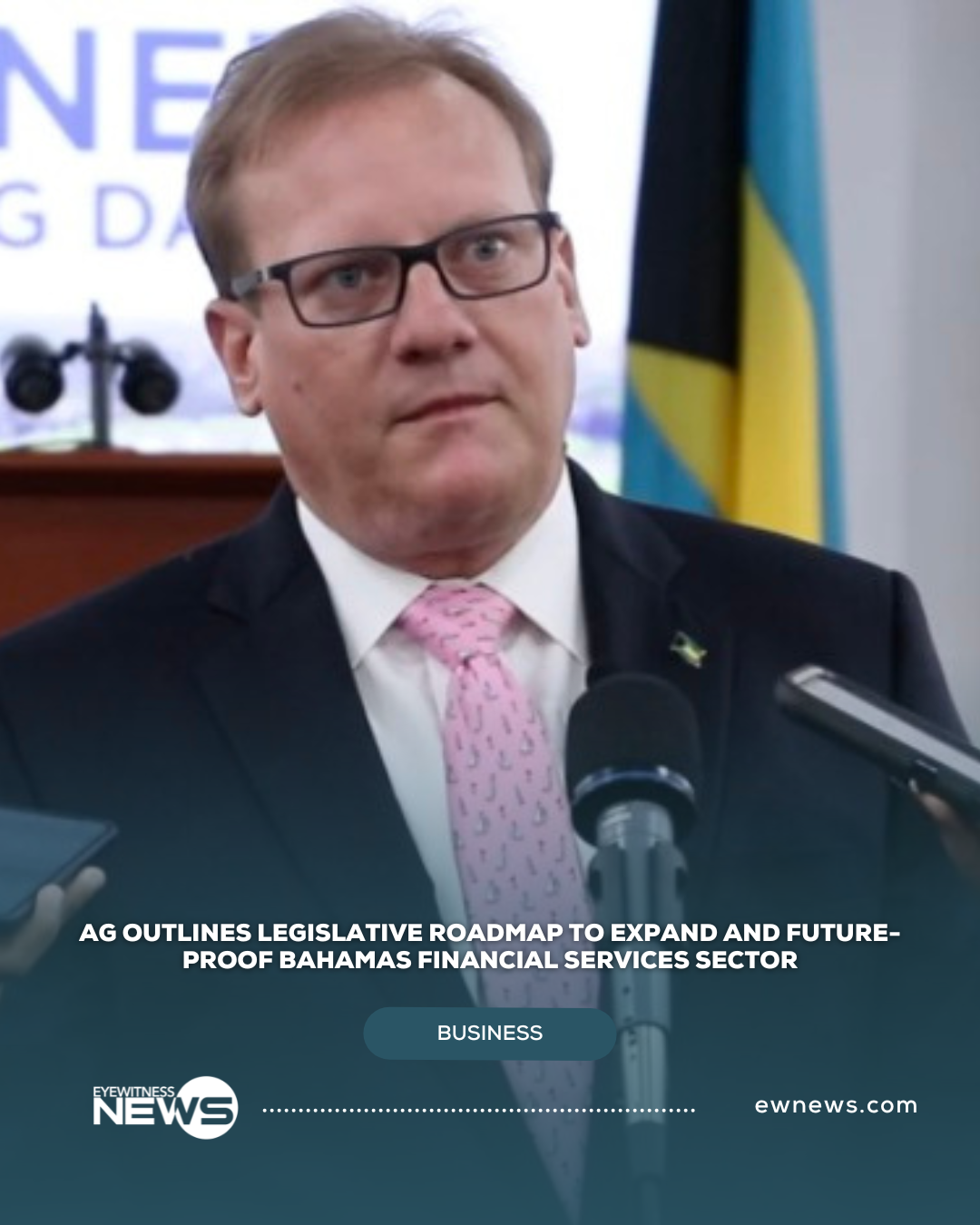
NASSAU, BAHAMAS- Attorney General and Minister of Legal Affairs Ryan Pinder, K.C., said The Bahamas has strengthened its position as a competitive and compliant international financial centre through legislative reform, product innovation and regulatory alignment, while signalling further changes aimed at expanding the jurisdiction’s global appeal.
Speaking at the Bahamas Financial Services Board (BFSB) CEO Conclave on Thursday, Pinder outlined reforms implemented over the past four years and previewed new legislation expected in the coming months, stressing that innovation and compliance must advance together to sustain growth in the sector.
“The Bahamas, as a sovereign financial centre who has a nimble and responsive legislative structure, and understands key markets, continues to innovate and do what is necessary to be a jurisdiction of choice,” Pinder said.
He pointed to regulatory milestones achieved during the current administration, including compliant or largely compliant ratings across all 40 Financial Action Task Force (FATF) recommendations, removal from the European Union’s non-cooperative list on economic substance, and ongoing engagement with the OECD on Common Reporting Standard (CRS) obligations. The country is also preparing for its fifth round mutual evaluation by the Caribbean Financial Action Task Force (CFATF).
On the product side, Pinder highlighted amendments to the International Business Companies Act in December 2023 introducing corporate demergers, allowing a single IBC to be split into two or more entities by operation of law. The change, he said, provides greater flexibility for corporate reorganisations without triggering distributions or dividends.
He also underscored the passage of the Segregated Accounts Company Act, 2025, which modernised legislation first enacted in 2004. The new framework allows SACs to demerge, permits foreign SAC-type companies to continue into The Bahamas, enables accounts to be converted into incorporated cells with legal personality, and allows SACs to be used for unregulated purposes. The reforms are expected to encourage redomiciliation activity as funds restructure in response to global tax and regulatory changes.
Trust sector competitiveness was addressed through amendments passed in May 2025 to the Arbitration Act, Trustee Act and Bank and Trust Companies Regulation Act. The changes promote arbitration as a dispute resolution mechanism for trusts and preserve confidentiality in related court proceedings, a feature Pinder said the industry considers critical.
In the digital assets space, Pinder pointed to the Digital Assets and Registered Exchanges Act, 2024, which expanded regulatory coverage to include digital asset advisory services, derivatives, staking, custody, DLT node services and stablecoins. He said the framework was designed to reflect the maturing nature of digital assets as a recognised asset class.
Alongside innovation, Pinder said the administration has prioritised legislative compliance to avoid the reputational and operational risks associated with international blacklisting. Amendments to the Register of Beneficial Ownership Act and the IBC Act tightened nominee arrangements, introduced new disclosure and registration requirements through the BOSS system, and prohibited nominee directors. Further changes to the Financial Transactions Reporting Act and Proceeds of Crime Act aligned The Bahamas with updated FATF recommendations on beneficial ownership and international asset recovery.
Looking ahead, Pinder said several initiatives are expected to move forward in the near term, including a Usufruct Interest Bill aimed at attracting civil law clients, new SmartFund rules tailored for private equity structures, and proposed legislation to authorise and regulate decentralised autonomous organisations (DAOs). He also confirmed that new legislation will require a one-time registration of all financial institutions in The Bahamas by June, regardless of whether they hold reportable CRS accounts.