


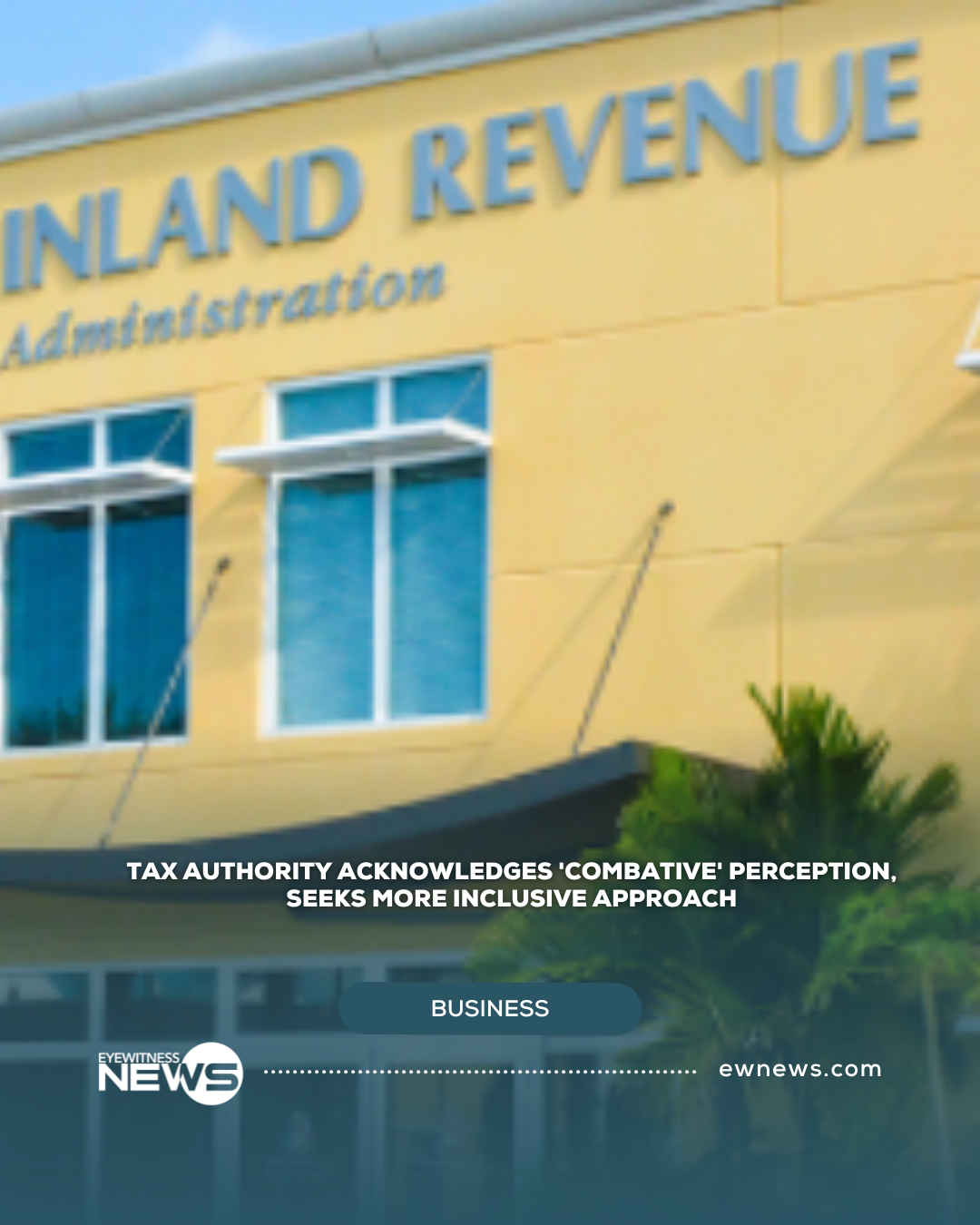
NASSAU, BAHAMAS — The Inland Revenue Department’s top official yesterday acknowledged that relations between the tax authority and taxpayers have too often become “combative,” noting the need for the agency to improve its approach, strengthen communication, and adopt a more collaborative strategy, while urging for greater voluntary compliance.
Shunda Strachan, Department of Inland Revenue’s Acting Controller, while addressing a large taxpayer symposium at the Baha Mar resort on Wednesday, stated:“I agree, I see it, I feel it — that it is deemed to be combative, that there is a fight between the tax collector and the taxpayer, and that’s not a good thing. I can’t overemphasize the need for communication. There has to be stronger communication between the policy-maker, the tax collector and the taxpayer,” Strachan said.
She noted that tight deadlines and fiscal targets sometimes force tax authorities to confront taxpayers aggressively.
“A lot of times we are seen as coming at the taxpayer. A lot of times you have tight deadlines, goals you have to hit, a budget forecast to be met, and the only way to accomplish those goals is to sometimes go at the taxpayer. But if we can improve voluntary compliance — not the kind that requires us coming at you — we would have won,” she said.
She added:
“I think it is sometimes how we do it. We can improve our approach, be more collaborative, be more inclusive, but at the end of the day all taxpayers have to realize that they do have an obligation.”
Strachan urged taxpayers to understand that the Department’s actions are guided by law and policy rather than arbitrary decisions.
“We have to find a way to have our taxpayers informed and knowledgeable about the laws and the policies. They have to know that the DIR isn’t just doing these things because we feel like it. We have to get everybody on the same page,” she added.
She also noted that the department is working to improve its communication and responsiveness.
“For us at the Department of Inland Revenue, we are conscious that we get terrible reviews regarding responsiveness and communication. We have committed to improve upon that. A big part of that improvement will come through digitisation.”
Strachan highlighted the One Tax Bahamas Portal, in which $20 million has been invested, according to Financial Secretary Simon Wilson, as a key tool to improve efficiency and compliance.
“One Tax Bahamas is the department’s new portal that will come online in 2026. It will better connect and collect all of our taxes, making it easier for taxpayers to connect with us, pay their taxes, and just in general have better responsiveness from the department to Inland Revenue,” she explained.
Strachan also responded to claims by the Free National Movement (FNM), which in a recent statement called on the Government to protect Bahamian commercial property owners amid what it described as an alarming surge in Department of Inland Revenue “Power of Sale” seizures targeting Bahamian-owned commercial properties.
The FNM said the DIR has intensified its use of the “Power of Sale” under the Real Property Tax Act as part of its revenue-collection efforts. The procedure allows the department to seize commercial property in arrears, confiscate it, and sell it—purportedly to the highest bidder—to settle outstanding Real Property Tax. The Opposition noted that the properties being taken belong to Bahamians who spent decades building businesses and employing other Bahamians, questioning whether the laws and procedures are applied fairly and transparently.
In response, Strachan stated: “The Department of Inland Revenue is engaged in enforcement, using the method of power of sale, and that is for property owners who have gone decades without paying real property taxes. This is not an avenue that we are using to collect from those taxpayers who are working with the department or may have fallen behind. These taxpayers are individuals who have never paid real property tax or have a significant amount of arrears spanning decades.”
She added:“Inland Revenue has a process that it follows. Power of sale is an absolute last resort. The government would have offered several tax amnesties in the past. If we have gone to power of sale on a particular property, it means we have exhausted all avenues to collect, and then the question is: is it fair for some businesses to avoid paying any taxes while others do pay? It’s in the legislation, and so we are mandated to collect the revenue.”
Prime Minister Philip Davis will addressing the symposium noted that through the first eight months of 2025, a total of $478 million of VAT revenue was collected by 7,517 VAT registrants.
“Now break that down to our largest taxpayers. The 157 enterprises, which are administered by the Large Taxpayer Unit, collected $246 million of that total, which is more than half,” said Prime Minister David.
He noted that large tax payers in the country are important to the nation’s financial well-being.
“You provide essential jobs, produce goods and services critical to our economy, and anchor key industries such as tourism, financial services, telecommunications, energy, and logistics. The Bahamian economy cannot grow without you. Our government cannot deliver essential services without your partnership. And our people cannot thrive without the stability that your contributions help secure.”