


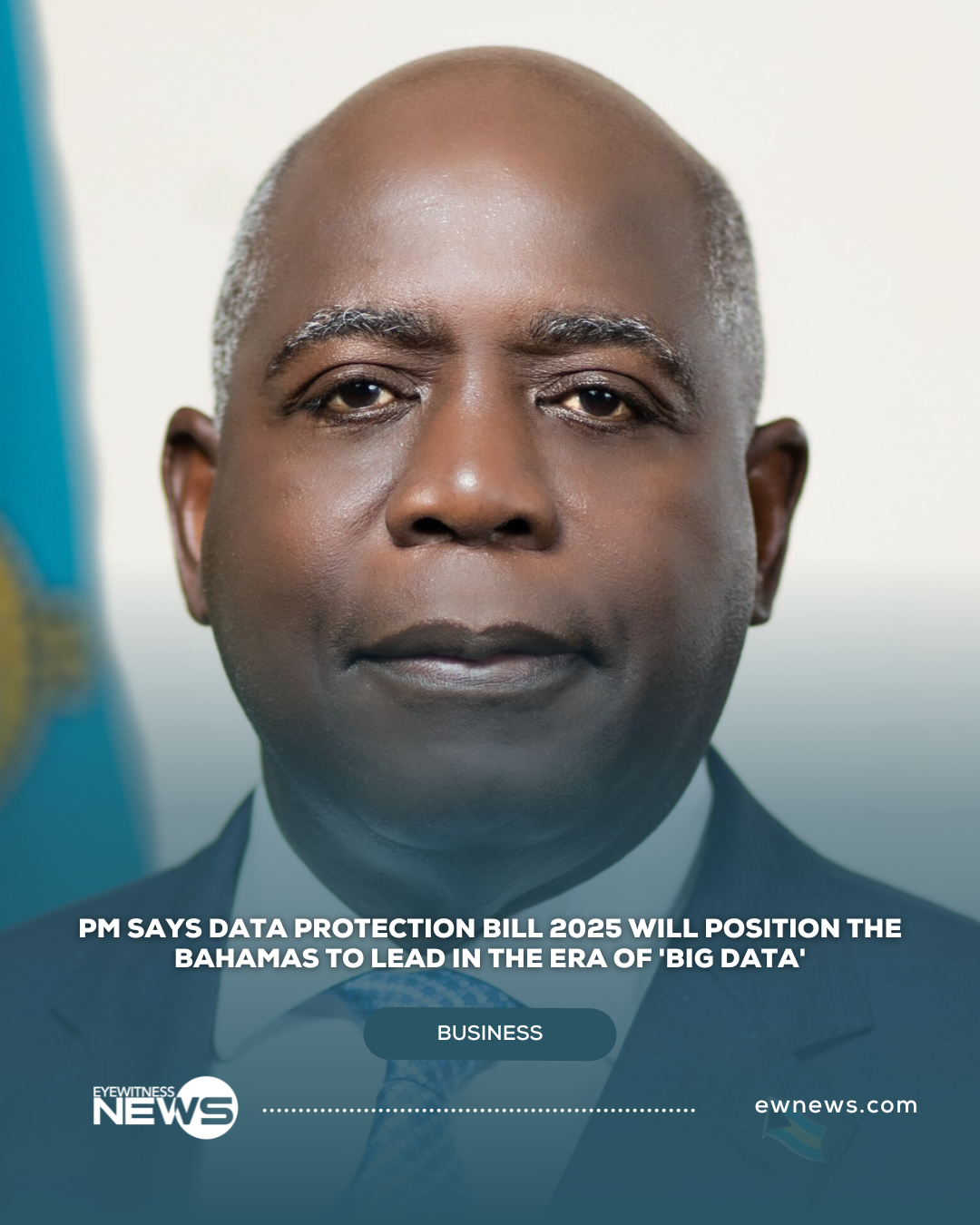
NASSAU, BAHAMAS — Prime Minister Philip Davis said the newly introduced Data Protection Bill 2025 positions The Bahamas to lead in the era of “big data,” ensuring the responsible collection, storage, and use of personal information while updating the nation’s legal framework to reflect modern technology and international standards.
“This Bill ensures that The Bahamas will lead in the 21st century,” Prime Minister Davis said, highlighting the economic and technological importance of robust data protection. “For nations that master the responsible use of data, the rewards are immense — economic growth, educational advancement, faster government services, more robust research, and smarter use of resources.”
The legislation replaces the outdated 2003 Data Protection Act, which was passed in a world without smartphones, cloud computing, artificial intelligence, or widespread biometric authentication. The 2025 Bill introduces modern standards governing the collection, storage, and processing of personal data, including lawfulness, fairness, transparency, purpose limitation, data minimization, accuracy, storage restrictions, and security measures.
Under the new framework, individuals will gain expanded rights, including the ability to access information about them, correct inaccuracies, request deletion, restrict or object to harmful uses, and seek compensation for data mishandling. Sensitive data — such as biometric identifiers, health records, financial information, and political or religious beliefs — will be subject to strict handling rules.
The Bill also strengthens the Office of the Data Protection Commissioner, requiring registration for all data controllers and processors in both public and private sectors. The Commissioner will have authority to investigate complaints, enforce compliance, and oversee international data transfers to ensure that personal information remains protected when shared across borders.
“The private sector must fully comply with these standards,” the Prime Minister noted. “Financial services, telecommunications, retail, hospitality, marketing, and insurance companies — all sectors that collect data — will now operate under clear rules for consent, security, and reporting of breaches.”
The legislation is expected to bolster The Bahamas’ attractiveness to foreign investors. Companies seeking to do business internationally increasingly require jurisdictions that meet rigorous data protection standards, including General Data Protection Regulation (GDPR)-equivalent frameworks.
“International banks, multinational corporations, and technology platforms evaluate jurisdictions based on their data protection frameworks. This Bill establishes a high standard that will be welcomed by the business community,” Davis said.
The Bill also provides clear guidance for government agencies, including requirements to register as data controllers, appoint Data Protection Officers, implement appropriate security measures, and respect citizens’ rights. Standards for digital identification systems, e-government services, and online service delivery will ensure public confidence in government technology platforms.
For healthcare, the Bill establishes explicit consent rules and safeguards for medical data, supporting expanded initiatives such as telemedicine while protecting patients’ privacy.
A phased implementation will give businesses and government agencies time to comply, while public education campaigns will inform citizens of their new rights. Once in force, the Data Protection Bill 2025 will ensure that The Bahamas protects personal information, fosters a thriving digital economy, and positions itself as a modern, transparent, and investment-ready jurisdiction.