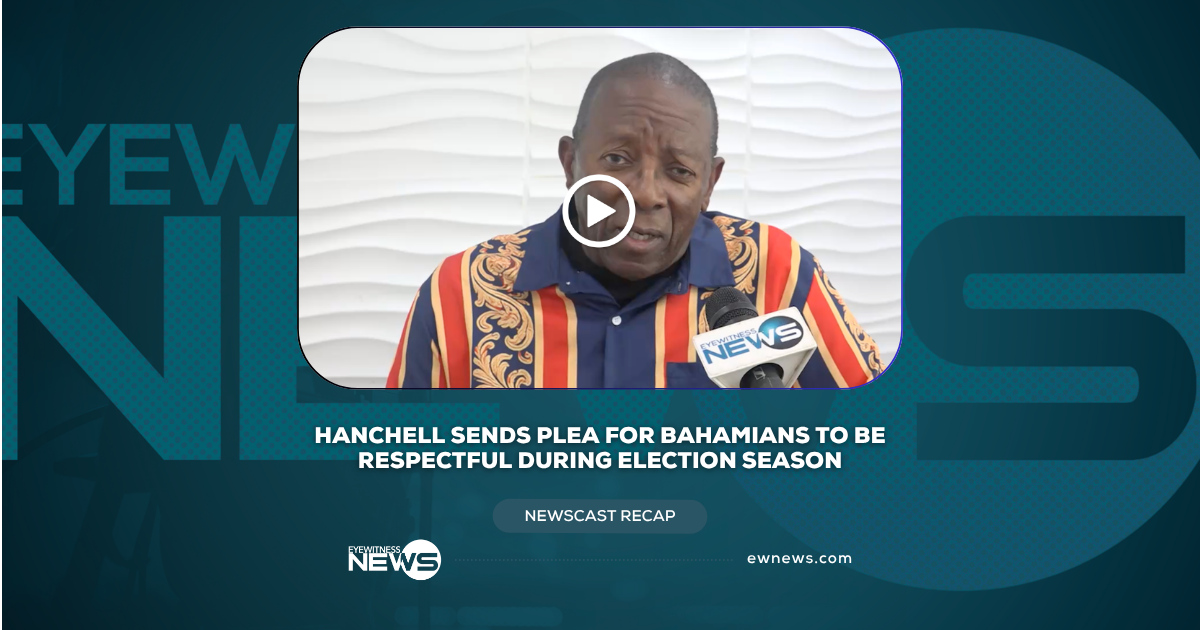




NASSAU, BAHAMAS — Opposition Shadow Minister for Finance Kwasi Thompson yesterday questioned whether the current threat of blacklisting by the European Union (EU) could have been avoided had the government continued with the monitoring and reporting regime set up last term.

In a joint statement, the Ministry of Finance and the Office of The Attorney General announced on Friday that the European Union (EU) will add The Bahamas to its list of non-cooperative jurisdictions on tax matters.
Davis hit out at the seemingly prejudicial and discriminatory scrutiny of former colonial states as he addressed the United Nations General Assembly in New York on Saturday.
Thompson said: “The Opposition stands in support of the Prime Minister’s recent statement at the United Nations General Assembly condemning these punitive blacklistings which unfairly harm our reputation in the international community. We agree with the Prime Minister that these actions seem to be unfairly targeted towards former colonized and vulnerable small island states.
Thompson noted the FNM’s stance with the EU, while in government, underscored that drastic actions should only be issued in the most “extreme and stubborn circumstances”.
However, in a statement yesterday, Thompson questioned why the government disengaged the lead technical advisor and special unit established to monitor compliance.
Thompson called on the Davis administration to advise the industry on immediate steps that will be taken to mitigate any potential fallout that may impact European people or companies doing business with or within The Bahamas, as well as reputational damage to the financial sector.
He said being blacklisted could force companies, in particular banks, to face a higher compliance burden and potentially could result in them reducing or completely withdrawing operations linked to The Bahamas.
“We call upon the government to re-establish the special international tax unit at the Ministry of Finance and re-engage the necessary technical advisor at the Ministry of Finance on these matters,” Thompson said.
“The government must also immediately upgrade the Substance Reporting compliance protocols, data, and statistical reporting capabilities and ensure that exchange of information is conducted on a timely basis as required by the standards which govern international taxation.”
Thompson noted the FNM faced an EU blacklist upon taking office in 2017, and credited its removal to the focused mobilization of resources, including the engagement of specialist human capital, for its delisting in early 2018.
He said the former adminstration had approved enhancements to the economic substance reporting system prior to the 2021 election, adding the government was advised to follow through to ensure the country received a favorable rating.
Thompson said the government’s failure to act with urgency or complete substantial improvements left the country vulnerable to negative action.
“Why did the Government not follow the advice given in November of last year to meet, as a priority, with officials of the European Union when the threat of blacklisting appeared to be on the horizon and the matter required urgent political engagement at the highest levels?” Thompson said.
“Why did the Government wait until earlier this month to dispatch the Minister of Economic Affairs and the Attorney General to meet with officials in Europe, only after it would have been advised that a blacklisting was forthcoming? Would the result be different had the meeting taken place when they were first advised to have a meeting almost a year ago?”
The government’s statement on Friday explained that the Commercial Entities (Substance Requirements) Act, 2018 (“CESRA”), came into force in The Bahamas in January 2019, and requires commercial entities engaged in certain relevant activities to have economic substance in the country.
It said The Bahamas was tasked at that time with effectively implementing the requirements for economic substance, and noted the government received notice of deficiencies related to that implementation and subsequent reporting shortly after the general election.
“Our administration has worked diligently to satisfy the concerns of the European Union, however not all deficiencies could be addressed before the determination of our review in April 2022,” the government statement read.
“As of now, it is anticipated that the European Union will add The Bahamas to its list of non-cooperative jurisdictions. We are committed to closing all remaining gaps expeditiously and to seeking a re-determination of our status in the shortest possible time.”