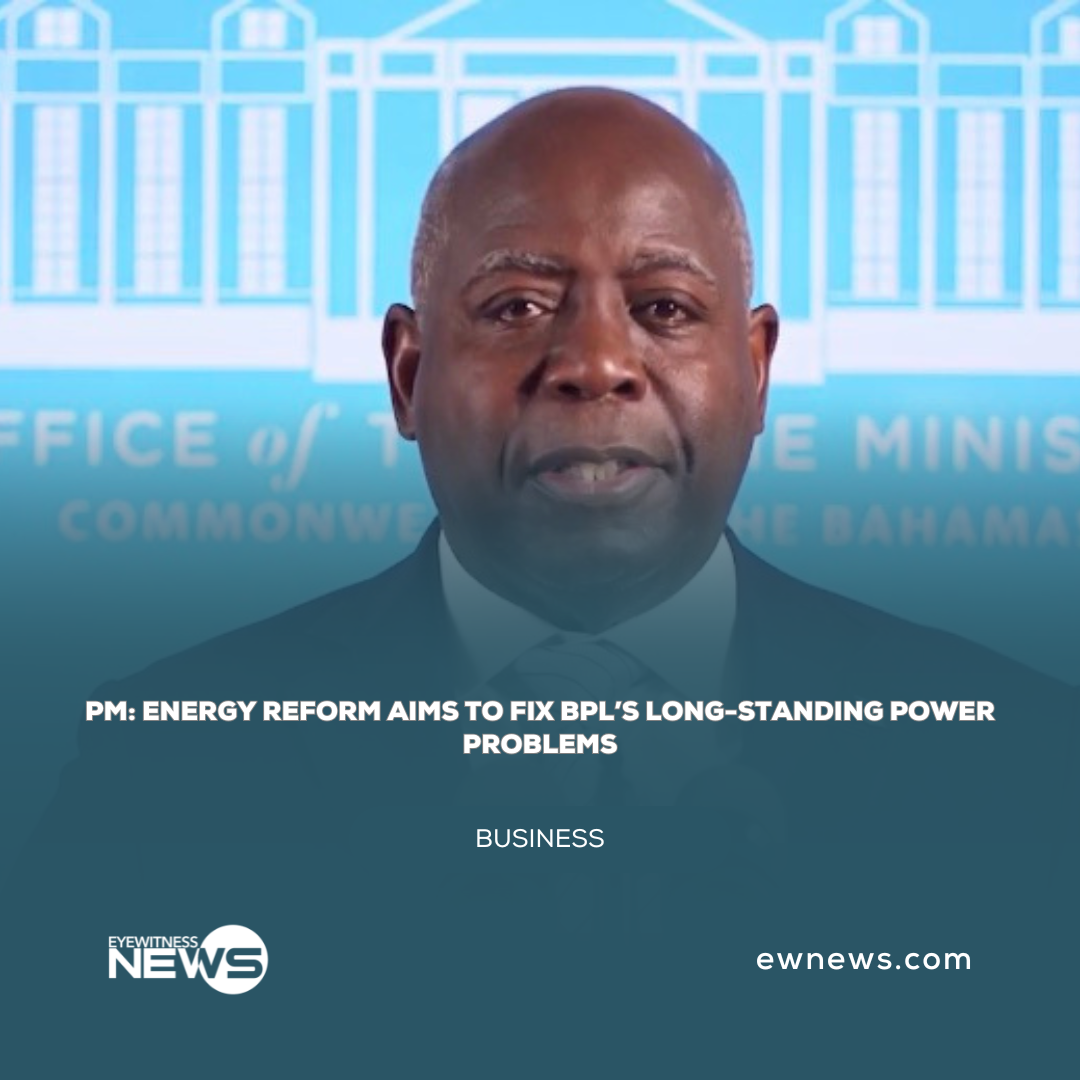




By C. Allen Johnson – Prime Minister Davis has either already departed or plans to leave to attend the 30th United Nations Climate Change Conference (COP30), which is scheduled to take place in Belém, Brazil, from November 10-21, 2025. The conference is intended to focus on key issues such as implementing climate action, securing climate finance, enhancing adaptation measures, and reducing greenhouse gas emissions.
Inaction, Hypocrisy, and Duplicity: There is much we can discuss and even more we can explore on Climate Change and the Environment in the Bahamas. For this letter, let’s focus on the following: the environment impacts the climate, and the climate, in turn, affects the environment. It’s a two-way feedback system.
Four years into his term, Prime Minister Davis has stated that he has built and is continuing to build a reputation as a global advocate for Small Island Developing States (SIDS) on climate issues. However, the situation at home is much less encouraging. We still lack a published, funded, and KPI-driven plan to protect our environment and manage the end-of-life impact of the green technologies we are currently importing. Policy speeches do not constitute a strategy, and polished videos do not create a system.
Although documents are in place, such as the Environmental Planning and Protection Act (2019), the Updated Nationally Determined Contribution (NDC) (2022), and the recently established National Energy Policy for 2025–2030, they do not provide clear guidance to residents. These documents fail to specify who is responsible for various tasks, the timelines for completion, the budgets allocated, and the metrics used to measure success. Additionally, they do not address the issue of end-of-life management for solar panels, batteries, electronics, turbines, LEDs, etc. Essentially, these are merely frameworks on paper rather than actionable programs that include resources, accountability, and specific timelines.
Currently, there is no national recycling or take-back system in place. While some private and pilot projects focus on specific materials, such as aluminum cans or plans for a plastics facility, these efforts are not sufficient to provide a comprehensive, countrywide solution for modern waste management. As we continue to expand “green” technology without addressing end-of-life logistics, we are merely shifting the problem from one area to another; we move it from smokestacks to shorelines, from tailpipes to landfills, and from post-hurricane debris to new locations.
Here’s the uncomfortable operational truth:
We cannot publicly track, in one location, the millions of gallons of hazardous oils and fluids imported each year, including engine oil, transmission fluid, industrial lubricants, and their disposal pathways. Without a comprehensive mass-balance registry and chain-of-custody, leaks, illegal dumping, and open burning remain hidden until they contaminate our aquifers and bays. While the DEPP (Department of Environmental Protection and Planning) exists by law, there is currently no published, real-time national tracking system tied to enforcement and key performance indicators (KPIs).
We are adding solar, batteries, electric vehicles (EVs), and LEDs without binding, prepaid take-back requirements (Extended Producer Responsibility), dedicated end-of-life staging yards on New Providence and Grand Bahama, or export contracts to certified processors abroad. When storms hit, “green” debris can become toxic debris.
The Prime Minister promotes our influence abroad while Bahamians still lack a clear, actionable plan at home, one that includes budgets, performance indices, procurement standards, and enforcement measures. This gap raises a legitimate question about sincerity: is this initiative focused on real climate action, or is it merely climate branding? Leadership should be measured by executed plans, not just conference headlines.
Energy planning reveals a significant disconnect. While there is a policy document in place, we lack a comprehensive, publicly accessible implementation plan that requires BPL, Grand Bahama Power, and other operators to align with it. This plan should include published Integrated Resource Plans, grid codes, siting rules, interconnection standards, and annual progress key performance indicators (KPIs). Without such a plan in place and properly enforced, utilities will continue to operate independently, and residents will continue to bear the costs of this inefficiency.
If the Prime Minister truly has a team of experts, then we should expect some basic deliverables that any competent program produces:
A GAP Analysis that outlines the laws, skills, and facilities we lack to effectively manage green technology from acquisition to decommissioning.
A public SWOT (Strengths, Weaknesses, Opportunities, Threats) analysis and risk register, updated annually, that residents and businesses can easily understand and use for planning purposes.
A straightforward PESTLE (Political, Economic, Social, Technological, Legal, Environmental) review that shows political drift, economic leakage from imported hardware, social vulnerability in storms, technological debt from non-recyclable imports, legal gaps on EPR and hazardous-fluid tracking, and accelerating environmental risk, evidence that climate branding has not replaced governance.
A 36-month implementation plan that includes line-item budgets, quarterly key performance indicators (KPIs), and designated team members responsible for each task.
A hazardous fluids mass-balance registry that tracks imports, storage, usage, and disposal of hazardous materials.
Extended Producer Responsibility (EPR) legislation that mandates prepaid take-back and export processes for photovoltaic (PV) panels, batteries, electronic waste, turbine blades, tires, and lubricants.
Standard Operating Procedures (SOPs) for storm debris that ensure damaged PV panels, batteries, and electronics are moved directly to secure staging areas for export, rather than being sent to general landfills.
We have the power to control what happens within our borders. To earn a credible voice on the global stage, we must first set a strong example at home. This includes establishing hurricane-rated procurement standards, implementing bonded take-back programs for every imported green product, measuring real-time environmental key performance indicators (KPIs), and ensuring that utilities are legally bound to a unified national plan. Without these steps, our “green transition” may merely be a façade, while air pollution decreases, waste and disaster debris could increase, making our claims look insincere in the eyes of the world.
The Bahamas does not need more climate and environmental theatrics. We require clear, costed, and enforceable plans that the public can monitor and to which the government can be held accountable. We should focus on making meaningful progress here first, and then we can effectively address global issues.