


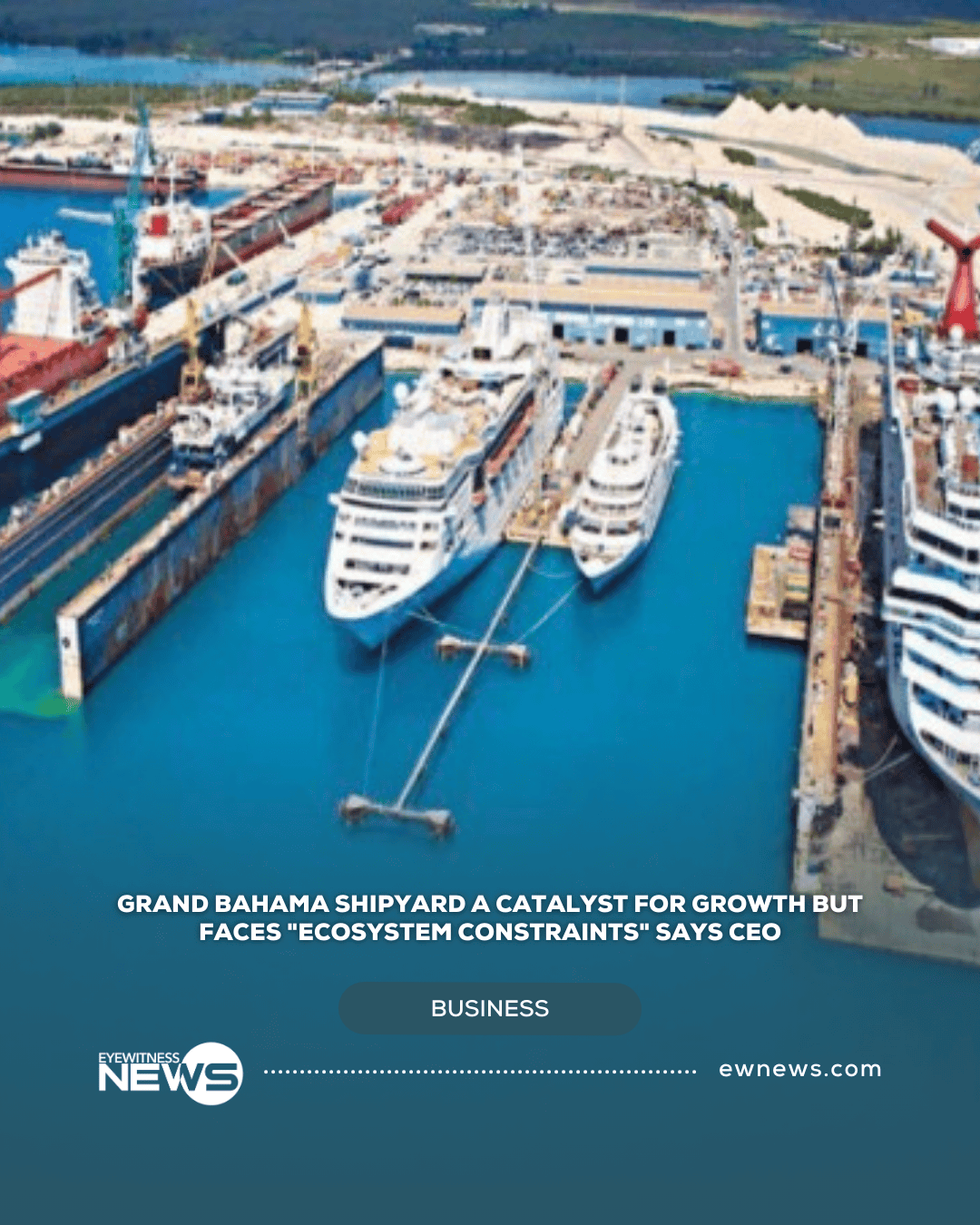
NASSAU, BAHAMAS – Grand Bahama Shipyard is poised to be a catalyst for industrial growth on the island, but real “ecosystem constraints” such as shortages in skilled labor, logistics, and regulatory support are hampering its potential according to its Chief Executive Officer.
Chris Earl while addressing the Grand Bahama Economic Outlook on Thursday noted that the shipyard us carrying approximately $650 million in debt, while facing stretched infrastructure, labor shortages, regulatory hurdles, and gaps in the supporting ecosystem.
“The honest truth is that the ecosystem is currently our constraint,” said Chris Earl, CEO of Grand Bahama Shipyard. “A plane ticket to get off the island yesterday was $3,300. Radiance of the Seas, a Royal Caribbean ship, had to send all of its contractors home because we completed their docking yesterday. Customers cannot book enough hotel rooms in April and May to support their projects.”
Earl warned that these challenges are visible to global clients. “Every customer has a choice, and they are watching us closely. Shipyards compete globally on price, speed, reliability, and total experience—not just dry dock availability. What happens here now will influence decisions for years to come.”
The shipyard has delivered a broad range of capabilities—including dry docking, steel and pipe fabrication, mechanical and electrical overhaul, interior installations, engineering, and naval architecture—but peak demand has exposed fragility. “Last month, our first experience with peak demand really showed where the gaps are—in labor, logistics, and services. Certified trade labor are being asked to work 60 to 70 hours a week, many without a day off since Christmas,” Earl explained.
Regulatory and permitting issues are compounding the challenges. “Grand Bahama Shipyard—and the Bahamas, more importantly—is getting a bad reputation due to work permitting delays. Highly qualified tradespeople are leaving or turning down opportunities to come here,” Earl said. Apprenticeship programs have been reduced due to limited supervision, leaving young Bahamians without opportunities for world-class training.
Despite the challenges, the shipyard remains a strategic anchor for local economic growth. “Every dollar the shipyard generates or spends produces nearly two dollars of local economic impact,” Earl said. In 2025, that impact totaled roughly $60 million, and with the right ecosystem—including skilled trades, logistics, accommodation, and government alignment—it could reach $225 million by 2030.
“The shipyard is the anchor tenant, but the real growth comes from the ecosystem of businesses, people, and employment surrounding it,” Earl concluded. “Coordinated action between industry, government, investors, and the community is essential. Real success will only happen if we get this ecosystem right.”