


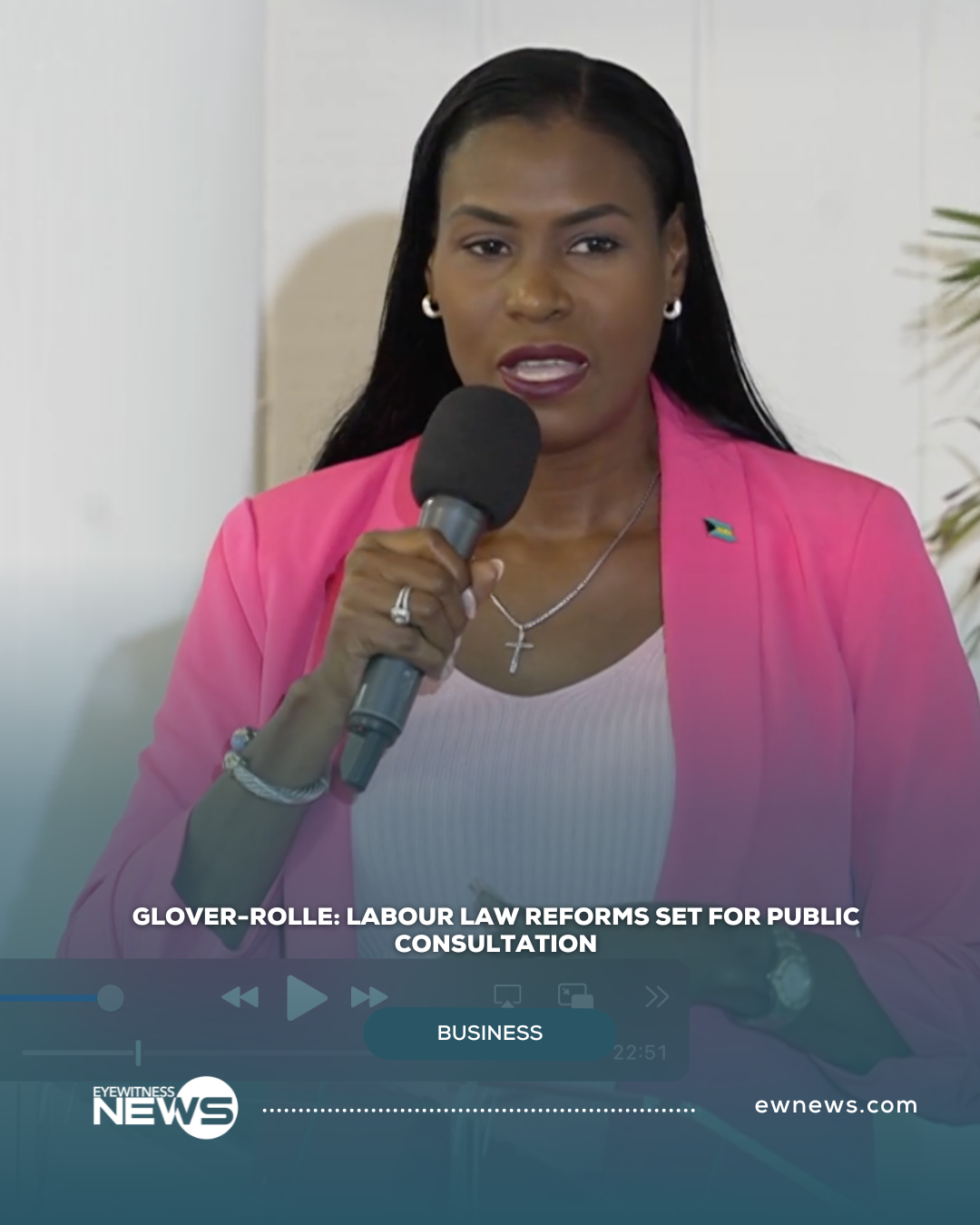
NASSAU, BAHAMAS- Labour and Public Service Minister Pia Glover-Rolle confirmed yesterday that sweeping labour law reforms, including updates to the Employment Act, Industrial Relations Act, Public Service Act, and General Orders, will soon go to consultation, with proposals ranging from expanded maternity and new paternity leave to mental health leave and stronger workplace protections.
“These reforms that you will hear about as we go to public consultation over the next few weeks will include expanded maternity leave, new paternity leave national policy, mental health leave, better protections for casual workers, remote work provisions, stronger anti-harassment measures, and updated occupational safety and health standards, to name a few,” she told attendees at the Abaco Business Outlook.
She emphasized that the reforms will benefit all workers, noting that they “will not only help you as business owners to remove the ambiguity that exists in our labor laws, but it’ll also support reforms for every worker. And that is whether you are a worker on the construction site, on the factory floor, or up to the executive level.”
On wages, Glover-Rolle addressed calls for a minimum wage increase. “We have not yet received any recommendation regarding wage increase, or minimum wage increase, or a livable wage, from the National Tripartite Council,” she said. “But when we do, the government intends to act responsibly, as always, to increase wages while protecting business, while protecting job growth, and while ensuring sustainability of business. We believe in fairness, but not just to our workers, but to you, the business owners, who are doing your best to keep your business afloat.”
The minister linked labour reform and wage policy to the Davis administration’s broader strategy for inclusive national growth. “Growth without inclusion is progress without purpose,” she said. “We can stand here and say that this is booming, and that is booming, and we’re experiencing success in this way and that way. But if you, if we, the people aren’t feeling it, then is it truly success?”
She stressed that these gains must reach local communities. “That means Abaco has to feel this national progress too. And that’s why we’re here today. To ensure that you aren’t spectators, to ensure that you are participants, to ensure that you’re beneficiaries, to ensure that we are hearing what it is you have to say.”
Skills development is a key part of the government’s labour strategy. Glover-Rolle highlighted initiatives including the National Apprenticeship Program, the expansion of BTVI campuses, the Bahamas Polytechnic Accreditation Training Hub (BPATH), and the new Upskill Bahamas online training platform. She also flagged the launch of the Creative and Performing Arts School of The Bahamas (CAPAS) as “not just a cultural investment, but it’s an economic strategy” to prepare young Bahamians for careers in media, fashion, audio engineering, and cultural tourism.
To boost productivity and competitiveness, the minister announced the formation of a National Productivity Task Force, which will later evolve into a Bahamas National Productivity Council. “Higher productivity means higher wages, greater output for your business, greater profitability, stronger businesses, and that translates into a more resilient economy,” she said.
“Our vision for Abaco remains one where infrastructure is resilient and modern, where jobs are available locally, on the ground, whether that’s in agriculture, hospitality, construction, culture, public service, where young people can build careers here at home,” Glover-Rolle said. “We want businesses, large and small, to thrive — and that comes through partnerships, not just for growth, but for shared growth, not for GDP, but for dignity, and not for numbers on a chart and statistics that sound good in a speech, but for better lives across every Bahamian island, every Bahamian settlement, and for every Bahamian.”