


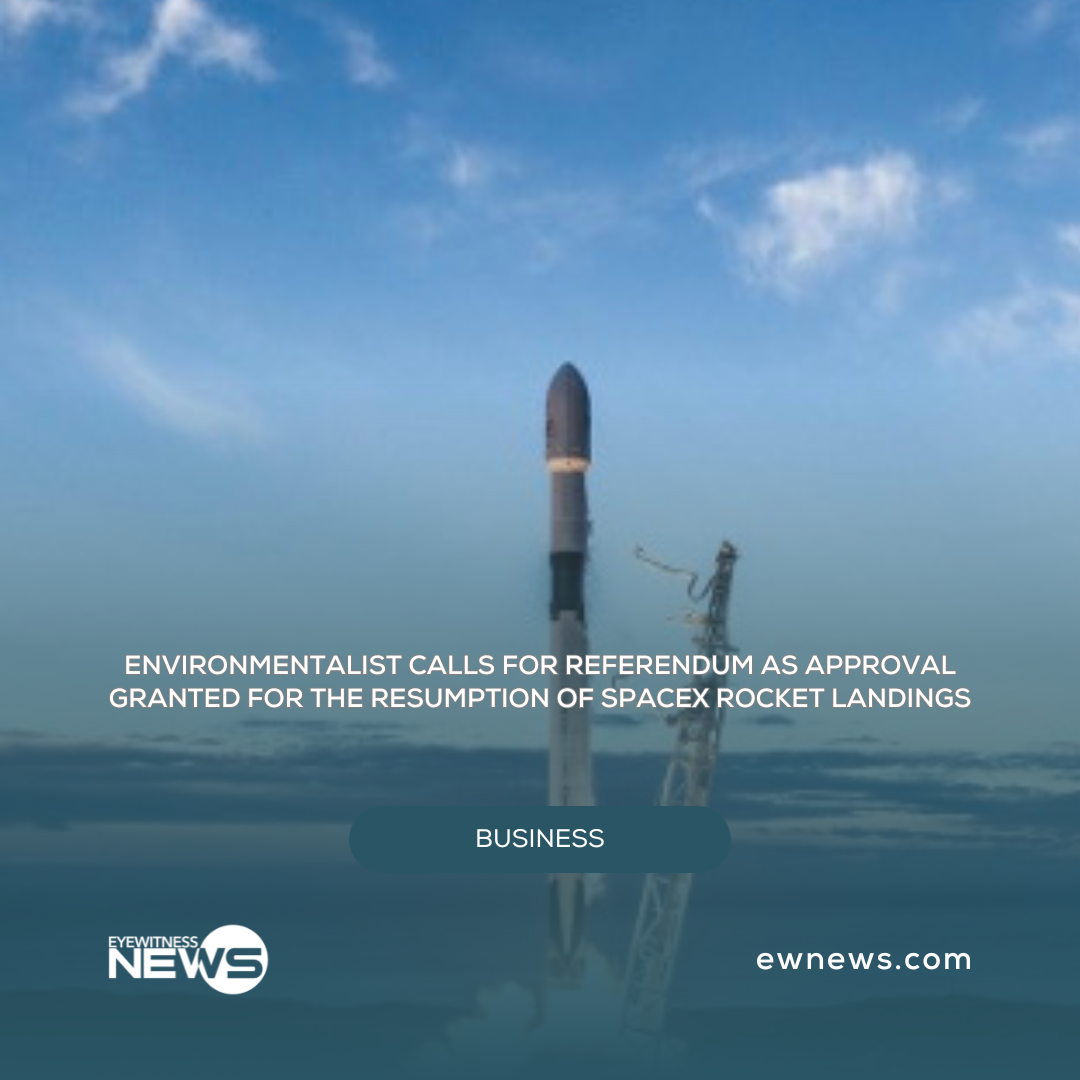
NASSAU, BAHAMAS — A well-known environmentalist is calling for a national referendum after Bahamian regulators approved the resumption of rocket landings by SpaceX in the country’s waters, warning that the move could pose environmental and economic risks.
Joe Darville of Save The Bays said he was “completely caught aghast” upon learning that authorities had granted permission for another flyover and landing without wider public consultation.
“After the incidents that took place in our waters and in the Turks and Caicos, I assumed any such approval would have been suspended for a long time,” Darville said, referring to concerns about rocket debris and potential environmental harm.
He warned that The Bahamas’ vast marine environment — central to tourism, fisheries, and national identity — could be placed at risk by potential accidents. “We have no right to gamble with our ocean — these rockets are not guaranteed accident-free, and the risks to our waters and marine life are real,” he said.
Darville also dismissed suggestions that space-related activity could boost tourism, calling the idea unrealistic given the perceived dangers, and insisted that any decision with possible environmental consequences should be put directly to the public.
“Any activity with this level of potential impact on our territory should be put to a referendum of the Bahamian people,” he said, adding, “No government alone should decide something that carries serious environmental hazards for our country.”
However, Rhianna Neely, Director of the Department of Environmental Planning and Protection (DEPP), appearing on Beyond the Headlines with Shenique Miller Tuesday night emphasized that the approved Falcon 9 exercises differ significantly from the Starship test flight that disintegrated over regional waters last year.
“It’s important to understand that the Falcon 9 exercises approved for work in The Bahamas are very different from the Starship test flight that experienced the unfortunate blow-up,” Neely explained, noting that the earlier incident involved a test flight that did not require or receive Bahamian government approval to fly over the country.
She added that aircraft and spacecraft frequently pass through international airspace above The Bahamas, meaning incidents can occur even without local authorization. By contrast, she said, the Falcon 9 operations cleared by regulators involve controlled re-entry into Bahamian airspace and waters, supported by extensive environmental reviews.
According to Neely, authorities examined detailed environmental baseline studies, management plans, and impact assessments, and conducted a public consultation process during the pause in operations. “We learned lessons from the previous exercise, particularly regarding sound impacts,” she said, adding that environmental monitors, independent scientists, and third-party reviewers will be engaged to collect data and oversee the activities.
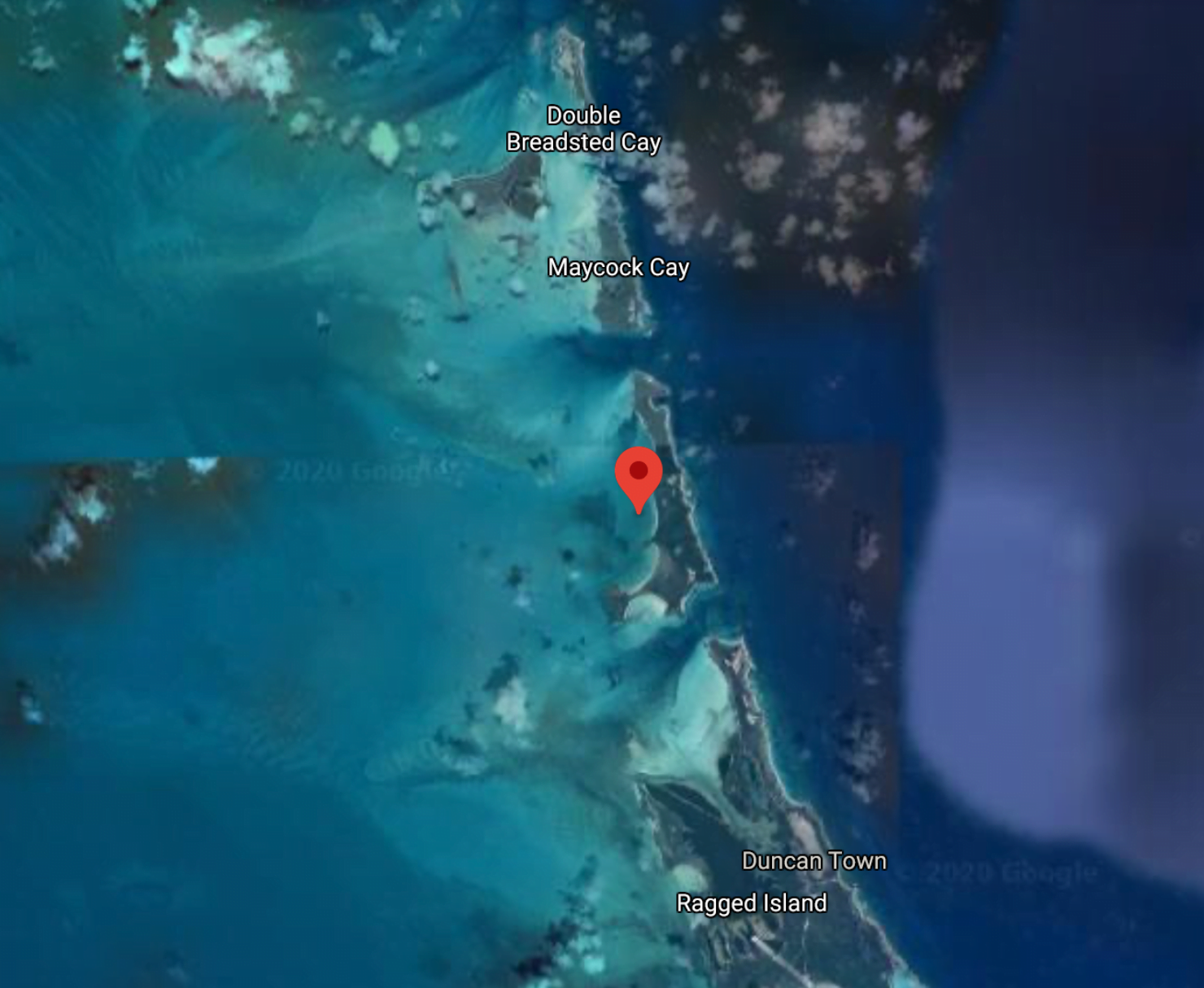
The Civil Aviation Authority of The Bahamas (CAAB) confirmed that a Falcon 9 landing is planned in the Exuma Sound on February 18, weather permitting, after a year-long pause triggered by environmental reviews. Officials said SpaceX provided the necessary approvals to resume operations, while cautioning that residents in parts of the country may experience multiple sonic booms during the landing window.