


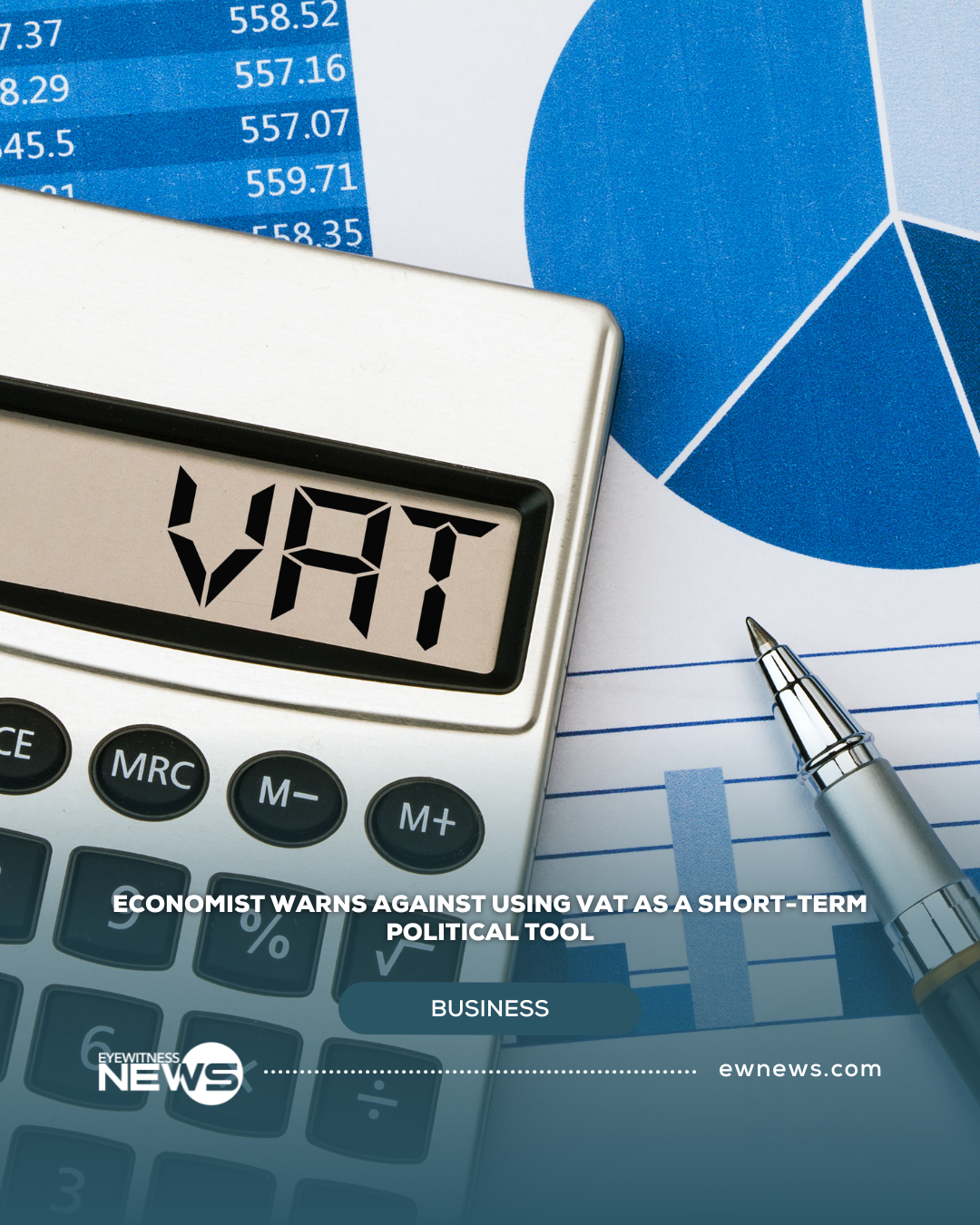
NASSAU, BAHAMAS — Value Added Tax (VAT) should not be treated as a short-term political lever but as a central pillar of fiscal stability, economic credibility, and long-term development a noted economist has warned.
Bahamian economist Therese Turner-Jones during a webinar hosted by the Organization for Responsible Governance (ORG) examining the impact of VAT in The Bahamas noted that The Bahamas has traditionally operated as a low-tax jurisdiction, without personal income tax or corporate income tax, relying instead on import duties, stamp duties and property taxes. As population growth and public demand for services increased however, those revenue streams proved insufficient to keep pace with government spending.
Turner-Jones noted that VAT was introduced in 2015 at a time when The Bahamas faced widening fiscal deficits and a narrow tax base.
“As the economy expanded and the population grew, the demands on government increased,” she said, pointing to healthcare, education, and infrastructure as areas requiring sustained investment. VAT, she explained, offered a broad-based and relatively easy-to-administer solution.
Globally, VAT is used in more than 176 countries and is widely regarded as one of the most efficient consumption taxes. Turner-Jones noted that even at its original 10 percent rate, The Bahamas’ VAT remained comparatively low by regional standards, with countries such as Jamaica and Barbados imposing rates exceeding 17 percent.
Turner-Jones, cautioned that repeated adjustments to VAT policy—particularly those driven by political considerations—risk undermining the efficiency and credibility of the tax system. VAT, she emphasized, is not designed to function as a campaign tool but as a reliable revenue mechanism that supports national development.
“VAT is not a political toy,” Turner-Jones said, warning that ad hoc exemptions and sudden rate changes can weaken fiscal discipline, confuse taxpayers and businesses, and erode confidence in government policy.
“I think when we start tampering with the VAT, exemptions here and exemptions there, that may not actually result in what it is that you want to do, which is to affect people who need it the most. You start to undermine the efficiency of the VAT, the collection of the VAT, confusion in the minds of everybody, including private sector players, who are now wondering, okay, it’s 5 percent off these items today, is it going to be 5 percent on other items tomorrow? It tends to undermine the credibility of the tax and tends to undermine the credibility of fiscal policy generally when you start to do these ad hoc changes,” said Turner-Jones.
Turner-Jones also highlighted the link between stable tax policy and investor confidence, particularly as public debt approaches 75 percent of gross domestic product. Excessive borrowing, she cautioned, places pressure on fiscal sustainability and raises concerns among international lenders and investors.
“When revenues become uncertain, borrowing fills the gap,” Turner-Jones said. “That is not a path any small economy wants to stay on for long.”
Keisha Ellis, Executive Director of Hands for Hunger noted that the impact of VAT reductions on food has been modest at best, particularly for low-income households already struggling with high living costs. She noted that roughly 70 percent of the organization’s clients are employed and rely on food assistance to supplement limited household budgets.
In January Prime Minister Philip Davis announced the removal of VAT on unprepared food.
The latest reduction in VAT to 0 will go into effect on April 1.
“It seemed very much like it was a haphazard decision, you know, election time is coming up. What is something that we can toss at people that make them feel like we are making major structural changes that will have an impact on the citizens and especially the most vulnerable citizens? I think what was motivating for me, especially as a political science lecturer, was how many of our clients saw straight through it,” said Ellis.
Both Ellis and Turner-Jones agreed that blanket VAT exemptions are a blunt instrument for addressing poverty and vulnerability. Instead, they argued for targeted, data-driven social assistance programs designed to reach those most in need without eroding the revenue base required to fund public services.
Turner-Jones advocated for means-tested social safety nets, including conditional cash transfer programs tied to school attendance, healthcare participation, or workforce engagement. Such programs, she said, allow governments to support vulnerable populations directly while preserving the integrity of the tax system.
“There is no reason to subsidize consumption for people who can afford to pay,” she said. “Targeted assistance is more efficient and more dignified.”
She further noted: “There are two sides to the budget,” Turner-Jones said. “Revenue and expenditure. We talk a lot about taxes, but not nearly enough about efficiency and accountability.”
She called for stronger oversight of public spending, improved procurement practices, greater digitization of government services, and more consistent engagement with oversight bodies such as the Fiscal Responsibility Council and the Auditor General’s Department.