


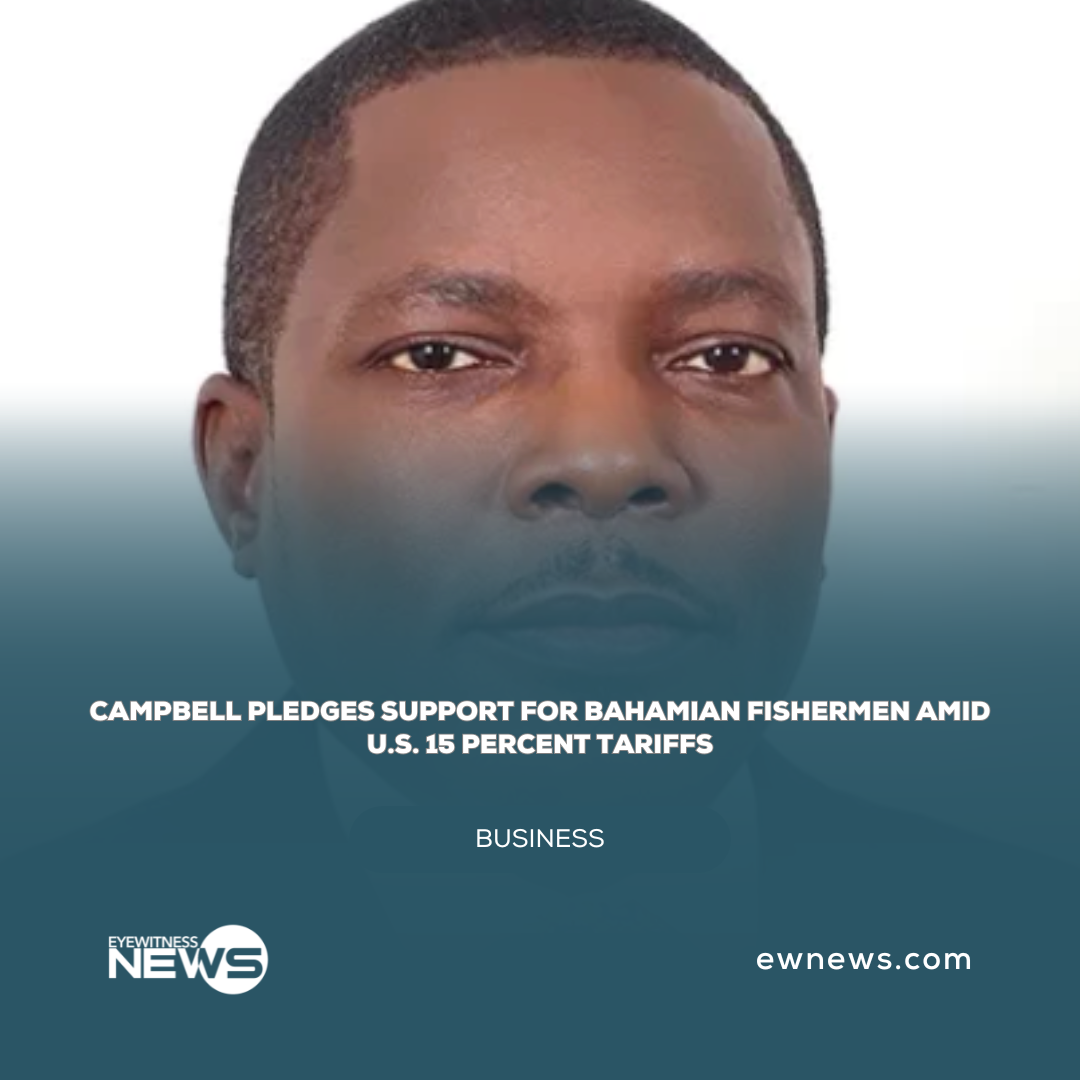
NASSAU, BAHAMAS – Minister of Agriculture & Marine Resources Jomo Campbell has acknowledged the seriousness of the newly imposed U.S. 15 percent tariffs on seafood exports and affirmed that the government is taking immediate steps to ensure Bahamian fishermen are not disadvantaged.
“Our fishermen are not just stakeholders in an industry; they are stewards of our waters, pillars of our Family Islands, and critical contributors to our national economy. Their livelihoods must be protected. The introduction of a 15 percent tariff on our seafood exports presents a direct challenge to one of The Bahamas’ most vital industries,” Minister Campbell said in a statement.
The minister confirmed that the government is engaging international partners through diplomatic and trade channels to safeguard market access. At the same time, authorities are exploring diversification strategies, value-added processing, and regional market expansion to strengthen the long-term resilience of the fisheries sector.
Campbell also highlighted the ongoing threat of illegal poaching in Bahamian waters, stressing that enforcement must be “visible, consistent, and uncompromising.” He noted that initiatives such as Operations Red Dawn and Dragnet, in partnership with WILDAid and The Nature Conservancy, are already underway to protect the nation’s marine resources.
“The Bahamas Government is standing first for Bahamians, and that includes defending our fishermen, guides, processors, and all who depend on our waters for their livelihood, while carefully considering all appropriate measures to strengthen and protect the industry going forward,” the minister added.
Industry leaders echoed the government’s concerns. Adrian LaRoda, president of the Bahamas Commercial Fisheries Alliance, recently told Eyewitness News that the tariff increase could disrupt advance pricing agreements with U.S. wholesalers just as the new crawfish season begins.
“It is concerning. Our wholesalers hedge their quantities and prices with us ahead of the crawfish season, so we know what we have to harvest. If these tariffs are still in place going into the next season, there’s nothing we can do about it — and that could hurt,” LaRoda said.
He cautioned that the biggest uncertainty lies in how U.S. buyers respond.
“It would really hurt us if wholesalers come back and say we have to split the cost or reduce our export price to compensate. That would be a big hit for us as an economy,” he said.
Fisheries products, particularly seafood, remain a vital source of revenue and employment for The Bahamas, especially in the Family Islands. According to the Bahamas National Statistical Institute, exports to the United States totaled over $110 million in the third quarter of 2025, representing the majority of the country’s foreign goods sales.