


NASSAU, BAHAMAS- Andros is positioning itself closer to the United Nations Sustainable Development Goals with the introduction of three hybrid power plants designed to significantly cut air pollution, reduce greenhouse gas emissions and modernize the island’s electricity supply.
The new facilities, to be constructed in Nicholl’s Town, Fresh Creek and The Bluff, will replace aging diesel generators with a hybrid system powered by liquefied natural gas (LNG), solar panels and battery energy storage. The transition is expected to eliminate approximately 2,900 metric tons of carbon dioxide emissions each year – roughly equivalent to removing hundreds of gasoline-powered vehicles from the road annually – along with sharp reductions in nitrogen oxides, sulfur oxides and fine particulate pollution.
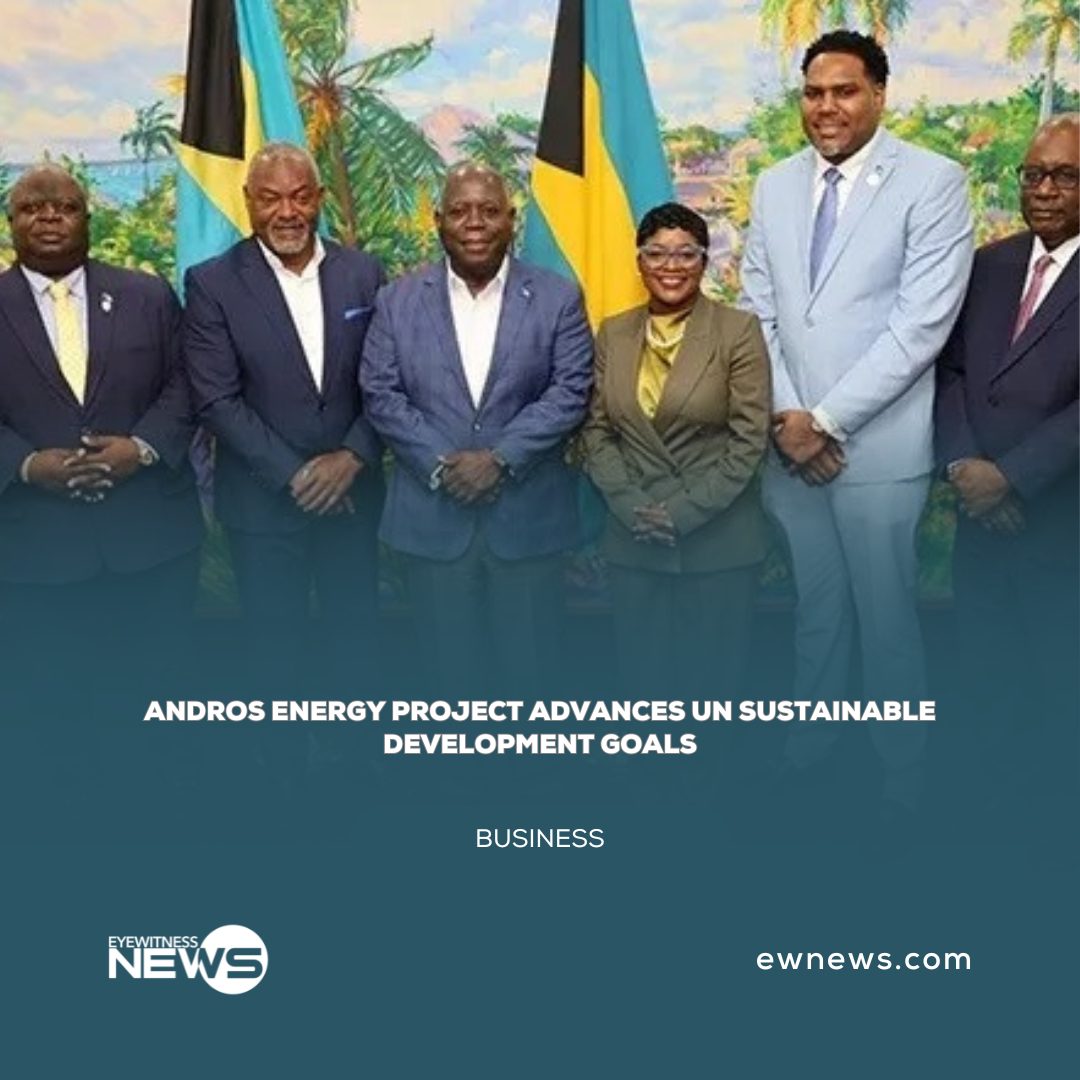
For Minister of State with responsibility for Disaster Risk Management Hon Leon Lundy, the environmental dimension is inseparable from the island’s long-term development strategy.
“This PPA represents a clear and confident commitment to growth for our Family Islands and especially for the people of Andros,” Minister Lundy shared at the official press conference announcing the deal. “It is a declaration that the Sleeping Giant is awake and moving with purpose.”
In addition to his role as Minister of State, Lundy serves as Member of Parliament for Central, Mangrove Cay, and South Andros. He described the project as both infrastructure reform and stewardship with plans for land at existing Bahamas Power and Light sites to be remediated to meet environmental standards. Additionally, the Fresh Creek facility has been repositioned to reduce noise and safety concerns for nearby residents.
During the announcement, Prime Minister Philip E Davis expounded on the government’s energy reform plans sharing a 3-pillar framework.
“Our energy reform work is guided by three clear aims: Bring down electricity costs for households and businesses. Replace old, inefficient power plants across The Bahamas with better, more efficient systems. Provide reliable electricity to communities across all our islands. This agreement moves each of these aims forward for Andros.”
The three plants will deliver a combined 7.2 megawatts of installed capacity, with the renewable portion of the project pegged at 18% of total capacity, according to Andros Renewable Energy founder and CEO Kenwood Kerr. The hybrid design allows cleaner fuel to replace diesel immediately, while creating a platform for expanded renewable integration over time.
Andros, home to vast wetlands, blue holes and one of the region’s most expansive barrier reef systems, sits at the frontline of climate vulnerability. Reducing sulfur and nitrogen emissions not only lowers greenhouse gases but also improves local air quality – an issue often overlooked in smaller island grids dependent on heavy diesel generation.
Project officials say the new system will cut nitrogen oxide emissions by 90 percent, sulfur oxide emissions by 99 percent and particulate matter by 95 percent compared to the existing diesel plants.
In addition to environmental benefits, the development is projected to create around 20 long-term operational jobs, along with temporary employment during the 18 month construction phase.
While LNG remains a fossil fuel, officials describe the hybrid model as a transitional step toward cleaner, more resilient systems consistent with global sustainability frameworks.
For Andros, the shift represents more than upgraded machinery. It reflects a deliberate move toward aligning economic expansion with environmental responsibility – ensuring that as the island grows, it does so with a lighter footprint and stronger safeguards for the natural resources that define it.