


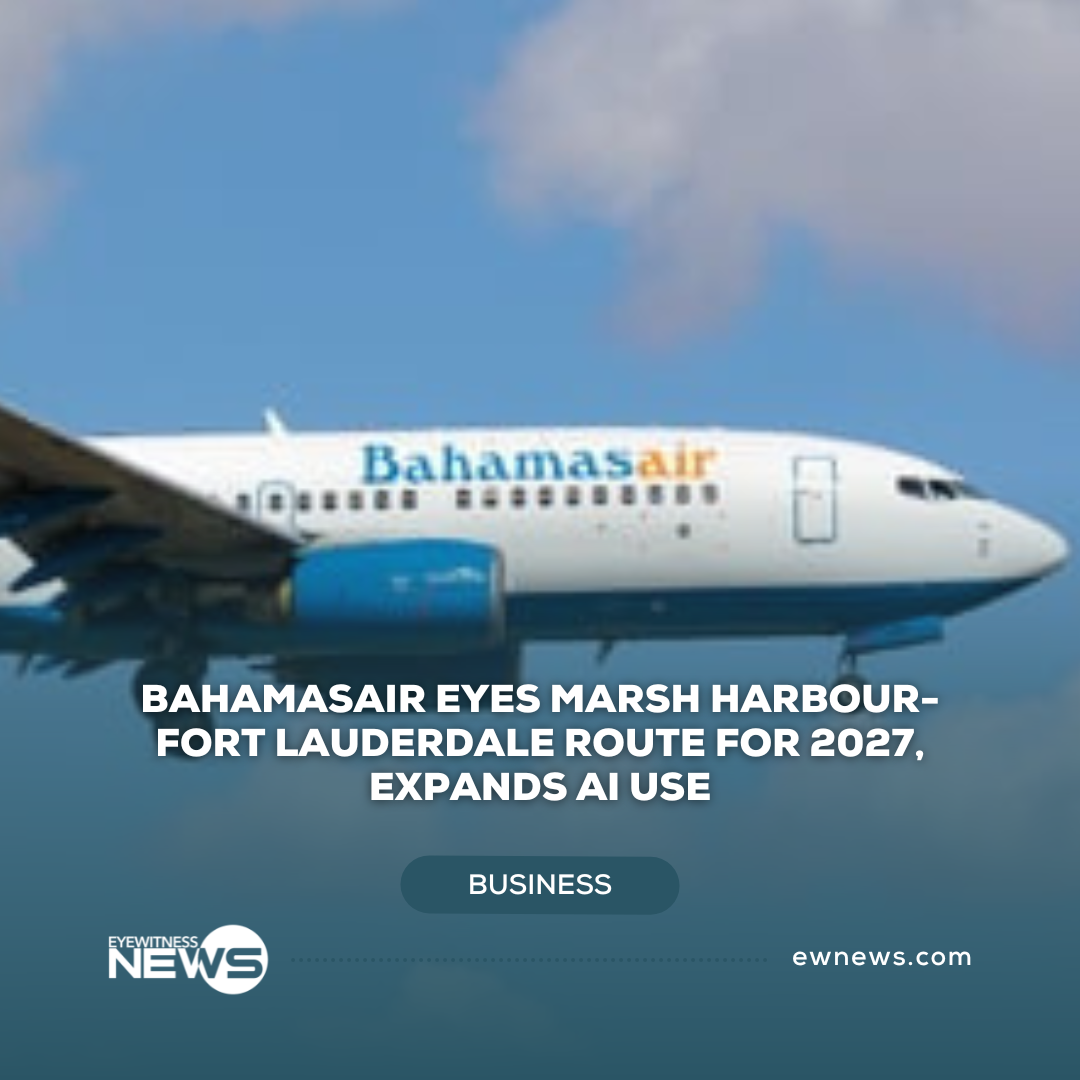
NASSAU, BAHAMAS — Bahamasair is targeting 2027 for the launch of direct service between Marsh Harbour and Fort Lauderdale, although Managing Director Tracy Cooper said the expansion hinges on securing funding to return aircraft currently sitting in the airline’s hangar to service.
Speaking at the Abaco Business Outlook, Cooper said Bahamasair has long wanted to operate the route but does not presently have the available aircraft capacity.
“Bahamasair wants to do Abaco-Fort Lauderdale. We wanted to do it since we stepped out of the arena,” Cooper said.
“The only issue is that we, at this particular point, just don’t have the equipment to expand to do that at this time.”
Cooper clarified that the airline owns the necessary equipment, but it is awaiting funding for aircraft maintenance.
“We do have the equipment but it’s sitting in the hangar waiting for some help from the owners of the airline,” he said.
Cooper said Bahamasair is in discussions with the Ministry of Finance and was recently asked to submit an expanded plan outlining the funding required to return the aircraft to operation.
“It was brought up in a meeting about two weeks ago, and they told us to come back with an expanded plan to see how we can get those monies to get those planes out there,” he said.
“We’re hoping that sometime in 2027 we could start that route from Marsh Harbour to Fort Lauderdale.”
Bahamasair currently operates three daily flights between Nassau and Abaco, except on Tuesdays and Wednesdays, along with service between Marsh Harbour and West Palm Beach five days per week.
Cooper said the national flag carrier is likely responsible for bringing the largest number of passengers into Abaco each week.
He also revealed that Bahamasair is preparing to incorporate artificial intelligence into its booking and customer-service operations as travellers increasingly use AI platforms to research and plan vacations.
The airline intends to adopt an “offer and order” system designed to provide customers with more personalised travel options and connect Bahamasair’s destinations with accommodations, attractions and experiences available on each island.
“What you’re going to see with Bahamasair in short order, using the offer and order — and we’re just trying to make sure we get the pricing right — is that you can tie into Bahamasair, look around our platform and be able to seek all of the avenues that we go to, including Abaco as a location,” Cooper said.
Travellers could then explore the attractions and experiences available in Abaco and other Family Islands before deciding where to visit.
Cooper urged tourism operators to ensure their websites and digital platforms are optimised for AI searches, warning that businesses without an effective online presence could be overlooked when potential visitors search for Bahamian destinations and experiences.
“If you’re not AI-enabled, then that means that the search engine simply will step over you,” he said.
Internally, Bahamasair plans to introduce an AI-powered telephone agent named “Sophie” before the end of the year.
Cooper explained that most calls received by the airline’s reservations department involve customers seeking basic information, changing travel dates or making other inquiries rather than purchasing tickets.
Sophie will answer routine questions by retrieving information from Bahamasair’s systems. Customers seeking to purchase tickets will be transferred to a reservations agent.
“This is not people replacement,” Cooper said. “It’s just that we can do that better with an AI component.”
He said the technology would allow Bahamasair employees to focus more heavily on revenue-generating transactions while improving the speed and efficiency of responses to routine customer inquiries.