



NASSAU,BAHAMAS: A $43.1 million liability connected to two public-private partnership arrangements has crystallised, but the Government has not explained how the obligation will be treated in its accounts or why it was excluded from its list of government guarantees, the Fiscal Responsibility Council has revealed.
The independent fiscal watchdog raised the concerns in its review of the Government’s 2026 Fiscal Strategy Report, calling for greater disclosure of the risks taxpayers face from public-private partnerships.
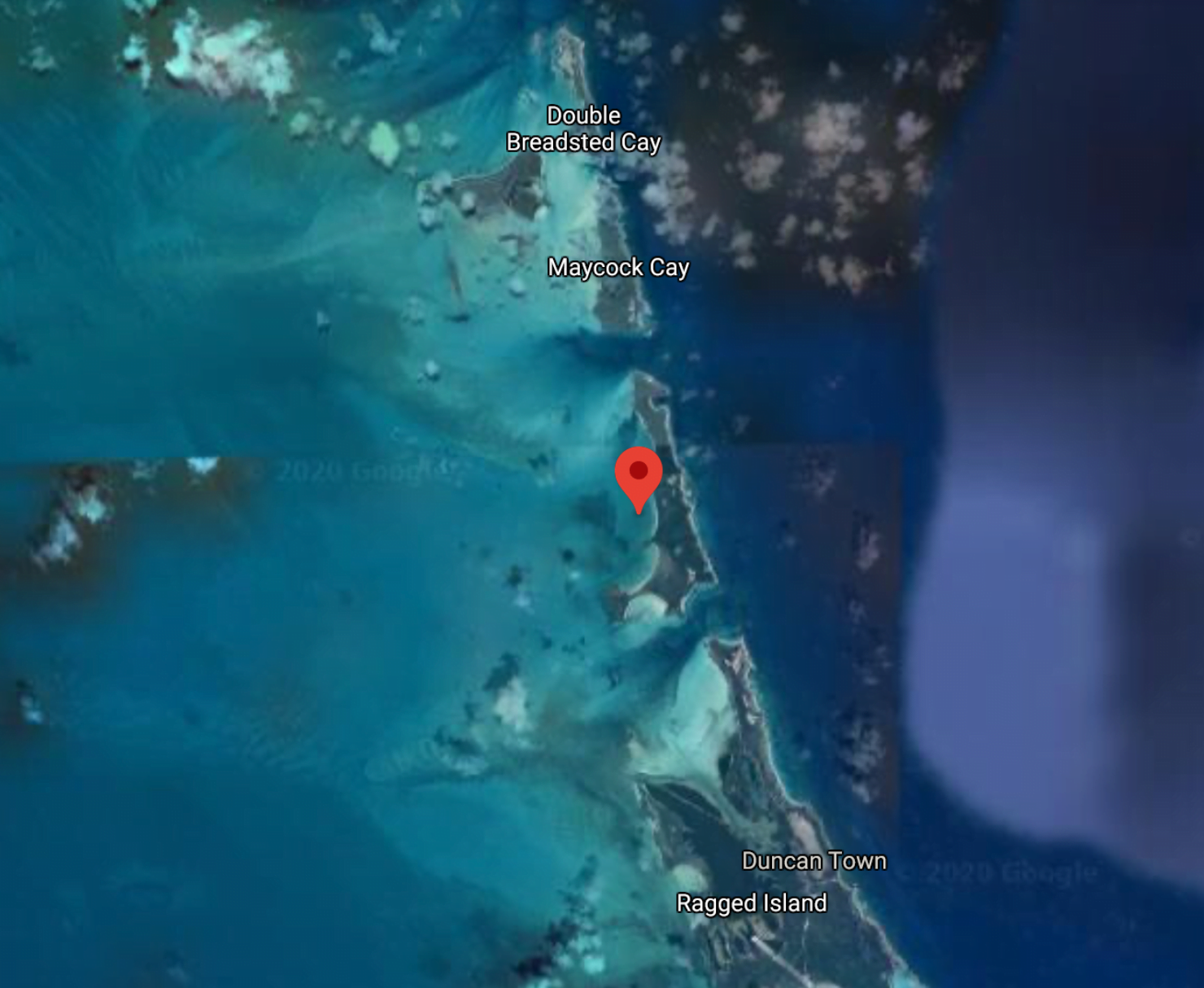
According to the Council, the Government faces a potential contingent liability of $140 million arising from financing arrangements with Bahamas Stripping and Cat Island Infrastructure Company Limited. Of that amount, $43.1 million has already crystallised, meaning the liability is no longer merely a potential exposure.
The FRC said the development highlights the urgency of establishing a mechanism for the public disclosure of PPP arrangements and their potential effect on the Government’s finances.
“The FRC also queries how the stated $43.1 million crystallised liability will be treated in the Government’s accounting,” the Council said. “While the Government has projected publication and implementation of a PPP Assessment Framework in the near term, the FRC is of the view that these are fundamental questions for which details should have been included.”
The report said the $140 million potential liability was disclosed in the Pre-Election Economic and Fiscal Update published on April 13, 2026. The subsequent Fiscal Strategy Report confirmed that $43.1 million of the obligation had crystallised.
However, the Council noted that the $140 million exposure was not included among the government guarantees listed in the Fiscal Strategy Report. It questioned how the Government distinguishes the obligation from other contingent liabilities and how the crystallised portion will affect the fiscal accounts.
The FRC said the Government still has no established mechanism for disclosing important information about PPP contracts, including their commencement dates, duration, revenue-generating potential and the nature and extent of any associated debt obligations.
The Government assigned PPP risks a rating of “medium” fiscal impact and “possible” likelihood. However, the Council maintained that the crystallisation of a portion of the $140 million exposure illustrates why comprehensive reporting is necessary.
“These developments underscore the urgency for a mechanism for public disclosure on all matters pertaining to PPPs, to enable comprehensive assessment of the impact of PPPs on the overall fiscal performance,” the FRC said.
The warning formed part of a broader assessment in which the Council described the Government’s near-term fiscal outlook as “aggressive” and warned that meeting its targets could require a downward adjustment in government spending.
The Fiscal Strategy Report projects revenue of $4.363 billion and total expenditure of $4.140 billion for the 2026/2027 fiscal year, producing a $223.1 million surplus equivalent to 1.2 percent of gross domestic product.
Revenue is forecast to rise from $3.896 billion in 2025/2026, while expenditure is projected to increase from $3.821 billion. The Government is then forecasting significantly larger surpluses of $532.2 million in 2027/2028, $870.2 million in 2028/2029 and more than $1.062 billion in 2029/2030.
Those surpluses would represent 2.8 percent, 4.3 percent and 4.6 percent of GDP, respectively.
The Council acknowledged the projected improvement in the fiscal and primary balances but warned that revenue had already been performing below budget expectations while substantial economic risks persisted.
“Below-budget revenue performances to date amid persistent downside risks suggest that the near-term fiscal outlook is aggressive,” the FRC said. “Achievement could require downward adjustment in the spending programme.”
The Council said the Government’s fiscal strategy was built around stronger tax administration, improved compliance and revenue mobilisation rather than the introduction of significant new taxes. However, it warned that the anticipated revenue gains could take longer than projected to materialise.
Total revenue is expected to increase from 22.1 percent of GDP in 2025/2026 to 23.6 percent in 2026/2027 before reaching 24.6 percent by 2029/2030. That would still be below the Government’s revised target of 25 percent of GDP.
The Government extended the deadline for reaching the 25 percent revenue target from 2025/2026 to 2029/2030. The FRC described the more gradual approach as prudent and more realistic but said it represented a significant departure from the strategy presented a year earlier.
It called on the Government to provide more information explaining the policy considerations behind the change.
The Council said tax administration reforms could strengthen revenue mobilisation, improve compliance and increase the efficiency of the tax system. However, it called for the reforms to be accompanied by clear implementation schedules, revenue estimates, technological upgrades, information-sharing arrangements and adequate institutional capacity.
“The FRC also notes that as the projected increases in revenue are expected to be derived from improvements in tax administration and compliance, actual gains may materialise more slowly than anticipated,” the report said.
Any revenue shortfalls, spending overruns or unanticipated extraordinary expenditure could undermine the targeted surpluses and slow the pace of debt reduction, it added.
The report also identified an apparent mismatch between the Government’s fiscal surplus objective and its actual fiscal projections. While the fiscal objective calls for a surplus of 1.7 percent of GDP in 2026/2027, the Fiscal Strategy Report forecasts a surplus of only 1.2 percent.
The FRC said achieving the targeted surplus would depend heavily on the timely and effective implementation of proposed revenue and expenditure reforms.
It also called for details on the expected contribution of individual policy measures, their implementation timelines and the sensitivity of the fiscal outlook to weaker economic growth, natural disasters and external economic shocks.
The Council similarly questioned the basis for expanding the fiscal balance target from allowing a deficit of up to 0.5 percent of GDP to requiring a 1.7 percent surplus in 2026/2027, followed by increasingly larger surpluses over the medium term.
While such surpluses could accelerate debt reduction, the FRC said additional information would improve transparency and clarify the policies supporting the adjustment.
Capital expenditure is meanwhile forecast to decline from 2.2 percent of GDP in 2026/2027 to 1.8 percent by 2029/2030. That is well below the Government’s stated capital expenditure target of at least 3.5 percent of GDP.
The Council said the forecast suggests that fiscal tightening will be driven largely by reductions in expenditure. It recommended that the Government consider revising its capital expenditure target so that it is consistent with its actual policy framework.
The Government has identified healthcare, housing, infrastructure, energy and digital systems as high-impact areas for capital investment. However, projected capital expenditure is expected to fall from $415.8 million in 2026/2027 to $390.7 million in 2027/2028 and $369.2 million in 2028/2029 before rising slightly to $384 million in 2029/2030.
The Council also identified inconsistencies in the Government’s debt projections. The Fiscal Strategy Report forecasts that central government debt will decline from $11.387 billion, or 64.6 percent of GDP, at the end of 2025/2026 to $11.097 billion in 2026/2027 and $10.487 billion, or 52.2 percent of GDP, by 2028/2029.
The Draft Estimates of Revenue and Expenditure project $934.5 million in borrowing and $1.054 billion in debt repayments during 2026/2027. That would result in a net reduction in liabilities of $119.5 million.
However, the Fiscal Strategy Report projects a larger $289.8 million reduction in the debt stock for the same period.
The FRC called for the debt projections to be revised and reconciled. It also found that the Fiscal Strategy Report did not provide the medium-term financing outlook required under the Public Finance Management Act.
“Disclosure of projected medium-term financing is a core feature that aligns with the principle of fiscal transparency,” the Council said.
Despite those inconsistencies, the FRC said its debt sustainability analysis found that the debt-to-GDP ratio remains on a downward trajectory.
Its analysis projects debt at 44.6 percent of GDP in 2029/2030, compared with the Government’s projection of 44.5 percent under its debt sustainability model. The Council estimated that a constant annual surplus of 1.7 percent of GDP between 2025/2026 and 2030/2031 would be sufficient to achieve the target of reducing debt to 50 percent of GDP or less.
The baseline scenario projects that the target could be reached one year early and assigns a 75 percent probability to its achievement.
However, the Council warned that weaker revenue, adverse economic developments and the crystallisation of contingent liabilities could disrupt the projected decline in debt.
Government guarantees represent another growing exposure. The stock of guarantees stood at $315.1 million, or 1.8 percent of GDP, at the end of March 2026 but is projected to more than double to $718.1 million, or 3.9 percent of GDP, during 2026/2027.
The increase reflects approved guarantees for the Grand Bahama Energy Company, the Public Hospitals Authority and Bahamas LNG Partners. The stock is forecast to rise further to $730.7 million by the end of 2028/2029.
The FRC repeated its recommendation that the Government establish a ceiling on total guarantees as a percentage of GDP.
It also challenged the Government’s decision to assess the probability of guarantee-related losses based on the absence of recent guarantee calls. The Council said the financial health of the entities benefiting from guaranteed loans would be a more appropriate measure of the risk.
The Council additionally pointed to a difference between the guarantees identified in the Fiscal Strategy Report and those listed in the Draft Estimates. The Estimates refer to guarantees for the Bahamas Mortgage Authority, the Bridge Authority and the Education Loan Authority, while the Fiscal Strategy Report identifies Grand Bahama Energy Company, the Public Hospitals Authority and Bahamas LNG Partners.
The FRC called for clarification on when the various guarantees will be issued.
Other major fiscal risks include state-owned enterprises, pension obligations and government payment arrears.
The Fiscal Strategy Report assessed only nine of the Government’s 32 public agencies and government business enterprises because of data limitations. The FRC said a stronger framework is required to compel state-owned enterprises to meet their financial reporting obligations.
Government payment arrears stood at $241.8 million at the end of December 2025, almost double the $122.4 million recorded a year earlier. The Council recommended that the adoption of accrual-based accounting be prioritised to improve the monitoring and reporting of unpaid obligations.
The FRC ultimately found that the Government’s fiscal strategy was broadly aligned with its objectives of debt reduction, fiscal sustainability and macroeconomic stability.
However, it said the strategy requires clearer implementation timelines, estimates of fiscal costs and gains, financing assumptions and greater disclosure of the Government’s PPPs, guarantees, tax concessions and other contingent liabilities.
“Expenditure discipline, sustained improvements in tax administration and compliance, stronger monitoring of SOEs, guarantees, arrears, PPP-related obligations, and other contingent liabilities and the maintenance of adequate fiscal buffers to manage macroeconomic, climate-related, and financing risks remain critical to achievement of the Government’s fiscal consolidation goals,” the Council said.