


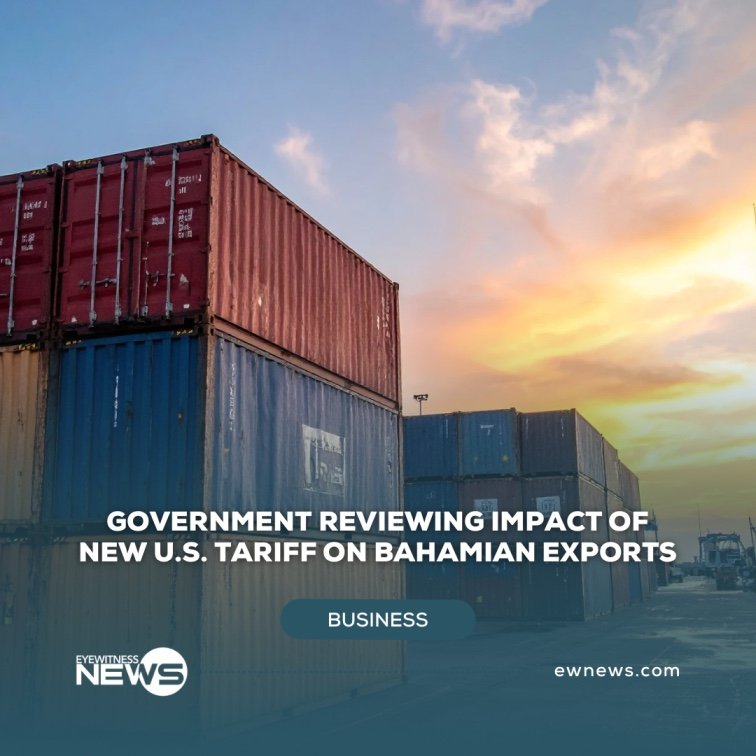
NASSAU, BAHAMAS: The government says it is assessing the potential impact of a new 12.5 percent U.S. tariff on exports from The Bahamas and is engaging American officials following the decision by the United States Trade Representative (USTR) to impose the measure over concerns about forced labor import prohibitions.
In a statement, the Office of the Prime Minister said the government is aware of the announced tariff adjustment and is reviewing what it could mean for Bahamian exporters.
“The Government is aware of the announced tariff adjustment and is reviewing its potential impact on Bahamian exporters,” the statement said.
“We are engaging our United States counterparts to seek clarification and to ensure that recent legislative measures taken by The Bahamas are fully considered.”
The Office of the Prime Minister added that The Bahamas “values its longstanding economic relationship with the United States” and will continue working “constructively toward a fair resolution that protects Bahamian businesses and maintains the strong trade relationship between our countries.”
The response follows Thursday’s announcement by U.S. Trade Representative Ambassador Jamieson Greer that the United States is imposing new tariffs on 60 economies under Section 301 of the Trade Act of 1974. The action, directed by President Donald Trump, targets countries that the USTR says have failed to impose and effectively enforce prohibitions on the importation of goods produced with forced labor.
Under the final determination, The Bahamas falls into the category of “all other investigated economies” and will face a 12.5 percent Section 301 tariff on exports to the United States.
Greer said the move is intended to address what the U.S. considers both a human rights issue and an unfair trade practice.
“President Trump recognizes that decades of moral suasion have not eradicated forced labor from global supply chains,” Greer said.
“The United States has had a forced labor import ban for nearly a century, and rigorously enforces it; it’s well past time for our trading partners to do the same.”
The USTR said its decision followed investigations launched in March, two rounds of public hearings, consultations with more than 45 governments and the review of more than 2,100 public comments.
According to the USTR, forced labor is work or service extracted from a person under the threat of a penalty and performed involuntarily. The agency argues that products made with forced labor create an unfair competitive advantage by lowering production costs and distorting international trade.
The Bahamas has previously lobbied the USTR successfully on regional trade matters. Last year, Caribbean governments secured exemptions from a proposed U.S. port fee targeting Chinese-built vessels after coordinated advocacy.
According to the Bahamas National Statistical Institute, exports to the United States totaled $110.9 million in the third quarter of 2025, up from $84.3 million during the same period in 2024. Total exports to all countries reached $128 million during the quarter, a 19 percent increase year over year. Machinery and transport equipment, manufactured goods classified chiefly by materials, and food and live animals accounted for more than half of the country’s exports.