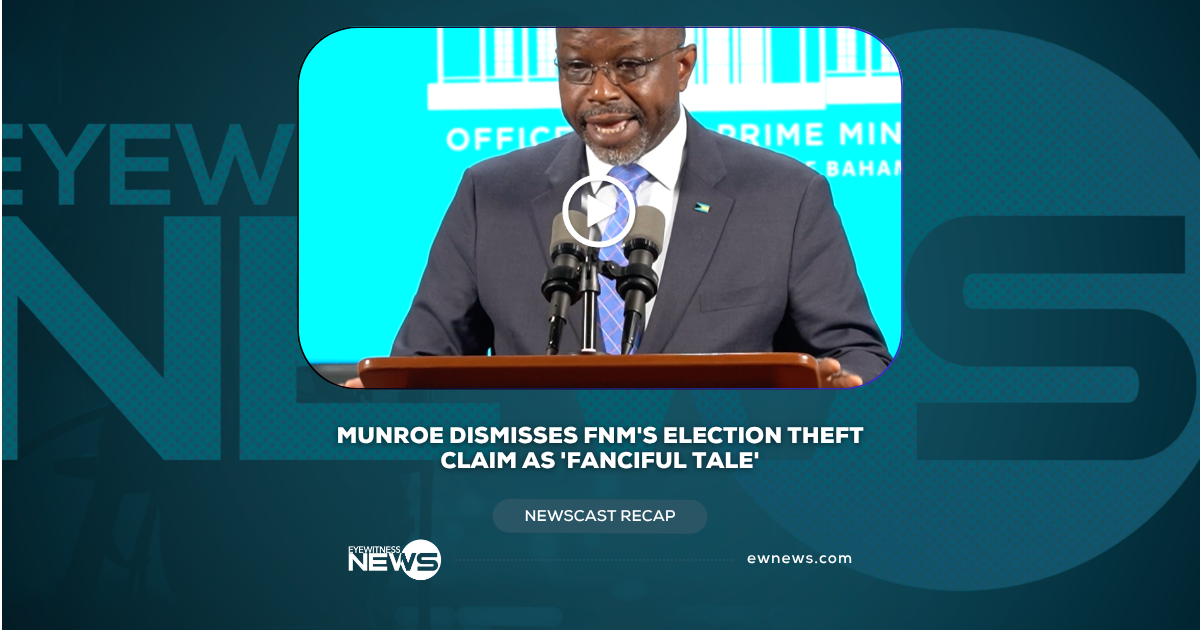



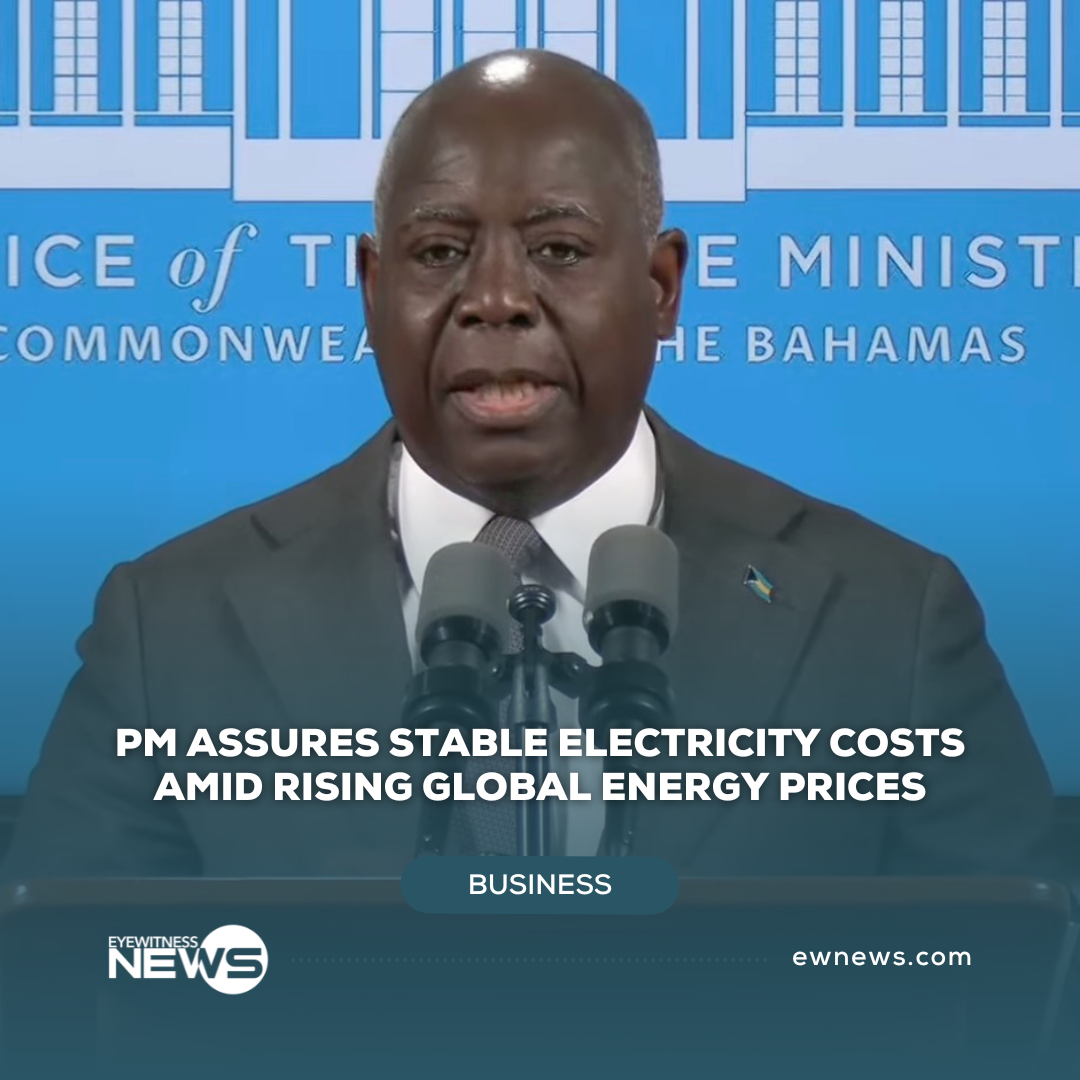
NASSAU, BAHAMAS — Prime Minister Philip Davis said electricity bills will not be impacted by the current global energy crisis despite a sharp surge in oil prices, as his administration moves to contain broader cost-of-living pressures and manage the impact of rising energy costs on Bahamian households.
Speaking Tuesday, Davis acknowledged growing concern among Bahamians as global energy markets react to escalating tensions in the Middle East.
“I know that many Bahamians have been watching the news from the Middle East, and wondering what this moment means for the cost of living here at home.”
He explained that the disruption of a critical global energy transit point has driven a sharp spike in oil prices.
“The conflict has disrupted one of the world’s most important energy transit points, through which roughly a large percentage of global oil and liquefied natural gas shipments normally pass. As a result, international oil prices have surged from around the 70 dollar range earlier this year to well over 100 dollars a barrel, one of the sharpest energy price shocks the world has seen since the Ukraine crisis.”
Davis warned that the increase is placing pressure on global supply chains and will have knock-on effects for small island economies.
“This increase, and the uncertainties about what will come next, are putting pressure on oil prices, shipping, and supply chains.”
“For a small island country like ours, that matters. When fuel prices rise in a global market, that has an impact on electricity costs, freight costs, transport costs, and, in time, prices at the grocery store.”
“People want to know what this means for their light bill, what it means at the pump, and what it means for food prices.”
The Prime Minister said the government has been actively monitoring developments and engaging with energy partners.
“We have been closely monitoring developments, engaging with our energy partners, and planning for various scenarios.”
He pointed to earlier policy decisions as a key buffer against the current shock, particularly in the energy sector.
“I am grateful to be able to say that policy changes we began to make early in our term have built more resilience into our system.”
“In particular, the major energy reforms we’ve put in place, which include major efficiencies and improvements, and risk mitigation strategies, have left us in better shape.”
“That work is still ongoing, but it means we are able to say that your electricity bills, which are lower already from the changes, will not be impacted by the current crisis.”
Davis also confirmed that he will meet with the Retailers Association ahead of the April 1 VAT reduction on food, with a focus on ensuring savings reach Bahamian consumers.
“This afternoon I will meet with the Retailers Association.”
“That meeting is focused on one thing: how we work together ahead of the April 1 VAT reduction on food to bring costs down for Bahamian families.”
“I want to hear their concerns directly, hear what they are seeing in the market, and hear what practical steps can help ensure that relief reaches the people who need it.”
He emphasized that reducing grocery costs remains a central priority.
“Bringing costs down for Bahamian families is the focus.”
“Giving people relief at the grocery store is the focus.”
“And nothing will get in the way of that.”
“My government will stay close to this issue. We will work with retailers, we will listen carefully, and we will keep pushing for results that people can feel in their everyday lives.”
Beyond economic concerns, Davis warned that instability abroad could create regional security risks, particularly in nearby Cuba.
“Periods of instability can create pressure far beyond the original conflict zone.”
“That includes illegal migration, maritime smuggling, and other unlawful activity across this region. So we are watching that situation very carefully in Cuba.”
He said the Royal Bahamas Defence Force remains on alert, with active monitoring across key maritime areas.
“From Great Bahama Bank to Cay Sal Bank and to Anguilla Cay, we are actively monitoring our maritime space.”
“Our assets remain in the southern Bahamas, and we are working closely with the United States Coast Guard and other partners.”
Davis highlighted recent enforcement activity as evidence of that vigilance.
“Over the past two days, RBDF personnel intercepted fifty-seven migrants in the Little Inagua area. Twenty-nine were apprehended on Monday, and a further twenty-eight were apprehended on Tuesday morning.”
“They were transported safely to Great Inagua, and investigations are continuing.”
He underscored that strengthening national security capacity has been a priority for his administration.
“That is why, when we came to office, we invested in strengthening the capacity of the Royal Bahamas Defence Force.”
“We understood that in an uncertain world, a country like ours must have the ability to monitor, respond, and protect its territorial integrity.”
Davis added that regional diplomacy remains critical, noting that Foreign Affairs Minister Fred Mitchell has been directed to remain engaged with international partners.
“I have also directed the Minister of Foreign Affairs, Fred Mitchell, to remain engaged with his regional colleagues.”
“I am in contact with partners as well, because this is a moment for close communication, close monitoring, and steady cooperation.”
Reflecting on broader efforts, Davis said his administration has worked to strengthen The Bahamas’ global standing.
“Over the past few years, we have worked hard to restore The Bahamas’ standing in the world.”
“We have made serious decisions on energy. We have made serious investments in national security. And we have used diplomacy with purpose, because for a country like ours, diplomatic leadership matters.”
He concluded by reaffirming the government’s commitment to managing the impact of global uncertainty on Bahamians.
“All options are on the table to protect the livelihood of Bahamians.We will keep working to protect families from the worst effects of global instability. We will keep working to secure our borders and our waters.We will keep working with partners at home and abroad. And we will keep making decisions with the country’s long-term interest in mind.”