


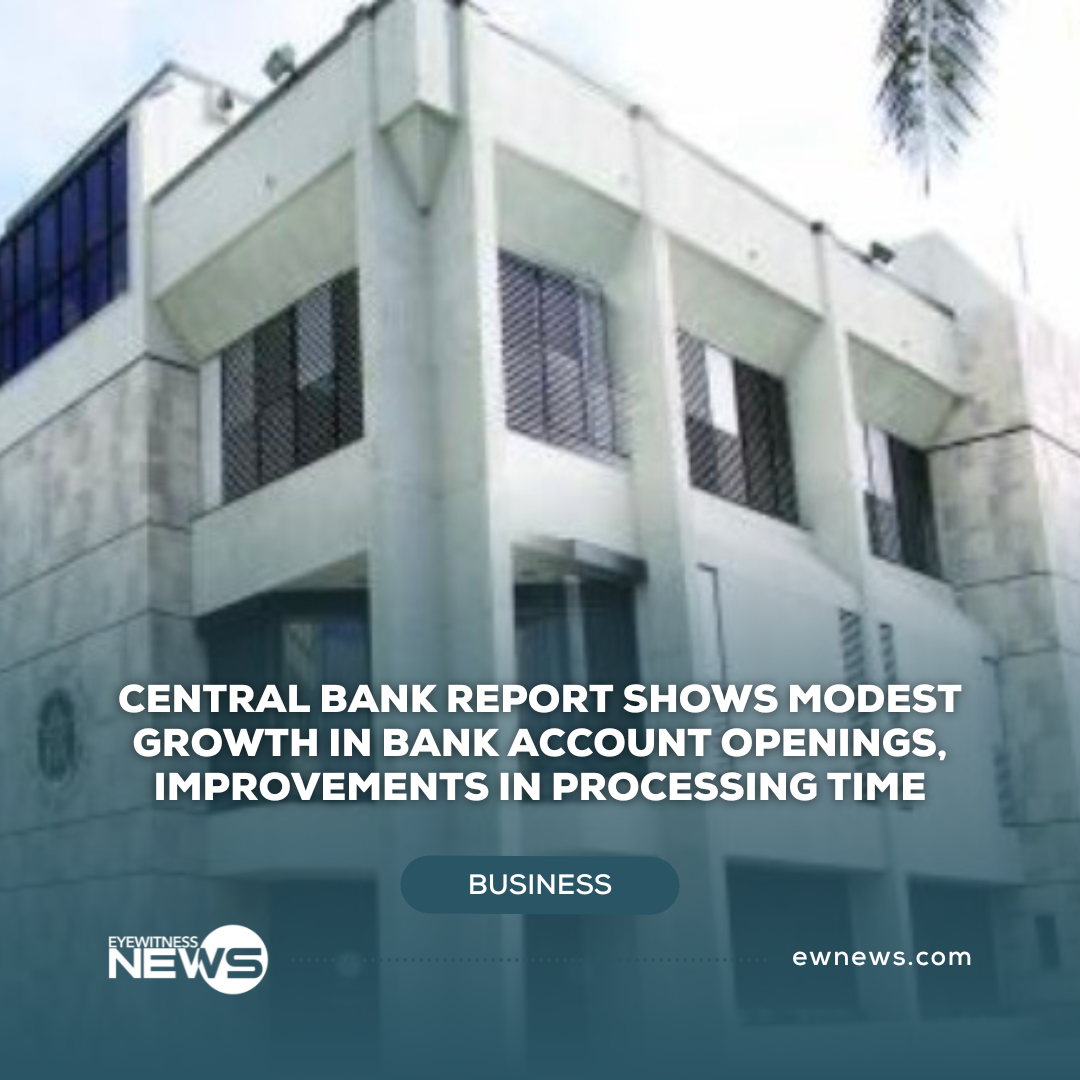
NASSAU, BAHAMAS- The Central Bank of The Bahamas has reported a modest increase in bank account opening activity across commercial banks, alongside gradual improvements in processing times and customer service efficiency, according to its latest semi-annual Bank Account Opening Survey.
The survey, which covered January to June 2025 tracks how easily individuals and businesses can open deposit accounts in the domestic banking system, found that commercial banks processed 29,018 applications during the review period — a 3 percent increase compared to the same period in 2024. The findings point to sustained demand for transactional banking services as economic activity and population-related needs continue to grow.
According to the Central Bank, the majority of applications — more than 96 percent — came from residents, with non-resident applications accounting for a small share of overall demand. Resident applications totalled 28,021, while non-resident submissions stood at 997.
The data also shows continued dominance of savings accounts, which accounted for nearly three-quarters of all resident applications, followed by demand deposit and fixed deposit accounts. While savings account applications remained relatively flat, demand and fixed deposit applications recorded moderate increases over the period.
Private individuals remained the primary source of applications, representing more than 93 percent of resident submissions. However, business-related applications increased by nearly 19 percent, signalling growing corporate engagement with the banking system.
By currency type, applications for Bahamian dollar accounts continued to dominate, though foreign currency applications saw a notable increase of more than 24 percent year-over-year.
The Central Bank reported that banks processed almost all applications received during the period, with 99.7 percent of resident applications completed and an approval rate exceeding 99 percent. Only a very small fraction of applications remained pending or incomplete at the end of the review period.
Approval rates for business accounts remained slightly lower than those for individuals but still strong, at approximately 97 percent. Meanwhile, denial rates across the system remained extremely low, at about two applications per 1,000 submissions.
One of the more significant operational improvements highlighted in the report was a reduction in account processing delays. The average time to reach a decision was just under three days for most individual and business applications, with foreign currency business accounts taking slightly longer, averaging just over eight days.
The report also noted improvements in customer onboarding processes, including reduced reliance on appointment-based account openings. Fewer banks required scheduled appointments compared to the previous year, and where they were still used, waiting times were nearly halved.
Despite these improvements, the Central Bank acknowledged that incomplete applications continued to create delays in some cases, particularly where additional documentation was required to satisfy customer due diligence and anti-money laundering requirements.
Banks also reported ongoing operational challenges linked to rising application volumes, staffing constraints in some institutions, and regulatory compliance requirements. However, several institutions noted that investments in technology, automation, and staff training had helped improve efficiency and transparency.
The survey found that account opening decisions continue to be made primarily at the branch level, although some cases are escalated to country or regional decision-making structures depending on risk and complexity.
From a policy perspective, the Central Bank said the findings continue to support its Payment System Modernisation Initiative, which aims to improve access to financial services and strengthen financial inclusion across The Bahamas.
Transactional accounts, particularly savings and checking accounts, remain the main entry point into the financial system, the Central Bank noted, adding that the survey provides a baseline for tracking improvements in access, efficiency and customer experience across supervised financial institutions.
The regulator said the results will help inform ongoing policy reforms aimed at improving transparency, reducing friction in account opening processes, and ensuring that financial services remain accessible to residents and businesses across the country.
Looking ahead, the Central Bank said continued improvements in the handling of incomplete applications, processing timelines and digital onboarding systems will be key to further strengthening the efficiency of the domestic banking sector.